The Ultimate Guide to Broken or Damaged Teeth
What to Do From the Accident to Recovery
A broken or damaged tooth can happen in an instant.
You might bite down on something unexpectedly hard, fall while walking or cycling, take a knock during sport, or simply notice that part of a weakened tooth has suddenly broken away.
From protecting the tooth immediately after an accident to contacting Emergency Dentist Sydney, preparing for your appointment, understanding your treatment options and looking after the tooth afterwards, acting quickly can help relieve pain and potentially save your natural tooth.
Broken Teeth Can Range From Minor to Serious
Not every damaged tooth looks or feels the same. Dental injuries can range from tiny cracks in the enamel through to a tooth being completely knocked out.
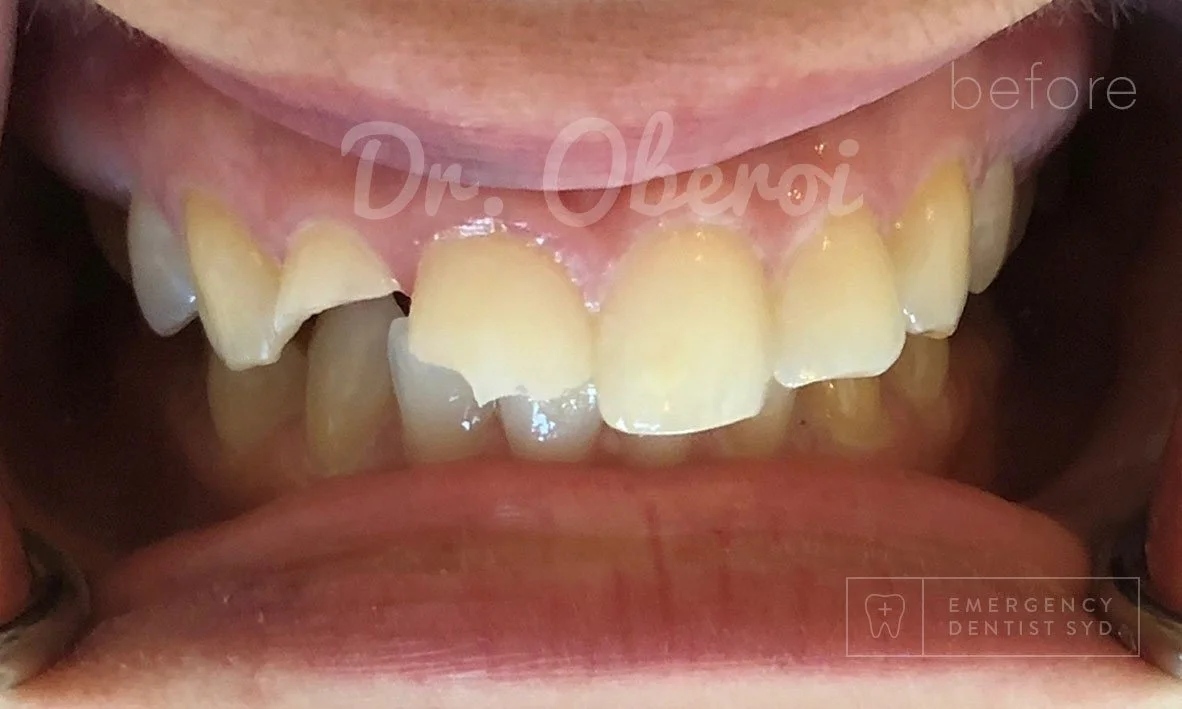
Common types of tooth damage include:
Small enamel cracks sometimes called craze lines, which may be primarily cosmetic but should still be assessed if they are new or causing symptoms
Chipped teeth where a small piece of enamel breaks away, leaving a rough or sharp edge
Larger fractures where a significant section of the tooth breaks off, potentially exposing deeper layers
Cracked teeth where a crack extends vertically and may cause pain when biting or sensitivity to temperature
Broken fillings or crowns where an existing restoration fractures or becomes dislodged
Fractures involving the nerve where deeper damage exposes or irritates the dental pulp
Loose or displaced teeth where an impact pushes a tooth out of its normal position
Knocked out teeth where the entire tooth is completely dislodged from its socket
Even if the damage initially appears small, it is worth having the tooth assessed by Emergency Dentist Sydney. What seems like a minor chip may involve deeper structural damage that cannot be seen at home.
Immediately After the Accident What Should You Do
The first few minutes after damaging a tooth can be important.
Try to remain calm and check your mouth carefully. If there is bleeding, apply gentle pressure using clean gauze or a clean cloth.
Rinse your mouth gently with water to remove blood or debris, but avoid aggressive rinsing or repeatedly touching the damaged area.
If you can find a piece of the broken tooth, keep it and bring it to your dental appointment. Place it in a clean container and let the dental team know.
For swelling, apply a cold compress to the outside of the face for short periods.
Avoid chewing on the damaged tooth and do not attempt to pull, push, file, glue or repair the tooth yourself.
Then contact Emergency Dentist Sydney and explain what has happened.
What If the Tooth Has Been Knocked Out Completely
A completely knocked out permanent tooth is a situation where urgent dental care is especially important.
Handle the tooth carefully by the crown rather than the root.
If the tooth is dirty, gently rinse it without scrubbing or removing attached tissue.
Keep it moist in milk and seek urgent dental care.
Do not attempt to reinsert the tooth.
Book an appointment with Emergency Dentist Sydney immediately and explain that the tooth has been knocked out.
Contact the experts in Emergency Dentistry, Sydney CBD
Emergency Dentist Sydney is here to help. Book now or get in touch with our friendly team.
When Should You Call an Emergency Dentist
Some people delay calling because they are unsure whether the situation is urgent. Contacting Emergency Dentist Sydney is important if:
A large section of the tooth has broken away
You have significant or increasing pain
The tooth is loose or has moved
The tooth has been knocked out
The inside of the tooth is exposed
There is persistent bleeding
Your bite feels different
You have facial or gum swelling
The tooth is extremely sensitive to temperature
You cannot comfortably bite or chew
A crown filling or restoration has broken and the tooth is painful or vulnerable
Calling Emergency Dentist Sydney
When you call Emergency Dentist Sydney, provide as much detail as possible.
Explain how the injury happened, when it occurred, which tooth is affected and whether there is pain, bleeding or swelling.
Also describe whether the tooth is chipped, cracked, loose, displaced or knocked out.
If the injury involved facial trauma, loss of consciousness or suspected jaw injury, inform your dentist as this may require additional medical assessment.
This helps the dental team prepare for your arrival.
View our Smile Gallery >


Preparing for Your Emergency Dental Appointment
While waiting for your appointment:
Avoid chewing on the affected side. Choose softer foods and avoid very hot, cold, hard or sticky foods.
If there is a sharp edge, avoid repeatedly touching it with your tongue.
Bring any fragments of tooth or restoration with you.
What Happens During Your Appointment
Our friendly team will greet you, have you complete our new patient form, and ask you to wait patiently for our next available dentist.
Once your appointment begins,our dentists will assess the extent of the damage. This includes examining the tooth, gums and surrounding structures.
Dental imaging may be required to check for deeper damage.
The dentist will also assess the nerve inside the tooth and determine stability. The goal is to understand the full extent of the injury and choose the most appropriate treatment.
We will then advise recommended treatment options and cost.
Treatment Options for Broken and Damaged Teeth
Treatment depends on the severity of the damage.
Minor Chips and Cracks: Small chips may be smoothed or repaired using composite material to restore shape and comfort.
Larger Broken Sections: More significant damage may require composite restoration, an onlay or a crown depending on how much tooth remains.
Damage Reaching the Dental Pulp: If the nerve is affected, root canal treatment may be required followed by a protective restoration.
Loose or Displaced Teeth: The tooth may be repositioned and stabilised while healing occurs, with ongoing monitoring.
Severely Damaged Teeth: If the tooth cannot be saved, extraction may be necessary followed by discussion of replacement options.
What Happens After Treatment
Some tenderness or sensitivity is normal after treatment, especially following trauma.
Your dentist will provide instructions which may include avoiding chewing on the tooth, eating softer foods and maintaining careful oral hygiene.
Follow these instructions even if the tooth feels normal again.
Keep in contact with us if you have any questions at all. We’re available for your entire recovery.
Why Follow Up Appointments Matter
Dental trauma can develop complications over time even if the tooth initially appears fine.
The nerve may be affected and changes can occur later.
Your dentist may recommend follow up checks or imaging.
Contact us if you notice persistent or sudden pain, swelling, sensitivity, discolouration or movement.
Can a Broken Tooth Be Saved
In many cases yes. Modern dentistry offers many ways to repair and protect damaged teeth. The outcome depends on the location and severity of the fracture and how quickly treatment is provided. Early assessment improves the chances of saving the tooth.
From Small Cracks to Dental Emergencies, We Are Here to Help
A damaged tooth can range from a small chip to a complete dental emergency. Whatever has happened, do not assume nothing can be done.
Expert Emergency Dentist Sydney CBD
Contact our friendly team