
Dental Flossing 101
Yes It's a Bother, But You Still Need to Do It...
Yes It's a Bother, But You Still Need to Do It
Flossing has, to be fair, been a topic of much discussion and even a little controversy over the last year or so, but, as we have explained before, it really is still a must. And, we'll admit, sometimes the most annoying and challenging part of a good oral health routine. It's a fiddly procedure that many of us get annoyed with and even get it more than a bit wrong sometimes. However, flossing the right way is not really as hard as it might seem, all you need to know are the basics of the best way to do it. Not really sure what those are? Read on to find out.
A Step by Step Guide to the Proper Way to Floss
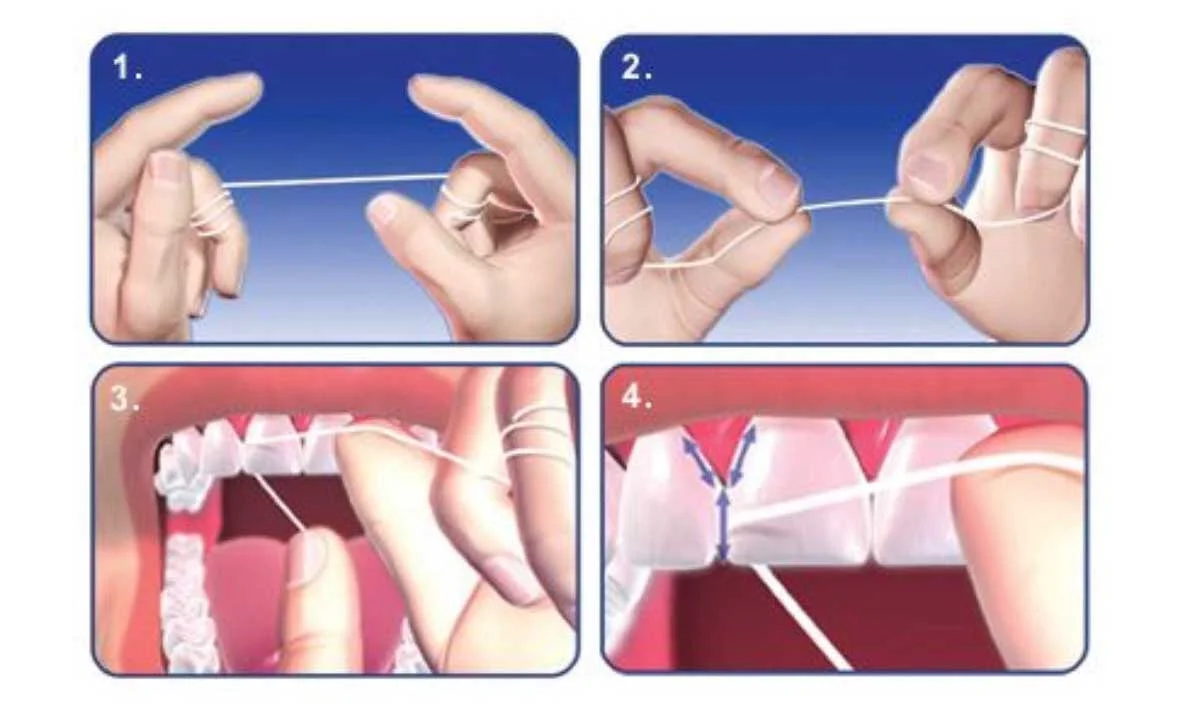
After brushing your teeth take around 18 inches of dental floss and wrap the majority of it around your middle finger.
Next, wrap the remaining loose floss around the opposite finger, leaving enough floss between them to rub between your teeth comfortably.
Holding it tight between thumbs and forefingers, insert the floss between your teeth using a careful seesaw motion. Don't do so too quickly as you may injure the sensitive gum tissue around your teeth if you do.
Once the dental floss is between your teeth curve it into a rough 'c' shape around one of them and rub up and down gently, ensuring that you keep the floss pressed against the tooth. Again, go slow to avoid injury.
Reverse the 'c' to clean the other side of the tooth, repeat the process and then gently remove the floss from your teeth.
Clean all of your teeth in this manner, using fresh floss as necessary. Pay special attention to your back teeth, as this is where a great many instances of gum disease and tooth decay begin, as the tartar and plaque buildup there is much harder to see with the naked eye.
As we mentioned, some people get pretty desperate when they are stuck with a toothache that just won't quit. Two aspirins didn't work, so they take four. Four don't work either so they take four more. That, however, is a terrible idea. The correct dosage of an anti-inflammatory OTC pain reliever might provide some relief - hopefully it does - but if it doesn't, taking so many more that you start to rattle a bit is not going to help.
It also won't help to try to booze away the pain. Well, it might for a little while, if you drink enough, but within a couple of hours you'll have a banging hangover AND a terrible toothache to contend with and, if you were also popping Advil, you could seriously have damaged your health.
Then there are those weird home remedies that Google's thrown up for you. A few temporary pain killing home remedies do work (more about that in a moment) but most are nonsense. Some suggest gobbling garlic over a visit to a dentist asap, but unless you are also dealing with a vampire infestation or something, that really won't help. And don't even think about trying something daft like pulling your own tooth, whatever Grandpa might say.
Alternatives to Standard Floss - Are They Any Good?
Standard dental floss - which is basically just specially coated string - is pretty cheap and easy to find in the shops. However, since, even when they do understand the right way to use it some people skip flossing because it's too time consuming a number of products have been launched in an attempt to make flossing easier. But are they actually any good?
One inexpensive alternative to standard floss in a box are floss sticks, or floss picks as they are also known. Lots of people do prefer these to standard floss as a lot of the measuring and guesswork is taken out of the equation and although you can only really use each pick once for hygiene reasons, making it a bit pricier to use them, the potential oral health benefits of actually flossing make the investment worth it.
There are also several different kinds of 'mechanical flossers' on the market. Some make use of water, some make use of air and they are priced anywhere between $10 and about $75, depending on the model you choose. Some do work well, and a water flosser can be an especially good choice for those with braces or bridges, as they can remove food particles that brushes and flosses often miss. Should you make the larger investment in one of these gadgets? If you struggle to floss now but think they might change that, by all means go ahead.
Emergency Dentist Sydney Says:
The bottom line is, however you floss, you still need to do so and there's no getting out of it if you want to maintain truly healthy teeth!

Toothache: What to Do When the Pain is Too Much
An expert opinion...
An Expert Opinion
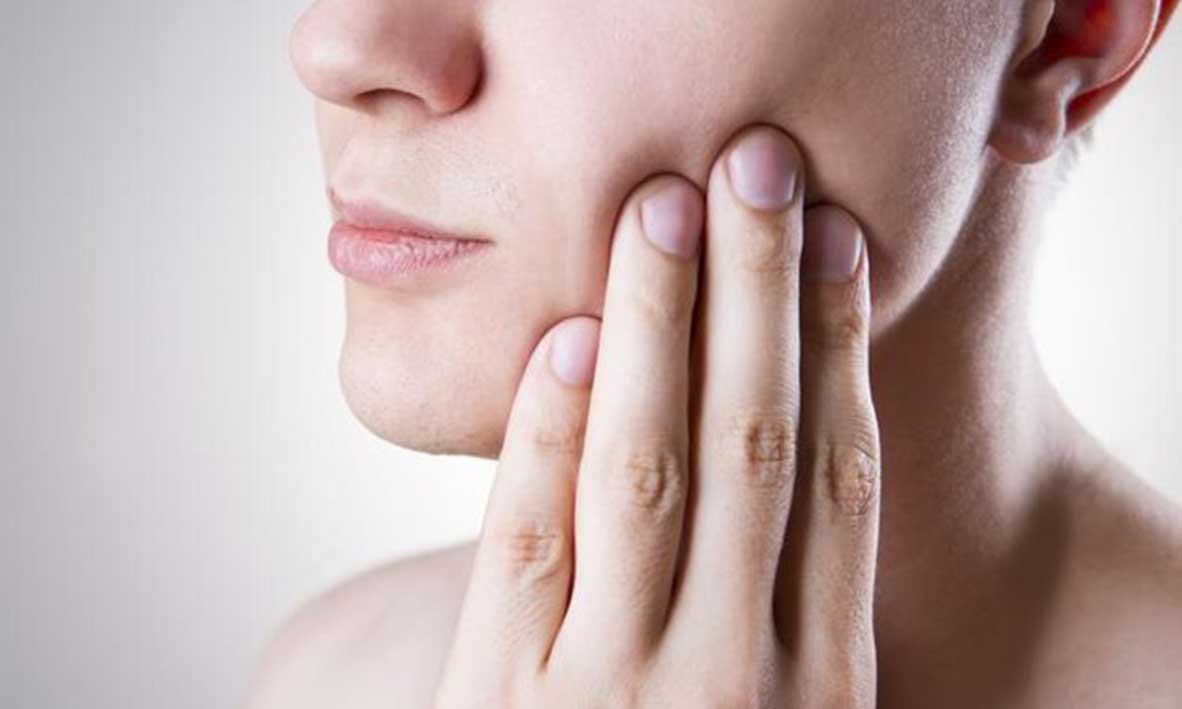
A severe toothache can, as many know, be a real nightmare. The pain can be horrible and, at its worst, it can be unbearable. And when pain is unbearable, people do silly things. If you Google toothache you'll quickly find page after page of advice on how to cope with it. Some of it's good, but an alarming majority of it isn't and can even make things worse.
Why Does a Toothache Hurt So Bad?
In many ways, a toothache is a unique form of pain unlike any other you might experience in your body. For starters, this is literally a pain in your head, so it's almost impossible to find a comfortable position that might help alleviate the pain in the way you might for, for example, a sprained ankle.
Secondly, a tooth does not respond to trauma in the way other parts of your body do. If you hit your arm hard it bruises, because the injury is being mitigated by a rush of blood to the damaged area that is the beginning of the healing process. But because a tooth is a solid, closed container - even though it's full of soft tissues and a surprisingly large number of nerves - the blood supply is not as plentiful and the healing process is not as effective.
Finally, often a toothache has an underlying, hidden to the untrained eye cause. If you have a broken or cracked tooth then the reason for the agony you're in is a little more obvious, as that sensitive soft pulp is usually exposed to the world and it's easy to understand why it hurts. However, if a tooth is infected or decayed, or perhaps there's an underlying gum problem, it's harder to see and harder to understand. In fact, all you know is that you're in pain and you want that pain to stop as soon as possible.
The Wrong Ways to Deal with Tooth Pain
As we mentioned, some people get pretty desperate when they are stuck with a toothache that just won't quit. Two aspirins didn't work, so they take four. Four don't work either so they take four more. That, however, is a terrible idea. The correct dosage of an anti-inflammatory OTC pain reliever might provide some relief - hopefully it does - but if it doesn't, taking so many more that you start to rattle a bit is not going to help.
It also won't help to try to booze away the pain. Well, it might for a little while, if you drink enough, but within a couple of hours you'll have a banging hangover AND a terrible toothache to contend with and, if you were also popping Advil, you could seriously have damaged your health.
Then there are those weird home remedies that Google's thrown up for you. A few temporary pain killing home remedies do work (more about that in a moment) but most are nonsense. Some suggest gobbling garlic over a visit to a dentist asap, but unless you are also dealing with a vampire infestation or something, that really won't help. And don't even think about trying something daft like pulling your own tooth, whatever Grandpa might say.
The Right Ways to Deal with Tooth Pain
A toothache almost never goes away on its own. And even if it does dissipate for a little while, it's usually back pretty quickly. For tooth pain you really do need to see a dentist and you need to see one asap. If, while you are waiting for your dentist to open, or for an emergency dentist to have you come in, you want to try rinsing with warm salt water or dabbing the painful tooth with clove oil (dabbing, not swallowing, the stuff can really burn) these are things that might provide a little temporary relief. However, in the end, even if you're not a big fan of them, a trip to the dentist is your best chance at finally getting rid of a toothache, and the sooner you get there, the faster you'll feel better.
Emergency Dentist Sydney Says:
Toothache is horrible and it's one of the biggest reasons emergency dentists exist in the first place. 'Toughing out' a toothache isn't being brave, it's being silly. So when toothache strikes at the wrong time, give us a ring, it's the only sensible thing to do.
Need Advice Or Emergency Dental Care In Sydney CBD?
Contact our friendly team


Mending A Broken Smile
Cosmetic Dentistry in the 21st Century...
Cosmetic Dentistry in the 21st Century
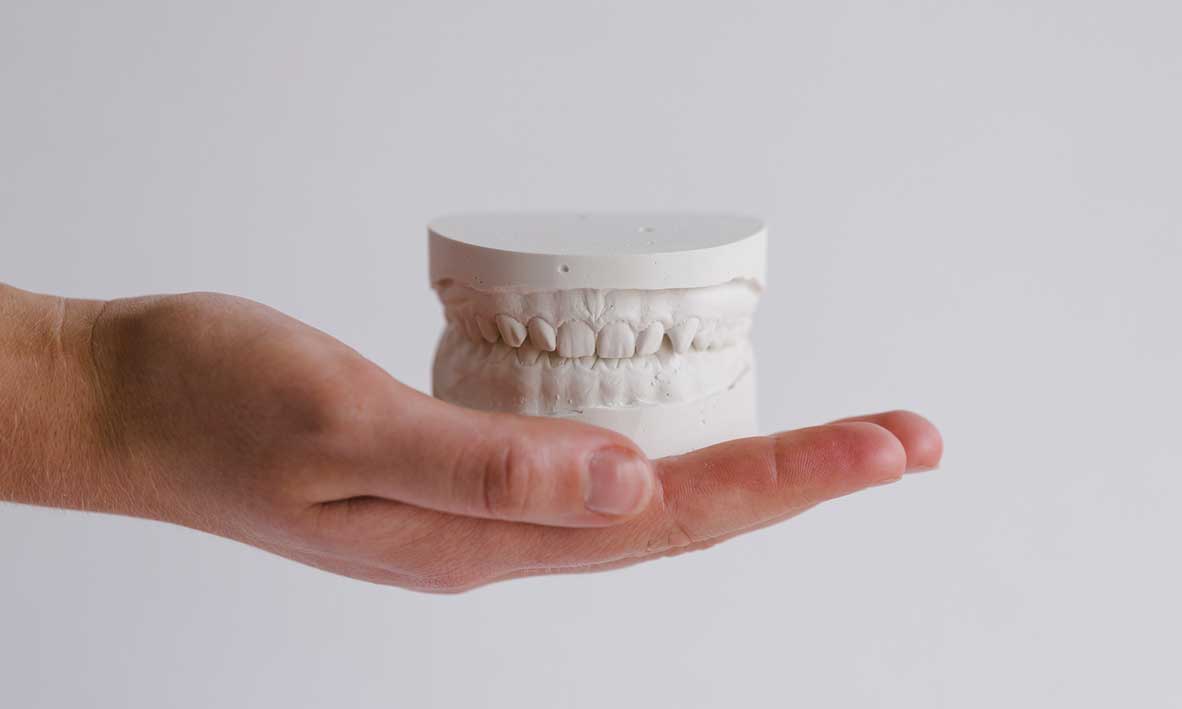
There is no doubt that the way your teeth look is important. And if they are damaged it's often hard to hide that fact, something that many find more than a little distressing.
The good news is that cosmetic dentistry has come a long way over the last few decades and it is continuing to get better and more innovative every day. This often means that even teeth that a person thought were beyond repair can not only be fixed but restored to their former glory in terms of aesthetics as well.
There are lots of ways teeth can be damaged and there are also a number of other cosmetic dental issues that simply develop to spoil your smile. Here's a look at some of the most common and how they are treated.
Missing Teeth
Losing a tooth as a kid is exciting. It means you are growing up AND you're likely to be waking up to a few extra dollars left in the night by the elusive tooth fairy (no, before you ask, even dentists have no idea what she wants all those teeth for) Losing a tooth as an adult is a very different matter. It's traumatic, shocking and ultimately very upsetting. How are you supposed to the face the world with that big embarrassing gap in what was once a nice smile?
Thanks to the skill of a good cosmetic dentist a missing tooth does not have to be the end of the world (or the end of that nice smile anyway) The treatments used vary according to the location and size of the missing tooth but bridges, crowns and implants are all ways that a 'gappy' smile can be restored to its former glory with relative ease.
Cracked/Broken Teeth
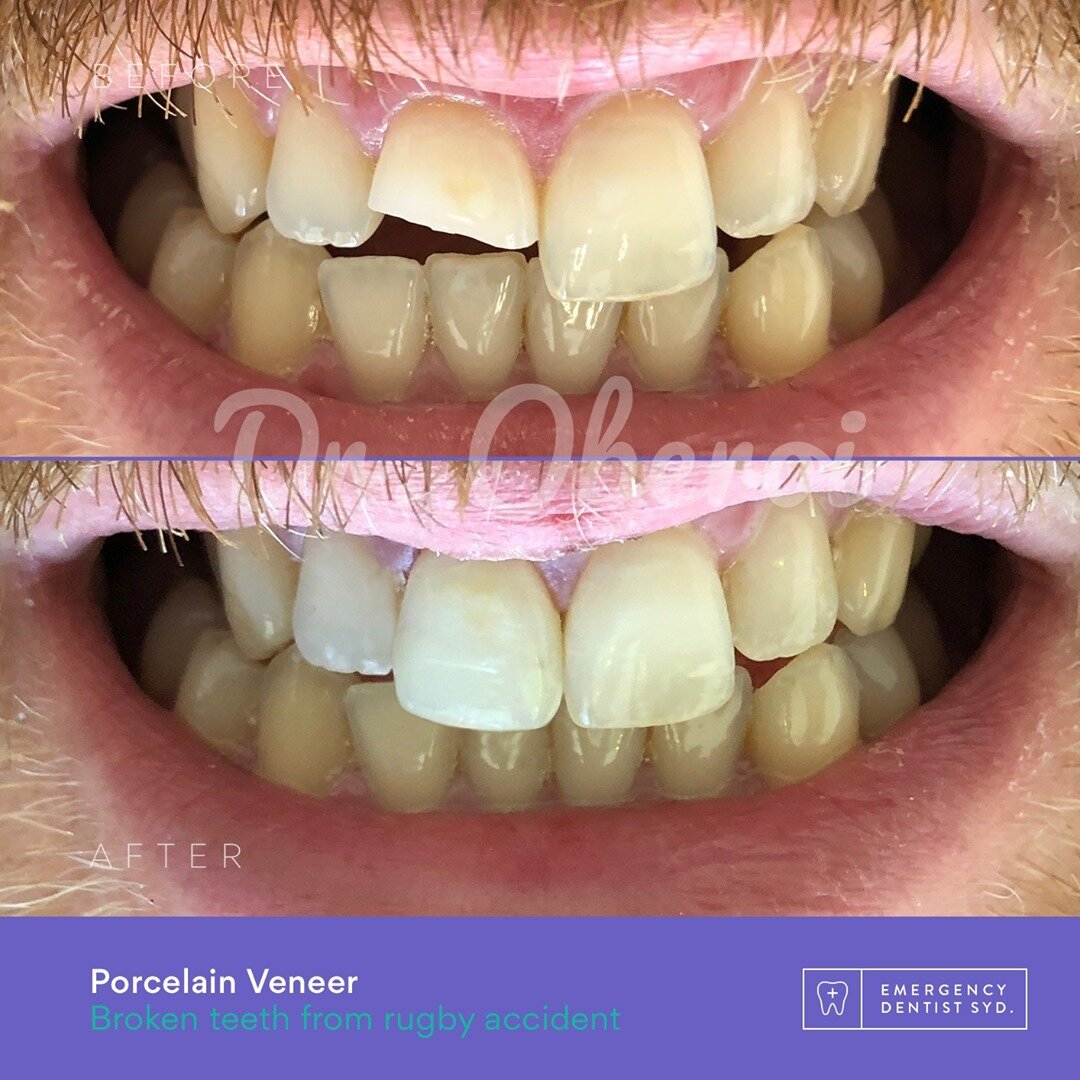
It's easier than you might think to crack, chip or break a tooth. They may seem tough but a particularly crispy apple, an argument with a pavement or a dozen other accidental scenarios are more than a match for tooth sometimes, and even though it survives the trauma it doesn't do so intact, leaving you with a damaged tooth that not only looks pretty bad but is also now prone to decay, infection and further collapse if not treated promptly.
Natural looking fillings, a treatment known as bonding, crowns and other cosmetic dental innovations can be used to correct all kinds of cracks, breaks and similar damage to teeth, but for them to be most effective you will need to see your dentist asap after the damage is first done.
Discoloured Teeth
Seems like everyone is in pursuit of that dazzling white smile these days. The chemist's is not really the best place to begin your quest though. Most over the counter whitening kits are both pretty ineffective and often contain harsh chemicals that can actually damage teeth. Your dentist, on the other hand, has the safe, effective and long lasting whitening solutions you are looking for, as well as a few tips for how changing the way you eat, drink and care for your teeth can keep them that way.
Emergency Dentist Sydney Says:
Cosmetic dentistry can work wonders, but don't overlook the fact that preventive care can also help keep teeth stronger, healthier and less prone to damage in the first place.

5 Reasons Why Your Teeth Might Be Hurting More This Winter
Winter in Sydney...
Winter in Sydney
Although it's not everyone's favourite season, winter in Sydney can be great for lots of reasons. But, as you may have noticed over the years, it's not always that great for your teeth. Colder weather often brings along with it tooth pain and especially tooth sensitivity, even if at your last dental check up your teeth got a relatively good bill of health.
The bad news is that the winter weather can indeed affect your teeth. The good news is that there are things you can do to minimise the damage - and pain - that the colder months can cause. With that in mind here's a look at the top five reasons why your teeth might give you extra problems this winter and what you can do about it.
1. Overly Aggressive Brushing
Yes, you have been told, correctly, since you were a kid that you need to brush your teeth at least twice a day. But the operative word here is brush, not scrub away like a maniac. If you brush your teeth too hard, or with a very stiff bristled toothbrush, you may begin stripping away enamel as well as plaque, leaving the softer inner part of your tooth exposed to the elements, something you'll feel a lot more when the air hitting them is cold.
When brushing your teeth take you time and use gentle strokes, as doing so will not only shield your smile from winter sensitivity but protect them from damage in general as well.
2. Winter Whitening Overkill
Winter in Sydney offers up all kinds of fun festivals and events that are a great excuse to get out and party. And if you are going to party, you want to look your best and dazzle everyone with a stellar smile. Those tempting home whitening kits at the chemists promise they can do that, but if you are considering using one this winter you'll need to take care.
Although home teeth whitening kits can have some effect, they often contain overly harsh chemicals that eat away at the enamel of the teeth, weakening them and making them more sensitive. A better way to go is to head to the dentist to discuss getting a professional whitening treatment that will look better, last longer and not leave lasting damage behind.
3. Your Hot Drink Habit
When winter comes we all tend to crave a few more hot drinks, especially if we're outdoors, something that's really only natural. This can have a downside for your teeth though, even if your tummy's warm and happy. The problem is that if your drink is hot - and the air is cold - the temperature difference can be quite a shock for your teeth and cause pain that rather sharp and stabby. To help prevent this, sip your hot chocolate - or whatever your preferred winter beverage option might be - slowly and try to stick to drinking it warm rather than boiling hot.
4. Colds and Flus
Not all winter tooth pain is directly related to your teeth. If you have a cold, the flu, or a sinus infection, all common winter ailments, then tooth pain may be just one of the nasty symptoms that come along with it. Often if your nose is all stuffed up your sinuses are all inflamed and that can put pressure on your teeth, especially those at the front. On this one there's not too much you can do, except practice good hygiene and take some extra Vitamin C to try to ward off winter colds and flus altogether.
5. Thermal Stress
Did you know that your teeth expand and contract in reaction to the weather in the same way as many other materials? It's only very slight, but it can cause pain, especially if you already have sensitive teeth.
Emergency Dentist Sydney Says:
Don't stress. Some winter tooth pain is temporary and goes away on its own, often when you get back to your nice warm house after a day in the cold.
However, if the pain is particularly bad, or lingers longer than a day or so it's a good idea to make an appointment to see the dentist to make sure something else - like decay or gum disease - is the problem, and not the winter weather after all.

What's The Point of Wisdom Teeth Anyway
The evolution of wisdom teeth...
The Evolution of Wisdom Teeth

With such a grand sounding name you'd think that wisdom teeth served a grand purpose in the scheme of things related to your oral health. And, once upon a time, it's believed they certainly did. These days, however, for many people, they are nothing more than a big pain, literally.
What are Wisdom Teeth Anyway?
Although you may not have ever actually seen yours very clearly, everyone has two sets of wisdom teeth, one at the top, one at the bottom, at the very back of your mouth, behind the molars. These teeth often appear last, sometimes when a person is in their teens, occasionally not until some time later.

Why Do Wisdom Teeth Exist?
Wisdom teeth were once something of a puzzle to dentists and other medical professionals. It's now generally agreed however that they are evolutionary throwbacks that no longer serve the purpose they were designed for.
You see, back when prehistoric man - and woman - roamed the Earth their primary diet was, obviously, very different to ours. Lacking a cave-based Woolworths to food shop in they ate a lot of pretty tough, chewy stuff, including sticks and reed plants. This usually led to teeth falling out and wearing down, so wisdom teeth could move in as replacements.
As we all know eat much softer foods, and (should) practice much better oral hygiene wisdom teeth no longer have a purpose. The human mouth is designed to accommodate 28 teeth, so if the wisdom teeth come in, that goes up to 32 and then there's a problem, often a rather painful one.
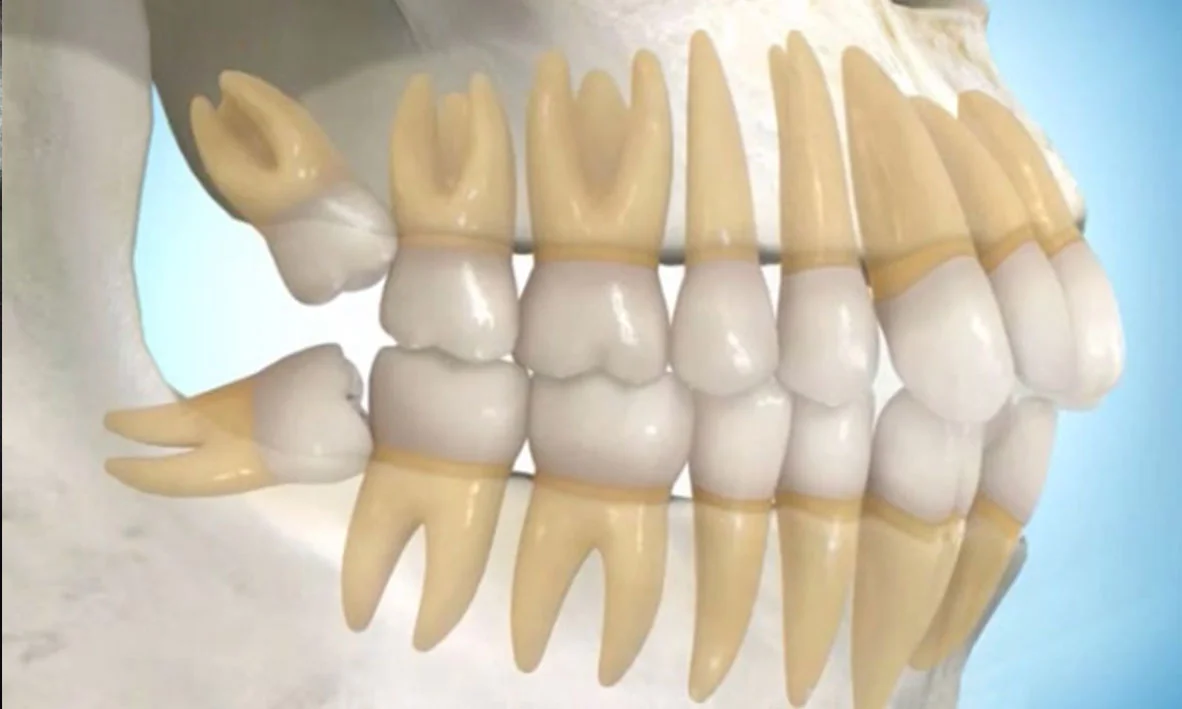
Partially impacted wisdom teeth.
Wisdom Tooth Eruption Problems
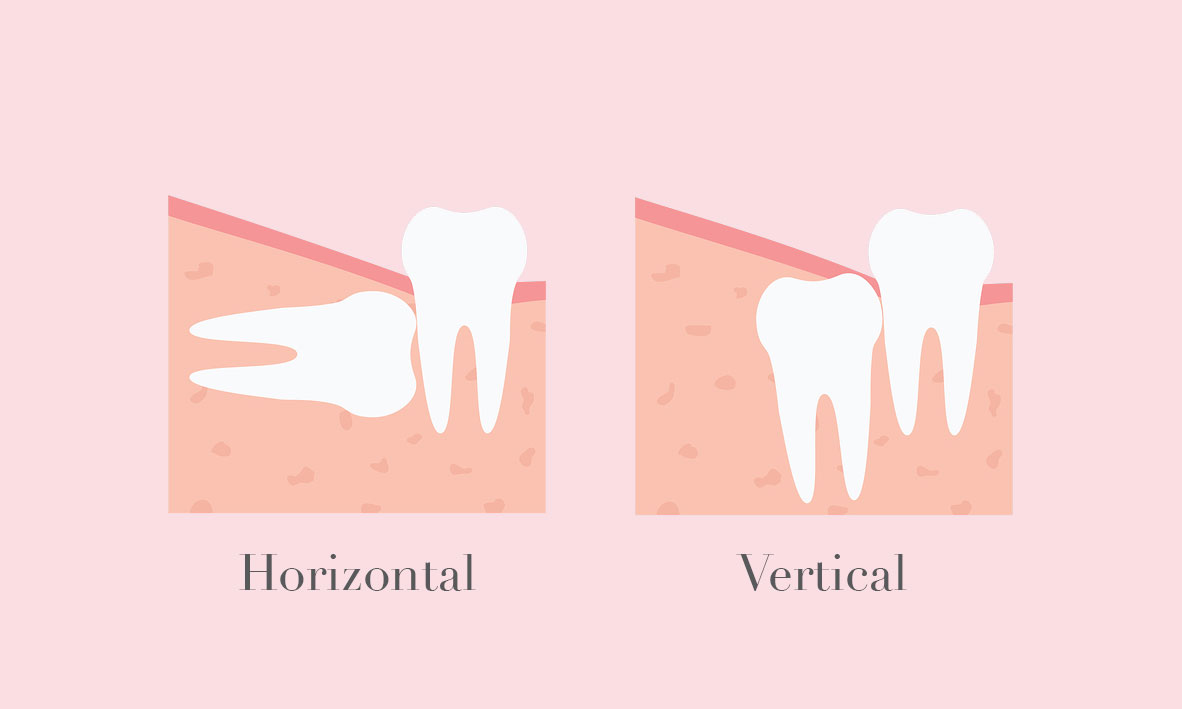
As there is no room for them to exist, it is not very common for a wisdom tooth to erupt nice and straight and then slide in without a problem. Instead, they usually impact, or partially impact, in the gum. There are four common types of wisdom tooth eruption (or lack of) and they break down as follows:
Angular - The wisdom tooth impacts into the gum, behind the molar, at an angle.
Vertical - The wisdom tooth is still straight, but it simply sits in the gum.
Partial Eruption - The tooth partially erupts from the gum and can be seen with the naked eye if you look hard enough.
Horizontal - The tooth 'falls over' and impacts sideways against the adjoining molar.
Wisdom Tooth Problems and What to Do About Them
In any of the scenarios mentioned above the potential for painful problems exists at all times, but sadly it's often at the most inconvenient times that they really become a nuisance. Signs that you probably need to see a dentist about a wisdom tooth can include all the following:
Pain, often centered at the back of the mouth
Swelling in the gum
Bad taste in the mouth
Redness
As an impacted wisdom tooth can cause all kinds of problems, including nasty infections, the usual course of action when one does begin to cause problems is to remove it asap. If the tooth has erupted it is an easier procedure than if it has become impacted but either way, in the hands of good dentist wisdom tooth removal is not anywhere near as bad as some might have you believe, and living with a wisdom tooth gone bad can be much, much worse.
The Emergency Dentist Says:
Did you know that these days it's often better to take a proactive, rather than a reactive approach to wisdom tooth problems? Discussing wisdom tooth extraction as a preventative measure, and then getting on with having it done now, can save you, and the rest of your teeth, a lot of pain and hassle later.

Lasers in Dentistry Explained
It sounds like something out of a sci-fi movie right?
A Must Have for Dental Practices
Lasers in dentistry. It sounds like something out of a sci-fi movie right? If dentists weren't scary enough, now they're wielding lasers like some kind of dental Darth Vader? What do they do with them? Is it safe?
Whenever people first hear about the use of lasers in modern dentistry these questions often come to their minds. However, there is nothing strange, or scary, about the practice at all, and in fact, lasers are helping to make dental treatment faster, more effective and, in many cases, a lot less uncomfortable.
Uses for Dental Lasers

Dental lasers are actually not really new, they've been around since the mid-nineties, but it's only more recently that they are being more widely used. And they are being used in a number of different ways. Lasers can be used more efficiently remove decay from a tooth and then prepare it to receive a filling. They can also be utilised to help fight infection and reduce inflammation, especially when a patient is suffering from painful gum disease.
And then there is that most feared of dental procedures; the root canal. If you've never had one, you have quite probably heard that this is a dental procedure from hell. In the right hands, that is nowhere near the truth, as the modern root canal is a far more efficient dental surgery than it might have been back in your parents or grandparents day.
However, lasers are helping to make the root canal even more effective. A laser root canal often means the procedure is shorter, there is less initial pain and bleeding, the recovery and healing time is faster, and being approached with what essentially looks like a simple beam of light is a lot less scary than a sharp metal instrument.
How Do Dental Lasers Work?
Now that we've established that lasers are very useful tools for a skilled dentist to have, you are probably wondering just how they work.
Like all lasers, dental lasers work by delivering energy in the form of a beam of light. When used in dentistry the laser can be used as a cutting tool, or to safely 'vaporise' damaged tissue. This is especially effective in a root canal, as the laser can be manipulated more easily to clean the root and remove all that nasty debris more effectively than traditional tools can.
Now, dental lasers are not replacing traditional dentistry tools and procedures completely. Instead, they are being used in conjunction with them to help offer patients a better overall experience when they visit the dentist. Not all dentists are trained to use lasers right now, there is a learning curve, but by taking the time to seek one out who is you may just be getting closer to that shorter, less painful, less intimidating experience in the dental chair we're all looking for.
The Emergency Dentist Says:
Dental lasers are just one of the innovations we make use of to provide you with the best possible experience. And no, we're still wearing our white coats, there's not a black cape or helmet in sight!

Dental Implants for Sleep Apnea Sufferers
Are Dental Implants the wrong choice for sleep apnea sufferers?
Are Dental Implants the Wrong Choice for Sleep Apnea Sufferers?

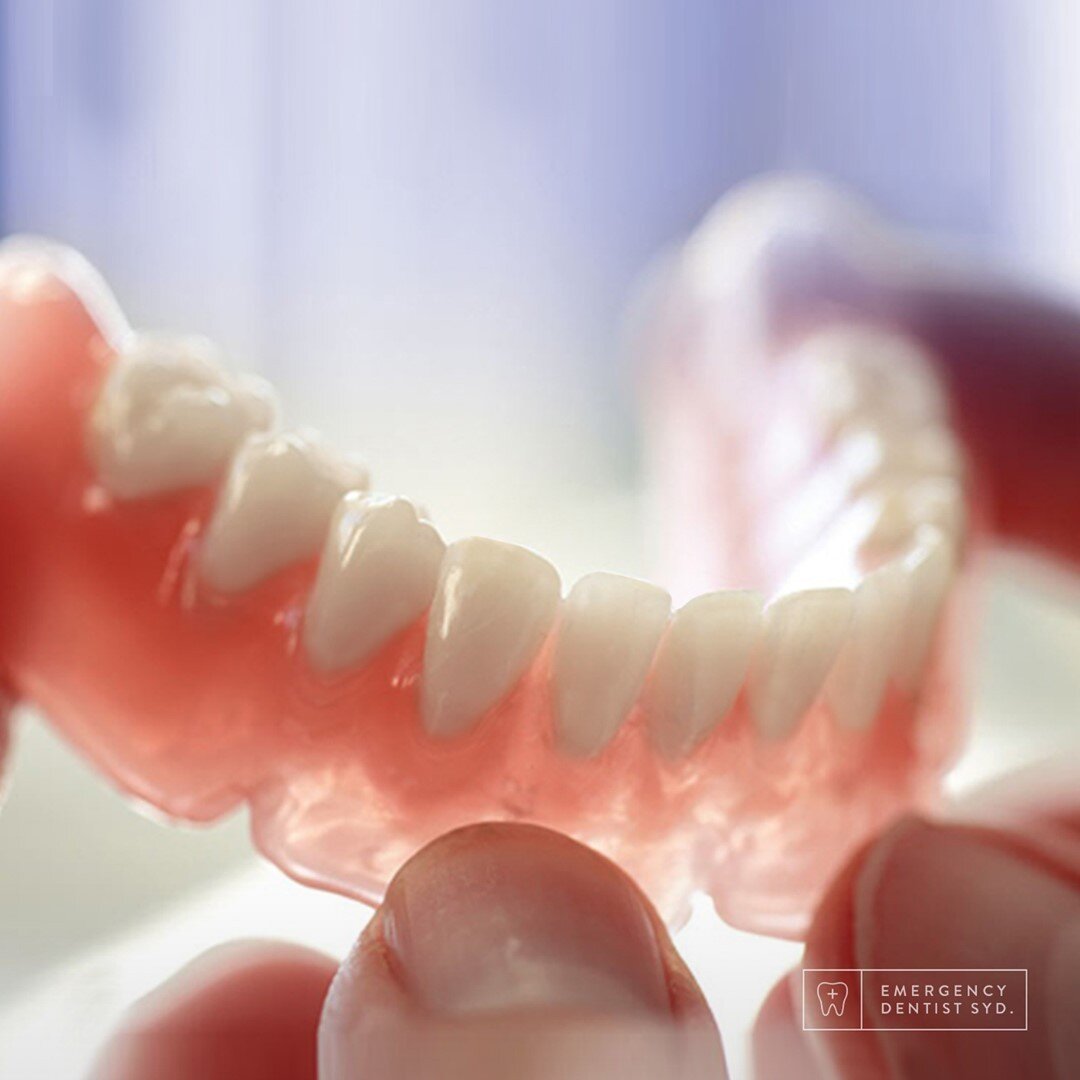
It's probably fair to say that no-one ever aspires to end up wearing dentures. In fact, avoidance of them is one of the biggest reasons that some people finally get a little more serious about looking after the teeth they have. Sometimes however the damage is unavoidable. This can be especially true for people who suffer from sleep apnea, as one of the complications that often comes along with that bothersome condition is something called sleep bruxism.
What is Sleep Bruxism?
Sleep bruxism is the 'proper' term for the sleep disorder involving the habit of clenching and grinding your teeth as you sleep. Although it can be a standalone condition many people who do grind their teeth also suffer from other sleep disorders like snoring and sleep apnea, a condition which causes pauses in breathing.
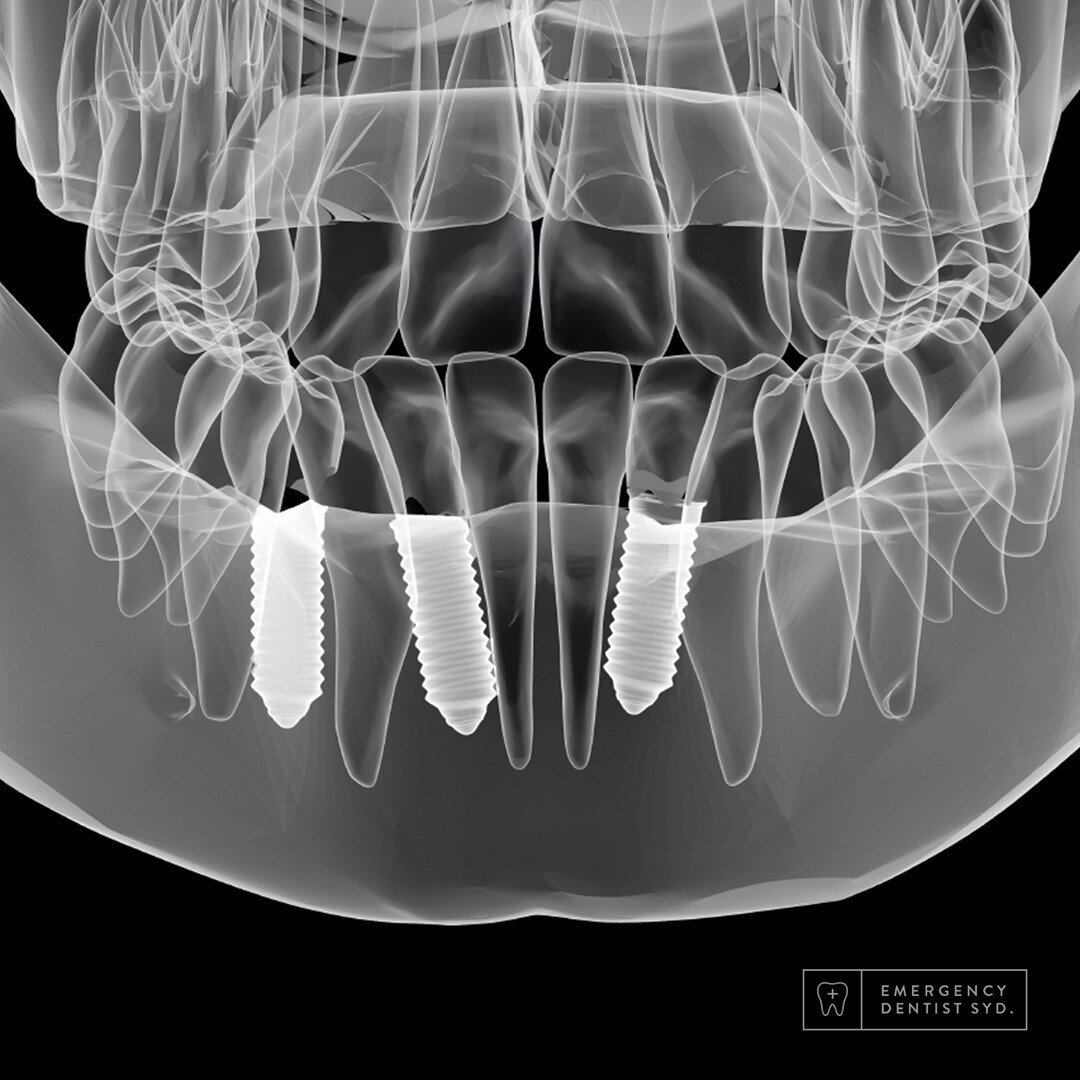
If a person does grind their teeth at night sadly, over the years, it can cause significant damage to the teeth, sometimes so much so that a tooth is damaged beyond repair, which is why it's not uncommon for those who suffer from sleep bruxism to end up needing partial dentures, or as is becoming more common, a dental implant.
Sleep Bruxism and Dental Implants
As an alternative to dentures or partial dentures, dental implants are quickly gaining popularity, and for lots of good reasons. Implants are permanent replacements, look more natural than even the best dentures and, obviously, make it easier to eat, drink, and smile with confidence than dentures might. They also seem like they would be the perfect solution for those who lose teeth due to sleep bruxism, but some recent studies have found that may not be the case.
Researchers from OSI Araba University Hospital in Victoria, Spain were conducting a study to determine if the most common form of sleep apnea, obstructive sleep apnea, affected the proper function and longevity of dental implants. They worked with a group of 67 people, some of whom had been diagnosed with OSA and some who had not. Of the 16 people in the study who eventually experienced complications with their dental implants 13 also suffered from obstructive sleep apnea, seeming to indicate that the damage to the implants might be directly related to OSA.
Implants, Sleep Apnea and Your Dentist
It should be noted that the study we have just mentioned was a small one and that more work needs to be done before assuming that for those who suffer from OSA dental implants are not the right solution for them.
When dealing with sleep bruxism, sleep apnea and trying to prevent possible tooth damage before dental implants are ever needed it's common wisdom that patients should work with both their doctor and their dentist to come up with a proper treatment and dental health plan. This allows patients to receive the best possible care to address both conditions.
With the right treatments, sleep apnea can be improved, and the same is true of sleep bruxism, and since the latter is considered a dental disorder it's your dentist who can help you out there. See them early enough and dental implants may never have to even become a consideration, something that we think you'd agree is the best possible outcome all around.
The Emergency Dentist Says:
The best way to deal with the possible dental complications that sleep apnea and sleep bruxism can cause, including the need for dental implants, is to speak to your dentist about it. Once you do that a proper treatment plan, one that may very well save your teeth altogether, allowing to keep your natural smile.

5 Things Your Tongue May be Trying to Tell You
Here's a look at five of the most common messages the tongue tries to send to warn its human that there might be something wrong...
Which Tongue Is Yours?
You know the drill; after the initial pleasantries at a dentist's appointment, you'll be asked to 'open and up and say 'ahh', so he or she can get a good look at your teeth. But your teeth aren’t all they are looking at, as the condition of your gums and tongue can be very telling as well.
Tongue? That surprised you maybe? The fact is however that this often overlooked - but large and important - body part can tell a dentist or a doctor more about your overall health than you might imagine. And learning to spot the warnings that your tongue might be trying to send to you between dentist visits can actually help you stay healthier. Here's a look at five of the most common messages the tongue tries to send to warn its human that there might be something wrong.
1. White Patches
Sometimes, white patches on the tongue are a sign that something is a little amiss with your daily oral hygiene routine. This can often be solved by making use of that bumpy backside of your toothbrush to clean your tongue when you clean your teeth. However, if you do that for a week or two with no change, something else may be wrong.
White patches and bumps on the tongue can also often be caused by a yeast infection, or can be a sign of a condition called leukoplakia, which is often caused by tobacco or chronic alcohol use. Both conditions are usually easily treated, so a call to the doctor sooner rather than later is almost certainly a good idea.
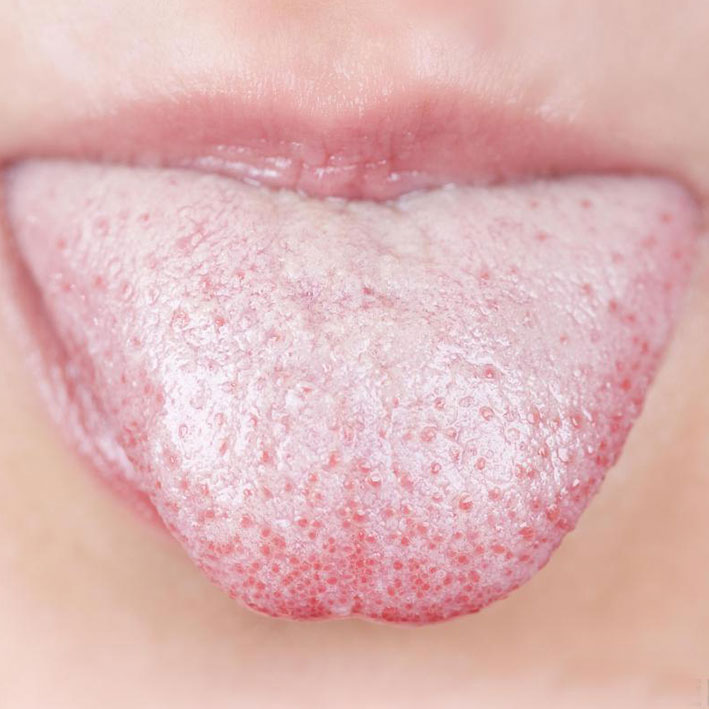
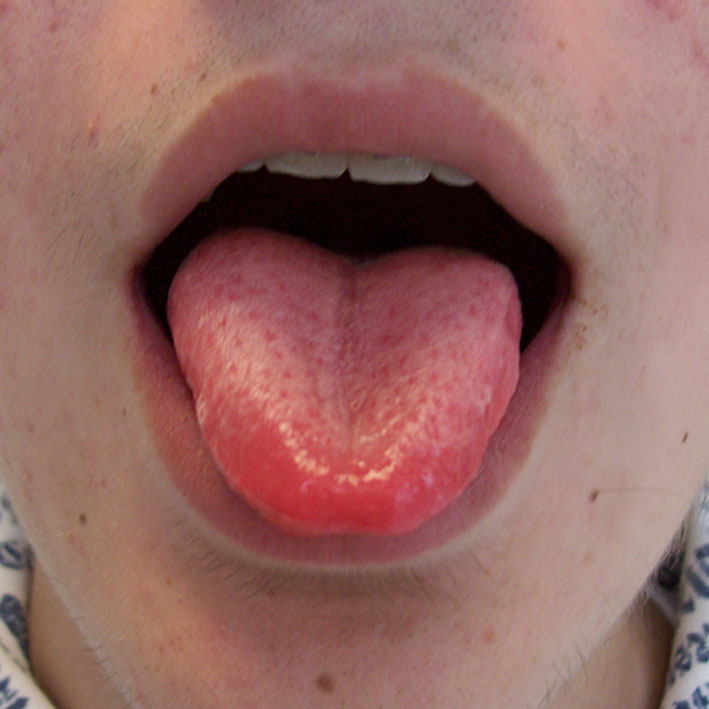
2. You're Seeing Red
A red tongue can also be a sign of several different things. One of the most common is dry mouth, a situation you can remedy by remembering to stay hydrated and occasionally chewing on some sugar free gum. A rosy tongue can also signify that some of your taste buds are reacting badly to a certain food, to stress, or even a deficiency in a vitamin like folic acid or B12, both of which are important to their function.
Finally, a very red tongue accompanied by a sore throat is often a sign of an infection like strep throat or even scarlet fever. Both conditions can be treated easily with antibiotics and so once again, the faster you make a doctor's appointment, the sooner you'll feel better.
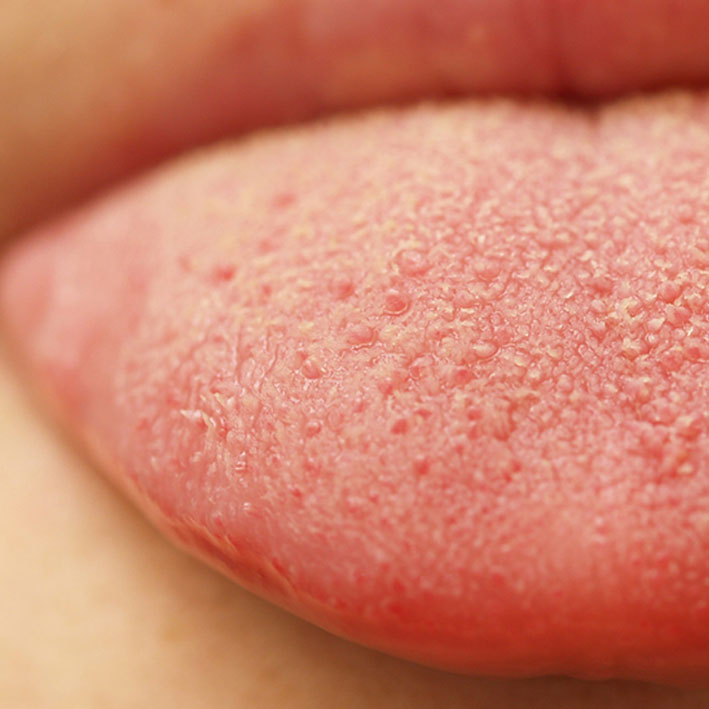
3. Things are Bumpy
Often bumps on the tongue are a temporary condition caused by a certain foodstuff you've recently consumed, especially things that are hot, both in terms of temperature and/or spice level. These will usually go away by themselves rather quickly.
Other causes of tongue bumps can include canker sores and herpes (cold sores), both of which will eventually go away on their own but can be treated to speed healing and ease discomfort. And in some cases, if you bite your tongue repeatedly (and some do, out of habit) a bump may actually be a fibroma and that should be looked at by your dentist, as in some cases they will need to be removed.
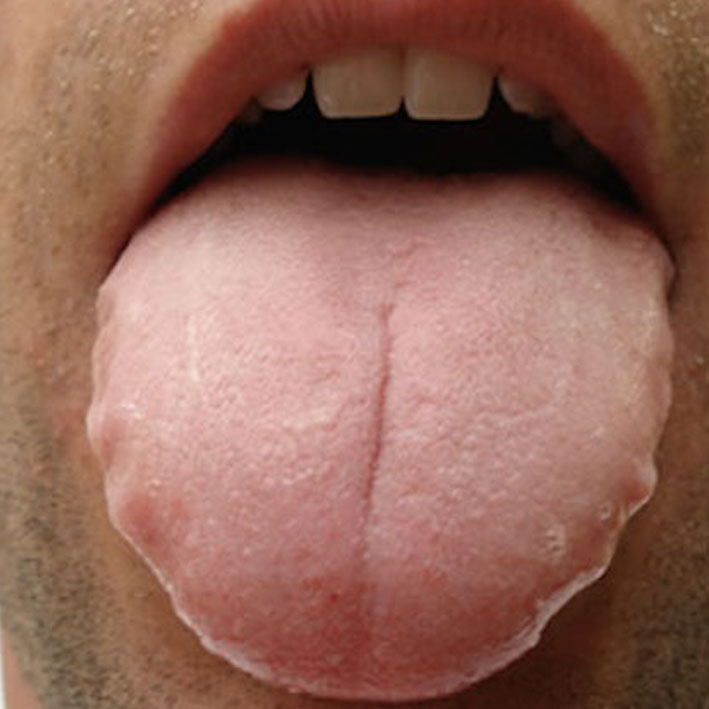
4. Ridges or Indentations
No tongue is perfectly smooth, and so in some cases ridges or indentations in your tongue are simply down to genetics. They may also be a sign that you have a fissured tongue, a long crack down the middle of the tongue that again, most people are just born with. It is something you should be aware of though, as it's easy for food to get stuck in that crack and cause bad breath and help the growth of potentially damaging to your teeth bacteria. Brushing your tongue will help, as will a chat with your dentist about the issue.
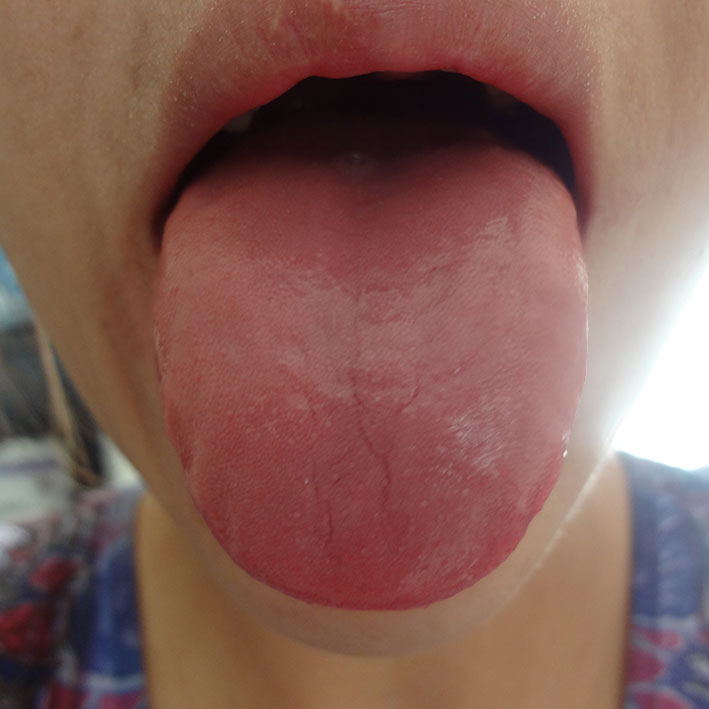
5. Swelling
A swollen tongue can be very temporary, a reaction to a cup of coffee that was a bit too hot, or accidentally biting your tongue instead of your food. This swelling is mild and will go away on its own, although sucking on an ice cube can help speed things up.
Sudden, more serious swelling however can be a sign that you allergic to something you just ate or drank. This can impair your breathing, something that is obviously dangerous, so medical attention should be sought right away.
The Emergency Dentist Says:
Your tongue is often trying to tell you something, so take notice! The health of your tongue is also important to your overall oral health. The best you can do to for your tongue is eat well and brush it daily!
NEED ADVICE OR EMERGENCY DENTAL CARE IN SYDNEY CBD?
Contact our friendly team

The Real Truth About Kid's Teeth vs Sugary Drinks
Is giving in and allowing your kid the occasional Pepsi really so bad? The real truth behind the kids and sugary drinks issue is a lot more complicated than that though...
From A Dentist's Perspective
Sugary drinks have, as we're sure you've noticed, been getting a particularly bad rap recently. Not just the obvious ones like cola though, but also soft drinks with high sugar content that is less apparent, like some of those flavoured 'energy' drinks and water beverages that are trendy right now.
The reasons that sugary drinks are under fire are many; they are, in many cases, packed with calories that can contribute to the increasing obesity problem in adults and kids that is plaguing Australia (and the rest of the world), that obesity can lead to type II diabetes in the same populations, and, of most concern to us, tooth decay.
But is giving in and allowing your kid the occasional Pepsi really so bad? Especially if you have them drink the diet stuff? After all, they're only kids and they can always brush their teeth, right? The real truth behind the kids and sugary drinks issue is a lot more complicated than that though.
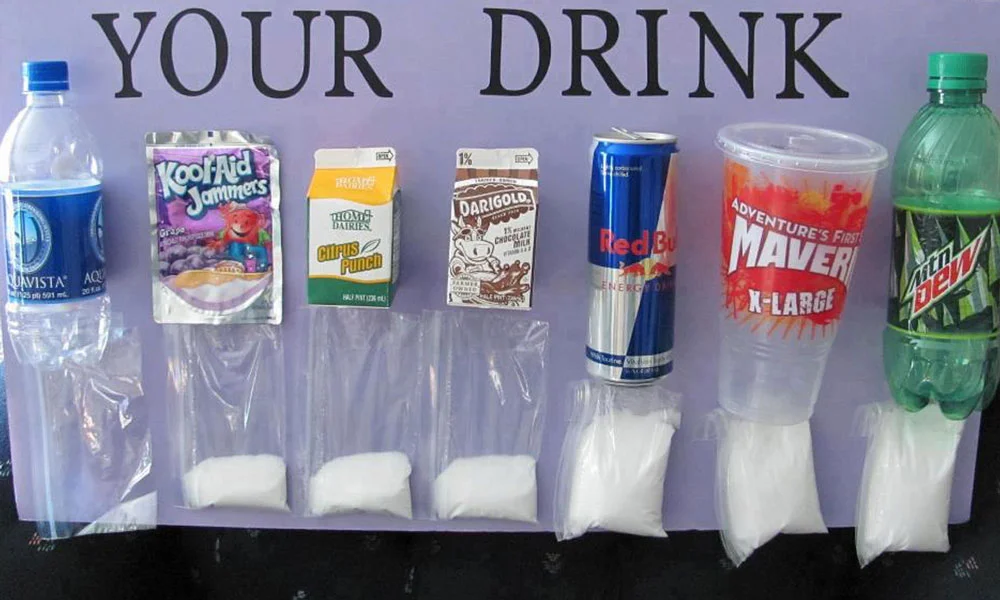
'Rethink Your Drink'. The much discussed and shared visual of how much sugary really is in our drinks.
What Soft Drinks are 'Bad Soft Drinks' Anyway?
OK. We can establish that a can of 'full strength' Coke a day - with its 161 calories and 10 teaspoons of sugar per 375mL can - is not a good habit to get into, even for a lively child who'll burn off those extra few calories by running around being a kid with ease. But colas and other similar fizzy drinks are not the only baddies here.
Take diet versions of colas. No, there are no calories in them, and no 'real' sugar, but they are highly acidic, even more so than their regular counterparts - real Coke has a pH of 2.53 versus diet's 2.45 - which is a terrible thing for the teeth. And those high levels of acid are even found in some of the fruit juices we often consider to be the best soft drinks to give to our kids.
This acid can cause a specific type of tooth decay; acid erosion. Dr Amrin from the Emergency Dentist Sydney says, "We have noted an increase over the past 16 months in the number of children we see who have the beginnings of tooth erosion. Unfortunately this type of erosion is unnatural and irreversible as it is not a result of bacteria and effects the structure of the tooth."
And the leading cause of it? Sugary and/or high acid content soft drinks. You see, if you were to encourage your child to only eat their three meals a day, with no sugary snacks or drinks in between, decay and erosion causing bacteria only have three opportunities to damage teeth. However, sugary drinks and snacks extend the time the bacteria are producing acid, and even the natural damage fighting power of saliva is diminished.
During the hours between tooth brushings, damage will be done. Dr Amrin advises, "Even children with the most health conscious and diligent parents will encounter foods and drinks with extremely high sugar content. Best practice is to brush immediately after consumption."
The Worst of a Bad Lot
Wondering which products should be put onto the 'worst' list? According to a report from the Australian Dental Association, which involved the results of testing on 35 different popular soft drink options found in most supermarkets, the following were the biggest risks to the health of teeth
Pepsi
Coca Cola
Diet Coke
Pepsi Max
V Energy Drink
Fruit cordials like Golden Circle Pineapple Crush
Fruit drinks like Pop Tops Apple Blackcurrant Drink
Heavy fruit juices, as the acid they contain is particularly resistant to the effects of saliva.
Of course, any parent will rightly ask what they are supposed to offer to their picky child in place of these admittedly pretty yummy drinks. If the warnings aren't enough just remember, "loss of tooth enamel in children can be extremely painful," says Dr Amrin.
"Treatment for tooth decay in children is often traumatic. Multiple courses of antibiotics are often required and teeth may need to be pulled," he says. "For a child having teeth taken out, it's a very scary experience for them and it can often result in the need for a general anaesthetic. Not to mention the knock-on effects socially and long-term effects of growth."
Milk is a good choice, as is water that has been 'infused' with real fruit, by steeping pieces of fresh fruit in a pitcher full of water.
The Emergency Dentist Says:
Most of the damage to you teeth caused by sugary drinks is done in the first 40 seconds. Even with twice a day brushing sugary drinks can do serious harm to children’s' teeth, so they really are better off without them, and so are their teeth.

5 Effective Ways to Overhaul Your Oral Hygiene Routine
It's important that your oral health routine focus on more than just the colour of your teeth...
Today
While most of us aspire to a celebrity-worthy pearly white smile, and will often spend a small fortune on whitening toothpastes, kits and treatments to achieve one, we can tend to overlook other important aspects of oral care and that's a big mistake. After all, what's the point in having pearly white gnashers if you also have rather rancid breath, inflamed gums, and or the beginnings of cavities lurking.
It's important that your oral health routine focus on more than just the colour of your teeth. Here are five very easy to implement changes you can make to your oral hygiene routine today to get a healthier smile, and not just a whiter one.
1. Practice Some Tongue Care
Your tongue is the single largest source of bacteria in your mouth, meaning it's a big contributor to bad breath and other oral nasties. And yet when most people clean their teeth they fail to clean their tongue, and it's very important to do so.
Yes, we know it sounds a bit weird but it's not a hard habit to get into. Some toothbrushes do come with a built-in tongue cleaner on the back, or you can buy an inexpensive tongue scraper. Either tool will strip your tongue of the excess gunk that builds up, but for an even better result follow up a scraping with a real brush of the tongue with toothbrush and toothpaste as well.
2. Forget the Hipster Toothpastes
Chances are your Mum and Dad have had you brushing with a fluoride toothpaste since you were a kid. But perhaps recently you've been noticing a number of new 'all-natural' toothpastes have been appearing that claim to do a better job at maintaining oral health than their traditional fluoride enhanced counterparts.
The simple fact is that they don't though. And while they may have cool packaging and funky, fun sounding flavours, we really do recommend sticking with the fluoride paste you grew up with. Fluoride guards your teeth from plaque and decay by strengthening the enamel and it's still a must in any effective oral hygiene routine.
3. Keep on Flossing
There's been a big debate of late over whether or not people really need to floss. It was opened up after a report was published that claimed research had shown that flossing had been overrated and that brushing might be enough.
Almost every dentist disagrees, but you don't even have to take their word for it. Even the fanciest, priciest toothbrush can't get all those little bits of food that get stuck between your teeth out, and if they stay where they are they'll begin to rot, leading to bad breath at best and cavities and infection at worst. Since flossing is a very effective way to get rid of between the teeth gunk on a daily basis to keep on using it really is just common sense.
4. Stay Hydrated
Bad breath - especially that rather potent 'morning breath' most of us are familiar with is, in large part, due to dehydration. When you sleep the production of cleansing saliva is decreased, as is the case when you are super-thirsty.
5. Don't Ditch Your Dental Appointments

Yes, we know, you're busy. And you really don't like going to the dentist. And because you do brush and floss every day like a good boy or girl you think your teeth are in pretty good shape, so it's probably OK to skip a check up this time around. But, no, it's really not.
In addition to that great deep cleaning you'll get, your dentist, as an expert in gum health as well, will be able to spot the signs of periodontal disease that it's harder for you to notice (until pain, swelling and/or infection sets in) and address it before it can cause any lasting damage. And although it sounds a bit morbid to mention it often the only way an oral cancer is diagnosed is after its symptoms are spotted by an eagle-eyed dentist.
The Emergency Dentist Says:
Good oral hygiene is about more than the shade of pearly white you can achieve with your 'brightening' toothpaste. An attractive mouth is one that is healthy as well as good looking, something that the tips we've shared here, really will help you achieve.

The Great Flossgate Debate
We take a look at the ongoing debate over flossing and if you should still be flossing away each day...
What's The Real Deal?
Dental floss. Chances are that you have some in your bathroom right now. And we wouldn't be too surprised if you've been wondering recently if it still actually belongs there. Over the last year or so dental floss - and the act of flossing at all - has become the subject of some rather heated debate worldwide, after an Associated Press 'investigation' published in 2016 suggested that the oral health benefits of flossing have been overblown. As you might expect, dentists across the globe for the most part disagreed. But what's the real story?
A Brief History of Dental Floss
If we are going to talk about dental floss and its real role in oral health it helps to know a bit about how it ever came to be in the first place. Although there is some evidence that even cave dwellers used rudimentary toothpicks, the concept of dental floss did not appear until the early 19th century courtesy of a scholarly dentist practicing in New Orleans in the US.
Levi Spear Parmly was not exactly your average dentist. He was a rather serious man who loved research as much as he did dentistry, becoming a noted author in the field at a relatively young age. It was in 1819 that he first wrote about his practice of making use of waxed silk threads to clean between his patient's teeth. He laid out his rationale for doing so by stating it was "to dislodge that irritating matter which no brush can remove and which is the real source of disease".
Dental floss was not made commercially available however until long after Parmly's death. In 1882 the Codman and Shurtleft company began producing unwaxed silk floss for general sale, but the concept didn't begin to really catch on until the Johnson & Johnson Corporation received a patent for dental floss made from the same silk thread that surgeons used for stitches.
Finally, dental floss as we know it came about during World War II, when a New Orleans doctor, Charles C. Bass, a man who had a great interest in how oral health affected general health, revisited Parmly's original concept of waxing the flossing thread, but he used nylon instead of silk, partially because it was cheaper and easier to work with than silk and partially because of its superior abrasion resistance.
Ask any dental student and they'll tell you that both Parmly and Bass are considered true pioneers in the field of preventative dentistry and that their work still influences the profession today. So, did two brilliant minds, working over half a decade apart, really get it all wrong?

Vintage advertising from Lister, above left and Crest, above right.
Dental Floss and THAT Report
Coming back to the 'Flossgate' debate (yes, people have called it that) of today, most dental educators dentists had similar responses to the AP report. The report, they said, missed the point completely when it comes the benefits of flossing for oral health.
Per many of them the research used as the basis for the piece did indeed show that yes, when flossing is performed incorrectly, there are no health benefits. But why would that come as a surprise to anybody they countered. In addition, the very same studies showed numerous benefits could be associated with flossing with proper technique. So, essentially, the "big" news was no news, simply a reiteration of what dentists had been saying all along, floss regularly and floss the RIGHT WAY and your oral health will be improved.
Let us not forget people who suffer from gum disease and other health problems resulting from less then sufficient oral hygiene habits. Patients with poor oral hygiene habits, poor diet and/or poor lifestyle habits may have early signs of oral disease or infection. Inheritance plays a massive role in periodontitis as well with genetics being a contributing factor in the onset of the disease.
Incorrect brushing techniques, regular smoking or a diet high in sugar may result in gum disease, which can be irreversible once the disease advances to periodontal disease. This may be even moreso for patients gentically predisposed to gum disease. For patients engaging in habits that lead to gum disease, they are often unaware of the physical signs and symptoms. For these patients regular flossing is imperative.
The Emergency Dentist Says:

Not everyone bought the arguments against the report and for some, the debate over flossing is still going on. However we side with majority of our peers and recommend regular flossing. Think you might need some help with your flossing technique? Make an appointment for a checkup (you know it's time anyway) and we'll be happy to give you a lesson.

Dentists Surprising Role in Treating Eating Disorders
Here are the facts...
Here Are The Facts
When most of us think about eating we associate it primarily with sustenance and pleasure. However, for a growing number of Australians, many of whom are young, the act of eating anything is a real trial, as they are one the increasing number of people suffering from an eating disorder. And, believe it or not, it is often their dentist who notices the problem first.
Eating Disorder Basic Facts
According to The National Eating Disorders Collaboration, Australia is in this case right in line with the rest of the developed world, in that that the incidence of eating disorders and body image issues has increased significantly over the last 30 years.
The NEDC estimates that approximately 9% of the Australian population currently suffers from an eating disorder and that figure is increasing, with eating disorders now being the 12th leading cause of mental health hospitalisation in Australia. And perhaps most worrying of all is the fact that up to 1 in 5 of the afflicted will die prematurely.
As we mentioned before, the problem is especially worrying among younger people. In a survey conducted by the NEDC 84.3% of the 15-25 year olds interviewed said that they personally knew of a peer that they believed suffered from an eating disorder and 62% said they knew of five or more.
How Dentists are Helping Those at Risk
No matter what kind of eating disorder a person is suffering from it is the norm that they are very secretive about both the problem and the behaviours it causes. It is very rare for them to voluntarily seek help alone, it usually takes the input of a concerned third party to persuade them to even begin to begin addressing their problem.
For the family GP, an eating disorder can be hard to spot, especially in a teenager or young twenty-something during a routine exam. The patient is not going to bring the issue up and fluctuations in weight are often considered fairly normal at this age. And as many young people are considered generally healthy they may not even visit the doctor anyway.
They probably do still visit the dentist though, at least once every six months, which is why it is becoming common that it is their dentist who notices a problem first.
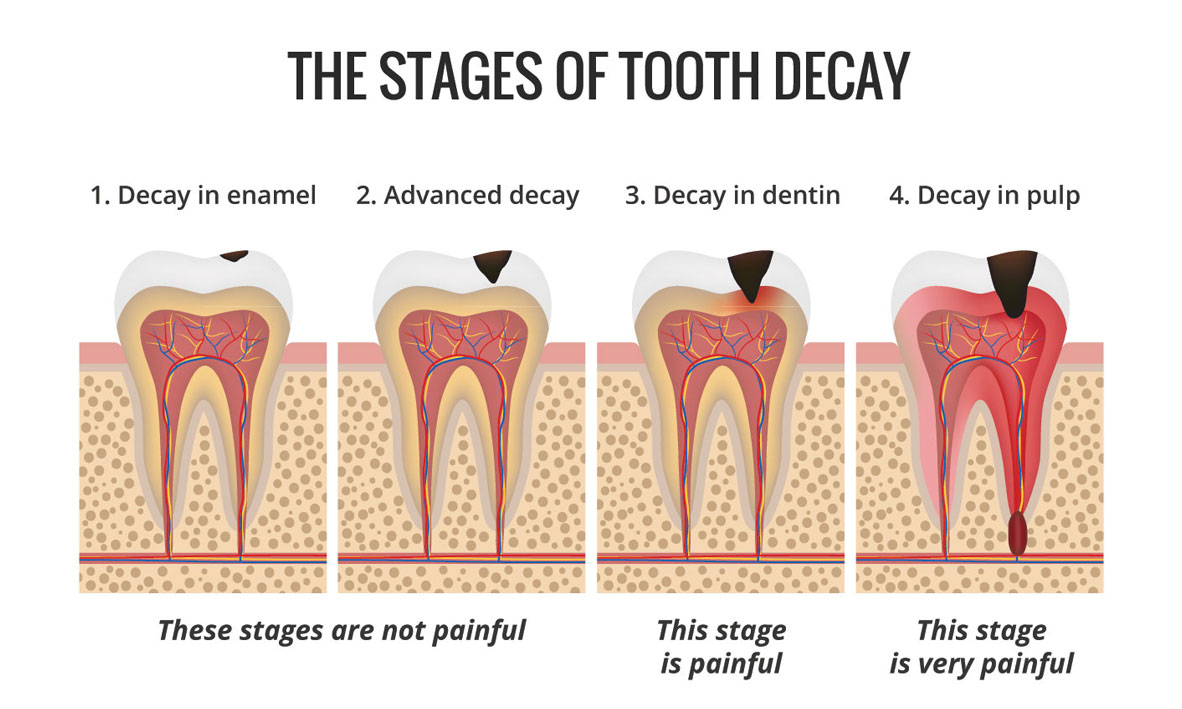
The Toll of Eating Disorders on Oral Health
Eating disorders can - and do - take a real toll on the body, but much of this is not easily visible. Not everyone suffering is very obviously painfully thin and will often hide it even if they are with the way they dress. One place where symptoms and signs are more obvious however is the mouth, as eating disorders affect oral health in several significant ways.
One big reason for this is the vomiting that is characteristic of eating disorders. Stomach acid is potent stuff, so the teeth of a person vomits on a very regular basis are often discoloured, or even almost translucent and may appear to be 'wearing away'. They may suffer from very bad breath, bleeding gums, tooth sensitivity, continually chapped lips and more, all of which a routine dental exam will reveal.
If a dentist does suspect an eating disorder problem they are in a great position to gently suggest that the patient begin seeking the right help. They can also help make sure that the damage to the teeth is minimised. As eating disorders are closely tied to image and self-esteem issues it can be very comforting for a recovering person to realise that they may not have damaged their teeth permanently and that like the rest of the body, they can be 'nursed' back to health with the right treatments.
The Emergency Dentist Says:
Eating disorders are a serious issue but something that can be very hard to deal with. Parents who suspect their child may have a problem should consider scheduling them a dentist's appointment, as they should be able to spot the warning signs and help get the patient onto the treatment path they need to be on.
Patient Care First

Keep Up-To-Date with All Things Oral & General Health
RECENT ARTICLES







For 15 years, we've had one mission - when Sydney has a dental emergency, Emergency Dentist Sydney is there
We're proud to celebrate 15 years of providing emergency dental services to Sydney CBD and surrounding suburbs.