
How Nail Biting Will Hurt Your Teeth
Why You Should Stop for the Sake of Your Oral Health
Why You Should Stop for the Sake of Your Oral Health
Nail biting is a very common habit that can start in childhood and continue throughout your life.
If you have this habit, you probably worry about the damage that it does to your nails and how it affects the appearance of your hands. But nail biting can do more than make it hard to wear nail polish. It can also impact your oral health and make you more likely to need a trip to an after hours dentist to repair the damage.
Why Bite Your Nails?
There is no clear cause of nail biting, but most of the time it’s associated with stress. This is a habit that often starts in childhood as a natural progression from finger or thumb sucking. Chewing your nails can help relieve tension, anxiety, stress or boredom. So when you find yourself in a situation that prompts these reactions, you’ll probably find yourself biting your nails. Unfortunately, this can be a difficult habit to break, even if you know that you’re damaging your oral health every time you bite.
How Nail Biting Affects Your Oral Health
Biting your nails can seriously affect the health of your gums and your teeth in a number of ways. Here are some of the problems that you might encounter if you bite your nails:
The grinding action can wear away the enamel on your teeth and cause cracked or chipped teeth.
Your nails get harder when you constantly bite them, which means that chewing them is even more difficult and will cause more damage the longer you have the habit.
Biting your nails puts pressure on your teeth, which can cause them to shift and leave gaps in your smile.
Biting your nails can weaken the roots of your teeth and cause your jaw bone to reabsorb them, which means that the affected tooth or teeth will fall out.
There is a lot of bacteria under your nails and every time you bite them you’re transferring it to your mouth, which can lead to gum disease.
Nail biting can do damage to your temporomandibular joint or TMJ, which can result in jaw pain or chewing difficulties.
If you chew your nails you’re more likely to develop Bruxism, which is a chronic teeth grinding habit that causes oral health problems as well as headaches and muscle pain.
How to Break the Habit
Breaking any habit is difficult and nail biting is no different. However, it’s also essential to break this habit if you want to protect and maintain your oral health. If you’re ready to get rid of this habit, here are some strategies that will help:
Find something else to do with your hands when you’re nervous, such as playing with a stress ball.
Keep your nails cut short and neat or get a manicure so they look too nice to ruin.
Get bad tasting nail polish from the chemist and put it on your nails.
Identify activities or experiences that set off the nail biting and plan to do something else instead.
Ask the people around you to stop you every time you start to bite your nails.
All of these strategies will help you find a better way to deal with negative emotions. And they will also help you avoid a late night visit to an after hours dentist with a serious dental problem.
Emergency Dentist Sydney Says
If you have a dental emergency, contact our Emergency Dentist in Sydney. Our caring and expert staff are available 24 hours a day to help you with all your emergency dental needs.
Need Advice Or Emergency Dental Care In Sydney CBD?
Contact our friendly team


Do I Have a True Dental Emergency?
When to Call the Dentist
When to Call the Dentist
If you have a problem with your teeth on the weekend or late at night, you might worry about contacting an after hours dentist. After all, when you’re in pain, it can be hard to tell if the problem is an emergency, and what kind of medical professional you should contact. To help with that, here are some of the most common dental emergencies and what you should do about them.
What is a Dental Emergency?
This may seem obvious. For most people, a dental emergency is when your tooth really hurts and you want it fixed. However, there are a few different types of emergencies that after hours dentists see. Here are some common dental emergencies.
Any problem that threatens the health and placement of a tooth. This broken, lose and cracked teeth.
Severe pain.
Bleeding from the mouth tissues that won’t stop.
A severe infection that suddenly flares up. This can be life threatening, so it’s important that you see an after hours dentist as soon as possible if this occurs.
What to do in a Dental Emergency
If you experience a dental emergency, then you need to get help as soon as possible if you want to solve the problem. This will also help you to preserve the health of your mouth and teeth over the long term. With that in mind, here’s what to do for some specific dental situations:

A toothache
If you experience severe pain after hours, you can take Nurofen to alleviate it until you can get to an after hours dentist. Don’t try to brush the area, but you can rinse with warm water to gently clean it.
Bleeding
If the bleeding isn’t too bad, rinse your mouth with warm water and apply pressure to the area to encourage it to stop. If the bleeding is severe, seek medical help immediately.

Dislodged teeth
If you have a tooth or teeth knocked out because of some type of injury, retrieve the tooth and rinse with water to clean it. Reposition gently in the tooth socket without pressing it down. If you can’t put it back in your mouth, put the tooth in milk to keep it moist. And contact an after hours dentist immediately so the tooth can be put back where it belongs.

Cracked teeth.
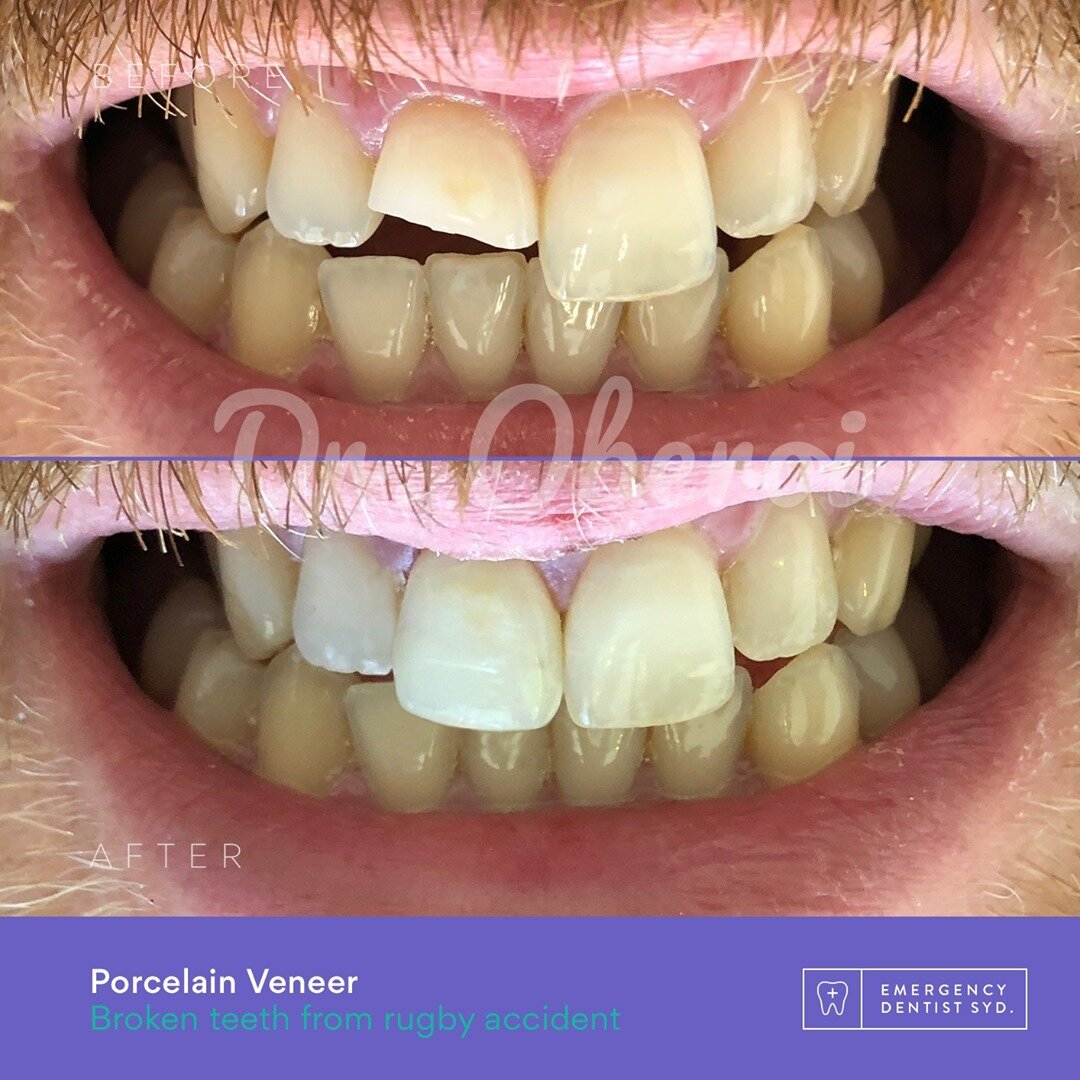
It’s easier than you think to crack a tooth or teeth. If you experience this, rinse your mouth with warm water, apply a cold compress to the face and see an after hours dentist as soon as possible. Your dentist will be able to repair the tooth using a porcelain crown or veneer, dental bonding, or a dental bridge.

Something stuck in your tooth.
Unless it’s extremely painful or bleeding, this usually isn’t a dental emergency. Try to gently remove the obstruction with your fingers or tweezers. You can also try flossing around the object. If this doesn’t remove the problem, make an appointment with your dentist.

Severed gum or lips.
This is considered a medical emergency, not a dental emergency. So apply pressure to slow the bleeding and go to your doctor or to the emergency room if it’s after hours.
Emergency Dentist Sydney Says:
If you have a dental emergency, contact our Emergency Dentist in Sydney. Our caring and expert staff are available 24 hours a day to help you with all your emergency dental needs.

Our Smile Makeovers
Giving You the Perfect Smile
Giving You the Perfect Smile
At Emergency Dentist Sydney, we don’t only treat dental emergencies, but we also do general and cosmetic dentistry. We are interested in the aesthetics of your face and can provide advice and treatments to give you the smile of your dreams using cosmetic dentistry. If you have a serious dental problem and you think your teeth are beyond repair, don’t worry at all and come visit us for a consultation. Your teeth can not only be fixed but restored to their former glory in terms of aesthetics as well. Here’s a look at what cosmetic dentistry can do for the following issues:
Cracked/Broken Teeth
It’s easier than you might think to crack, chip or break a tooth. Your broken tooth may have survived the trauma, but it leaves you with a damaged tooth that not only looks pretty bad but is also now prone to decay, infection and can further collapse if not treated promptly. There are quite a few treatment options for cracked or broken teeth including bonding, fillings, crowns, and veneers.
Missing Teeth
Losing a tooth or teeth can be really upsetting and stressful. Whether you lost your teeth in an accident or had them extracted by the dentist, there are many ways for replacement teeth. The treatment options vary according to the location and size of the missing tooth, but bridges, crowns and implants are all different ways to replace your missing tooth/teeth and restore that smile of yours. It can also improve your chewing, speaking and overall dental health.
Worn Teeth
We need to be careful of the foods and drinks we consume as they may contain harmful and corrosive acids that wear our enamel. Behavioural habits such as teeth grinding, biting fingernails or chewing on hard objects also wear our teeth down. There are many treatment options for worn teeth including veneers, crowns, bonding, and implants. We also have advice and ways we can fix those behavioural problems such as teeth grinding.
Crooked Teeth
Having crooked, spaced or crowded teeth is no fun especially because it makes it hard to brush, floss and keep your teeth clean. As you get older the long-term effects for these conditions can be very harmful for not only your oral health but your overall health. Orthodontics may be the best method to treat those crooked teeth. There is a variety of orthodontic treatments which your dentist can help you with.
Emergency Dentist Sydney Says:
If you have concerns about your smile and want to makeover your smile, don’t hesitate to call us. Our expert team will help you design a treatment plan that gives you a smile that you’re proud to show off.

Dental Implants
A Basic Guide to Replacing Your Tooth
A Basic Guide to Replacing Your Tooth
Dental implants are an effective treatment for cracked or broken teeth. It is a great option for people who have damaged a tooth due to sudden accidents or who have lost teeth due to decay and disease. Here’s everything you need to know if you are in need of a replacement tooth or teeth.
What are Dental Implants?

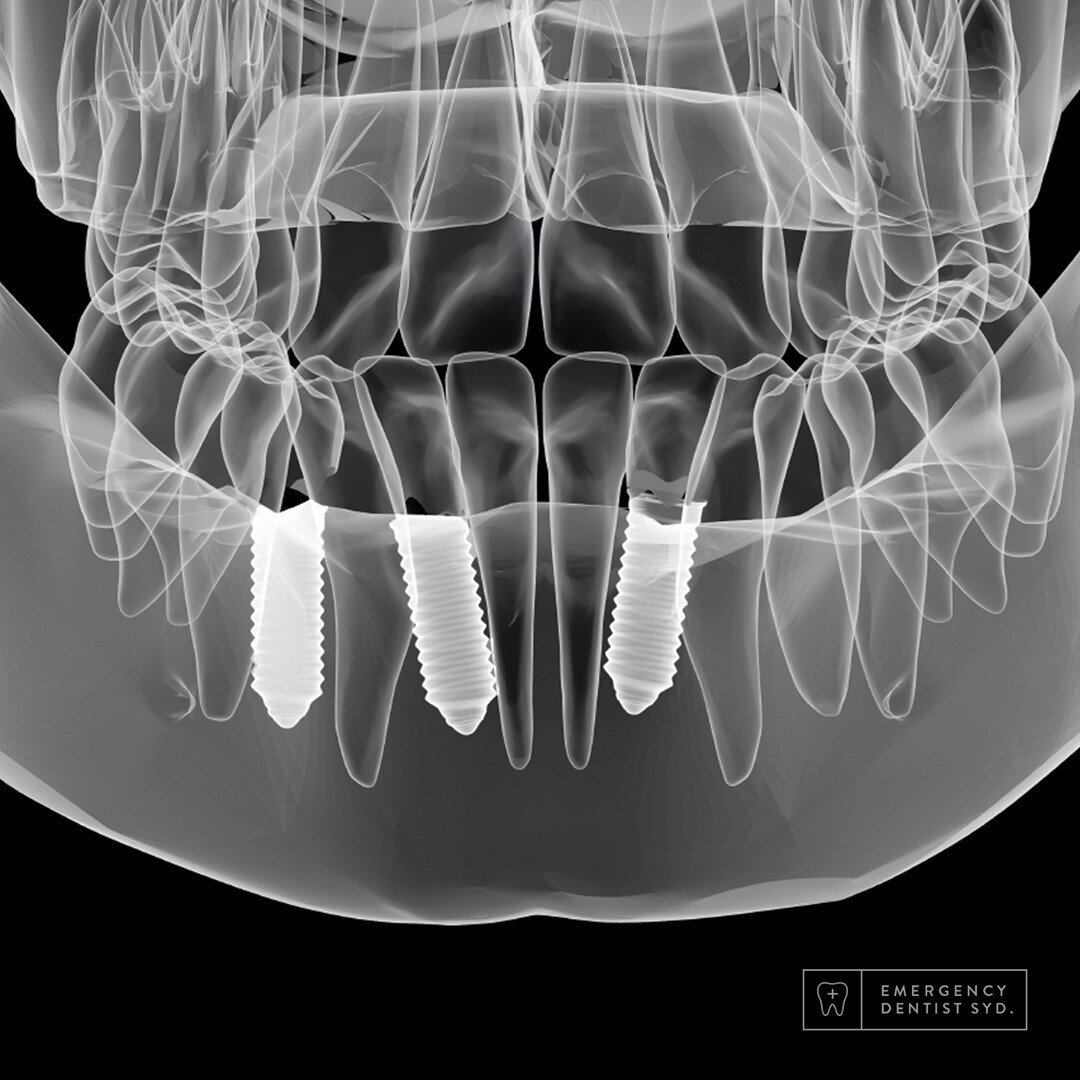
Dental implants are a permanent solution for badly damaged teeth. If you decide to get them or if your dentist suggests this treatment, the first step is to remove your broken teeth roots and replace them with metal posts. They are artificial roots made with strong and long-lasting materials. This procedure is the same whether you’re getting one tooth replaced or all of them. These metal posts can be cylindrical or can be a screw. Once your mouth has healed around these new structures, your dentist can attach brand new teeth to the metal foundation. Dental implants require several treatments, but once they’re in, they feel and look just like normal teeth.
What are the Advantages of Dental Implants?
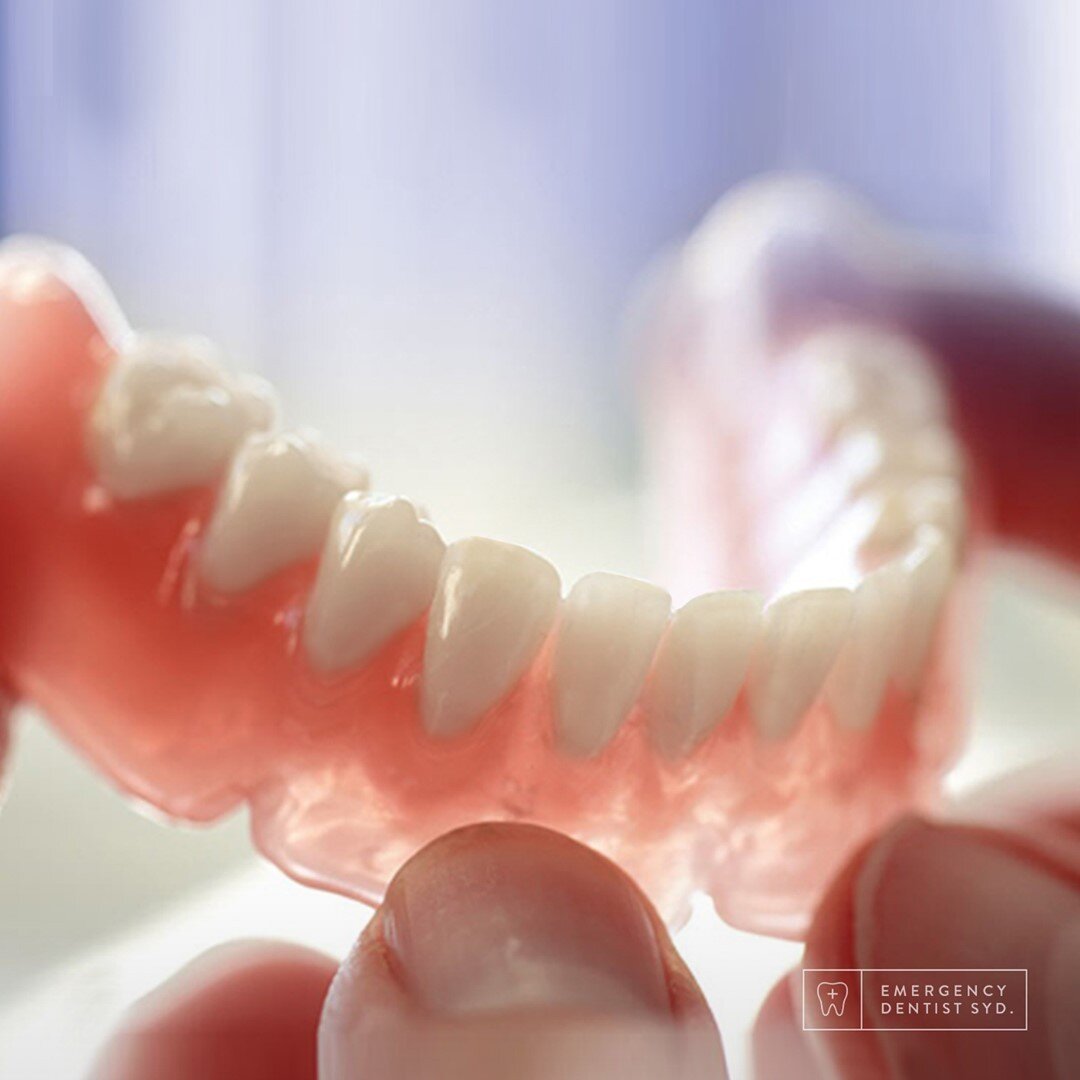
The main advantage of dental implants is that it creates the most natural as well as durable solution to your missing tooth. They are designed to look like your original teeth. Dental implants also replace loose dentures and partial plates that look fake, fall out, and can be painful to wear. They’re extremely sturdy, and although they can decay if you don’t take care of them, they’re stronger than natural teeth. Getting dental implants will not only improve the look and feel of your mouth, it will also improve your ability to eat because when you have broken teeth, it is difficult to eat and your diet becomes restricted. The end result of dental implant procedures will make it feel like your natural teeth.
The Importance of Avoiding Bone Loss
When you have missing teeth, the bone around the removed tooth root gets partially absorbed into your body. This causes the jaw bone to become thin and weak, causing various problems for your oral health and for your appearance. If you have bone loss, you may need to build up the bone again with a bone grafting procedure and then be able to have dental implants. Your teeth may also become crooked and uneven, because the bone beneath them is uneven. And in the worst cases, the lower third of the face can actually collapse inwards because there isn’t enough bone to support it anymore.
Dental implants can help you avoid this problem as they will protect and strengthen your jaw bone. The screw that is placed into the bone protects the bone from being absorbed by the body. The screw also integrates into the bone, strengthening it and protecting it from future damage.
Single Tooth Implant

A single tooth implant replaces a single missing tooth as well as its root. This is a good procedure to have if you’re missing a single tooth and want to avoid having a gap in your smile, or repair your bite. It has several advantages over other replacement options such as a bridge, which damages the health of your surrounding teeth because they need to be ground down to fit with the new dental work.
Multiple Teeth Implants

Multiple teeth implants are for replacing several missing teeth and their roots. Other replacement options require support from adjacent teeth, which can cause wear and damage and even result in the support teeth themselves becoming loose. But multiple teeth implants don’t require any support, they look and function just like real teeth.
Full Mouth Implants

Full mouth implants are best if you need all of your teeth replaced because of decay or damage. With this procedure, all of your remaining teeth and their roots are removed before the screws are placed into your jaw. While they heal, temporary teeth can be worn. Once your mouth has healed, new teeth are fixed into place using small metal bars. Once the teeth are in place, you can’t see any of the metal work, and you can show off your great new smile.
Emergency Dentist Sydney Says:
If your teeth are cracked or broken, call us immediately and book an appointment. We are here to help you find the best treatment for your damaged teeth.

What Does a Dental Emergency Look Like?
Tooth Breaks
Tooth Breaks
Many times you find out while you’re brushing your teeth or while trying to bite an hard object that your tooth is broken. This, most times causes you to panic and sometimes shy to open your mouth. The panic is understandable but not justifiable because there is always a solution as soon as you call the right Dentist to handle it.
There are different types of breaks to the teeth. It could break from the gum, half the tooth, varying forms of fracture, teeth becoming loose and others too. All this have a solution, so there is no particular need to panic.
Why People Get Broken Teeth
People still get their teeth broken, even though, it has the covering of the hardest substance in the body. The reasons are not far-fetched:
Playing games without the proper mouth guard
Chewing of hard objects
Traumatic fall
Blow
Eating hard candies and acidic foods
Types of Tooth Breaks
There are different types of tooth breaks and most of them require emergency care. They are grouped into the following categories:
Minor Cracks: These are also known as “Craze lines”. They are cracks that only affect the outermost layer of the tooth called the enamel. This type of crack does not usually result in a panic because it doesn't cause pain initially. If left untreated though, it might get deeper, particularly if it's not carefully managed.
Cracked Tooth: This type of fracture involves the complete splitting or breakage of the tooth while the tooth is still in position. The tooth cracks from the enamel, through the dentine, even to the pulp cavity. This type of crack can be very painful because it involves the nerves and so it requires an emergency care.
Broken Cusps: This type of breakage only affects the chewing portion of the tooth and it does not usually break up to the pulp cavity. It can be painless but if not quickly attended to can extend to being abnormally painful.
Serious Breaks: This type usually exposes the nerve and sometimes get it damaged. This breakage usually comes with a large bout of pain and it should be treated as an emergency condition.
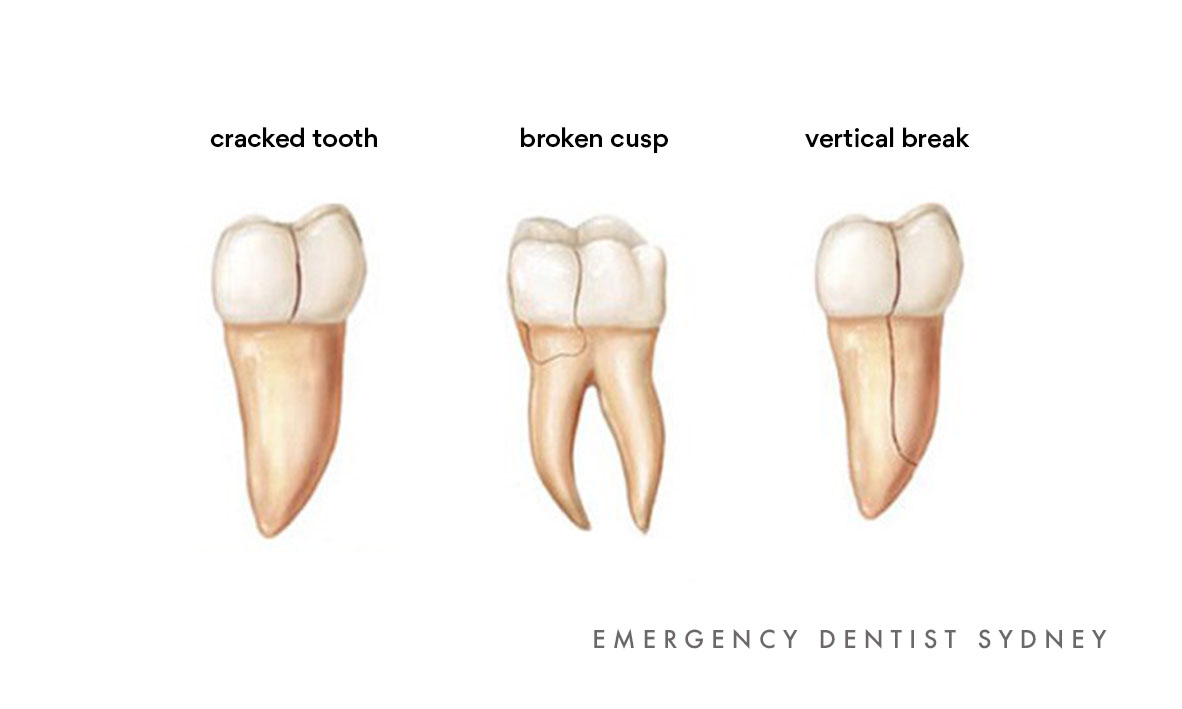
Vertical Breaks: This is also known as “Split Root”. It is the splitting of the tooth from the root to the enamel. This condition is also very painful and it is associated with inflammation of the gum and also nerve damage.
Decay-Induced Breaks: This condition usually occurs as a result of wearing the tooth by a cavity from inside out. This causes the tooth to break and it is very important to treat it as an emergency situation especially if the decay has extended to the bone.
Can Breaks Be Treated?
Yes, they certainly can, there are different methods of treating breaks depending on the level of severity and the kind of break it is. Some of the modes of treatment are:
Dental Bonding
Use of Veneers
Use of Crowns
Root canal treatment
Dental Implant
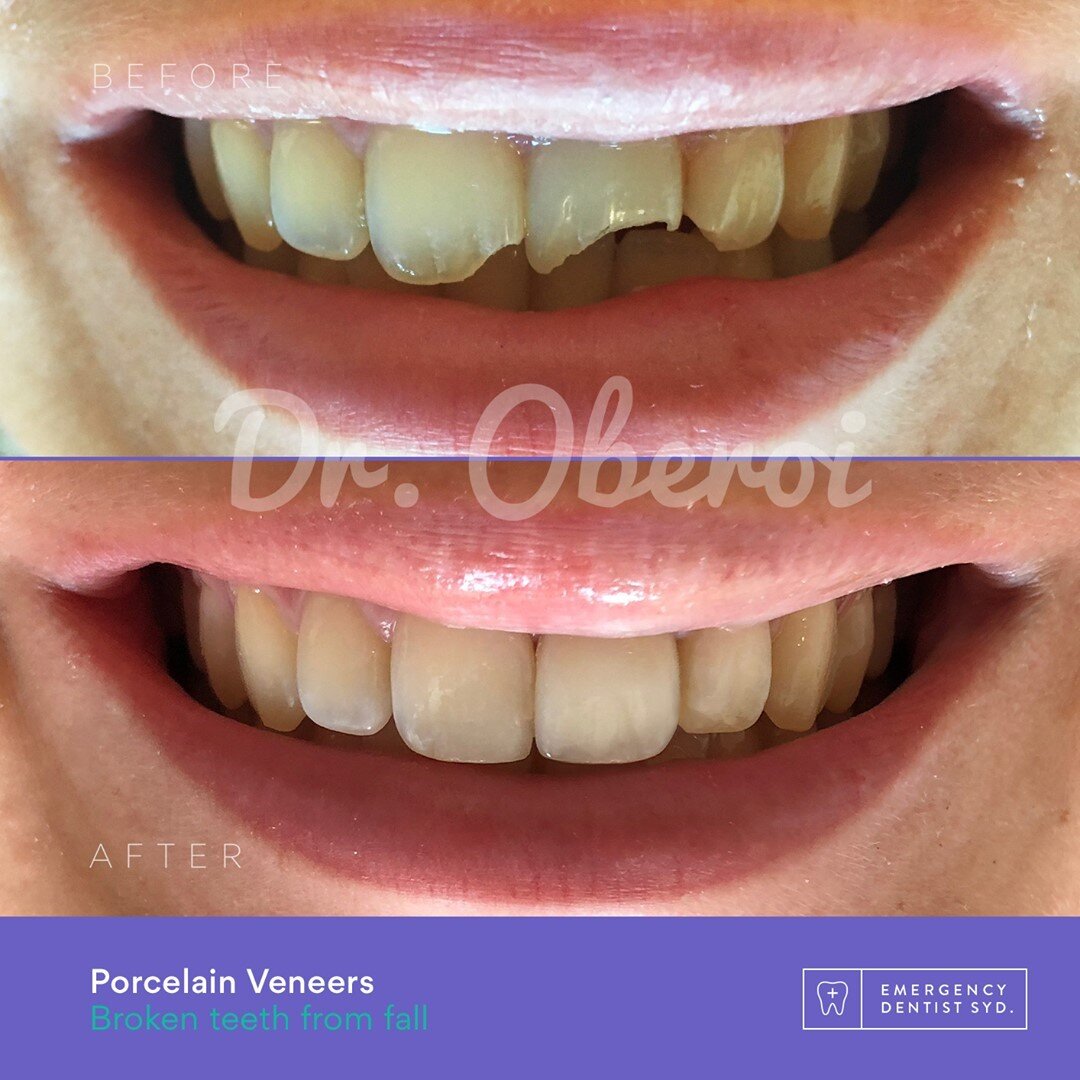
Below is an example of the use of porcelain veneers and bonding to reconstruct the broken teeth of a patient who fell down face first.
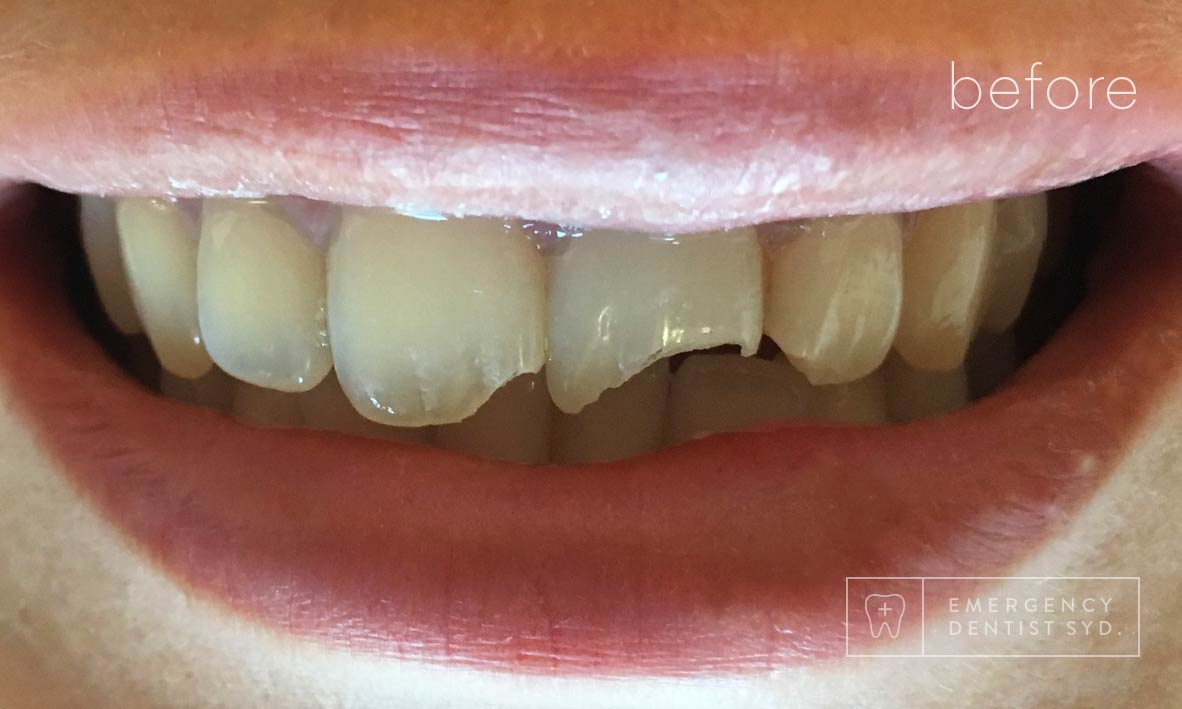
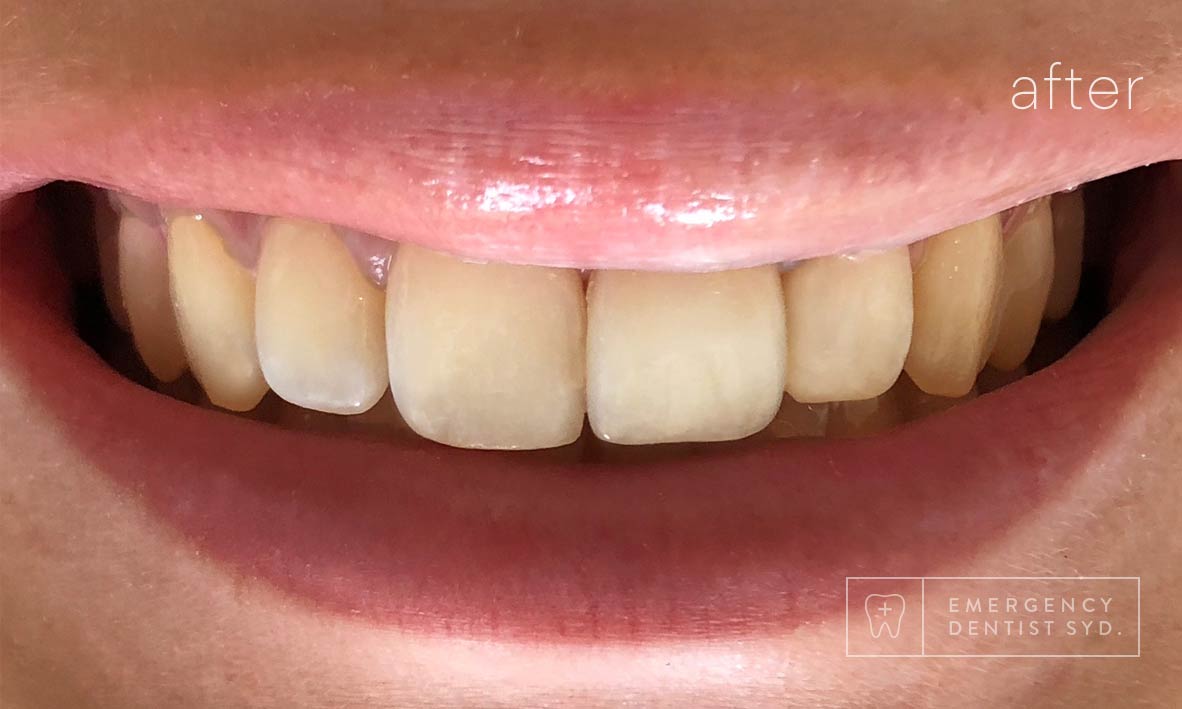
Check out our Smile Gallery for more examples of how we treat breaks.
Emergency Dentist Sydney Says:
In case you have any break of any kind, think no further, put a call through to Emergency Dentist Sydney and the solution will be right at your doorstep. The team is always at your call and beckon. They have recorded countless success stories of re-branded and remodeled broken teeth. Put a call through today and enjoy the best.

Cracked a Tooth?
What to Expect When You Visit the Dentist
What to Expect When You Visit the Dentist
Cracked teeth happen, but they can happen in a number of different ways. A trip, a fall, a blow to the mouth. Biting down on an apple that's just a bit too hard. Grinding your teeth at night and doing so just a little too hard. Or maybe you notice that after such an incident your tooth doesn't seem to be cracked or broken but it does seem to have been dislodged or pushed back and that too is rather disconcerting.
Sometimes there isn't actually much pain involved when a tooth gets cracked. Sometimes it's only painful when you eat or drink something very hot or very cold. Sometimes there is lots of pain. So, when should you actually see a dentist? Should you even bother?
The answer to the second question will always be a 'yes'. Whenever a tooth has been cracked, fractured or dislodged there is a very real danger of permanent damage. Should you see a dentist on an emergency basis? That may vary from case to case, but to be on the safe side it may be a good idea to call an emergency dentist for advice as to how best to proceed based upon what has happened to you.
How are Cracked Teeth Treated?
So, you are headed to the dentist to get your damaged tooth looked at. What can you expect once you get there? That again will depend very much upon what damage has actually been done to the tooth. In some cases, cracked teeth can cause nerve damage as well as damage to the outer surface of the tooth. In others, there may be a danger of infection to any exposed pulp. And in almost every case we see, a patient is concerned about what can be done to minimise the aesthetic damage to their smile.
Common treatments for cracked or broken teeth, however, include all of the following:
Porcelain Crowns or Veneers
Temporary braces or brackets
Teeth Whitening
Removal of the teeth or Extractions
Gum Treatment or Periodontal Treatment
As you can see, the possible treatments vary quite widely. Just which will be appropriate for you is a decision you and your dentist will make after you have undergone a thorough dental examination and, very importantly, x-rays, that will help determine just what damage has been done.
Whatever treatments you do eventually need for your cracked or dislodged tooth the one thing you should not do is ignore the problem or put off a trip to the dentist. Modern dental techniques can help repair all kinds of damage and save teeth that may otherwise have had to be pulled, but often time is of the essence.
Emergency Dentist Sydney Says:
Cracked or dislodged teeth can be effectively treated and repaired. Prompt treatment is the key, however, so the faster you see a dentist after cracking a tooth the better

Why You Should Never Just Assume You Need a Filling
Toothache
Toothache

Even if you are usually fairly fastidious about your oral healthcare routine, and you try your best to keep up with those recommended regular dental checkups there may very well come a time when you are blindsided by a sudden toothache. Not fun, and often not easy to soothe.
It's at this point that many people assume that, despite all of their best efforts, they have a cavity and it's time to steel their nerves to head into the dentist's office for a filling. However, although often that does turn out to be the case (and modern fillings are painless and very natural looking by the way, so it's not the end of the world) it is not always a cavity causing that pain, and other forces may be at work.
Here's a look at some of the other possibilities...
Sensitive Teeth
If the pain occurred - or occurs - after eating or drinking something very hot, or very cold, then it may be caused by a fairly simple case of sensitivity. While there are lots of toothpastes available that are designed to help ease this the best first course of action is a visit to the dentist. There he or she will be able to rule out things like excessively thinning tooth enamel or receding gums, conditions which have to be treated in a different way, and then recommend a suitable daily oral health care routine to follow in the future to minimise the problem.
Cracked or Chipped Tooth


Even if you can't quite see it a crack or chip in one of your tooth may be the cause of your discomfort, as even the smallest of these can expose a nerve, leading to a surprising amount pain. Your dentist has a number of methods at their disposal to repair these defects, but they can't do that until you go in and see them!
Gum Disease
Sometimes the pain you assume is radiating from a tooth gone bad is actually coming from the gum surrounding it instead. A gum infection, which can be caused by a number of different things, can be excruciatingly painful and does need to be treated as soon as possible. Often a course of dental laser treatment and cleaning, along with medication to clear up the current infection, is extremely effective and you can be out of pain very quickly.
TWhen You Need More than a Filling
Some tooth decay cannot be effectively treated with just a filling. If a tooth is significantly damaged by decay its root is often affected as well, and in this case slightly more treatment is called for, often in the form of a root canal, if the tooth is to be saved. This is a scary prospect for many, as they have heard nightmarish tales of pain and agony that lasts for days. This is not the case at all in the 21st century. A root canal can be performed quickly and efficiently using dental lasers and the pain and discomfort is minimal (really).
Emergency Dentist Sydney Says:
It's easy to try to treat a toothache at home because you don't have the time/patience/guts to head to the dentist's to get it properly diagnosed and treated. But even if a toothache seems fairly minor, or it comes and goes, tooth pain is always a sign of a problem of some kind, and the faster you get it treated the better off you - and your oral health in general - will be.

Mending A Broken Smile
Cosmetic Dentistry in the 21st Century...
Cosmetic Dentistry in the 21st Century
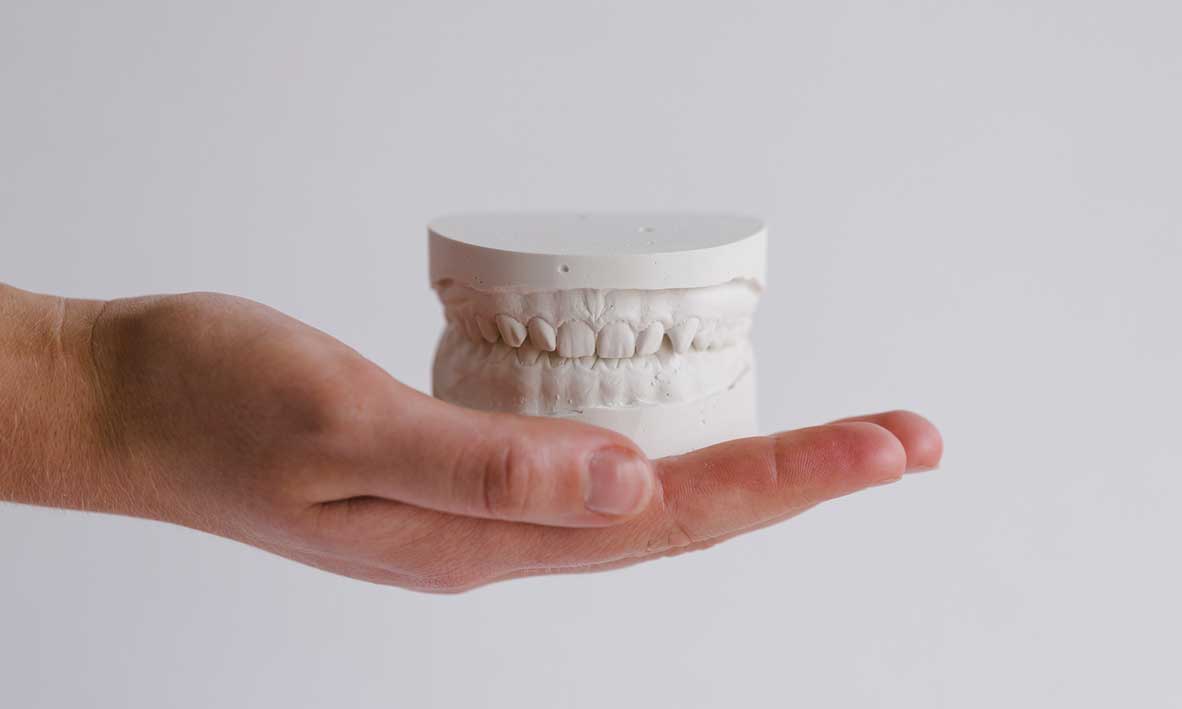
There is no doubt that the way your teeth look is important. And if they are damaged it's often hard to hide that fact, something that many find more than a little distressing.
The good news is that cosmetic dentistry has come a long way over the last few decades and it is continuing to get better and more innovative every day. This often means that even teeth that a person thought were beyond repair can not only be fixed but restored to their former glory in terms of aesthetics as well.
There are lots of ways teeth can be damaged and there are also a number of other cosmetic dental issues that simply develop to spoil your smile. Here's a look at some of the most common and how they are treated.
Missing Teeth
Losing a tooth as a kid is exciting. It means you are growing up AND you're likely to be waking up to a few extra dollars left in the night by the elusive tooth fairy (no, before you ask, even dentists have no idea what she wants all those teeth for) Losing a tooth as an adult is a very different matter. It's traumatic, shocking and ultimately very upsetting. How are you supposed to the face the world with that big embarrassing gap in what was once a nice smile?
Thanks to the skill of a good cosmetic dentist a missing tooth does not have to be the end of the world (or the end of that nice smile anyway) The treatments used vary according to the location and size of the missing tooth but bridges, crowns and implants are all ways that a 'gappy' smile can be restored to its former glory with relative ease.
Cracked/Broken Teeth
It's easier than you might think to crack, chip or break a tooth. They may seem tough but a particularly crispy apple, an argument with a pavement or a dozen other accidental scenarios are more than a match for tooth sometimes, and even though it survives the trauma it doesn't do so intact, leaving you with a damaged tooth that not only looks pretty bad but is also now prone to decay, infection and further collapse if not treated promptly.
Natural looking fillings, a treatment known as bonding, crowns and other cosmetic dental innovations can be used to correct all kinds of cracks, breaks and similar damage to teeth, but for them to be most effective you will need to see your dentist asap after the damage is first done.
Discoloured Teeth
Seems like everyone is in pursuit of that dazzling white smile these days. The chemist's is not really the best place to begin your quest though. Most over the counter whitening kits are both pretty ineffective and often contain harsh chemicals that can actually damage teeth. Your dentist, on the other hand, has the safe, effective and long lasting whitening solutions you are looking for, as well as a few tips for how changing the way you eat, drink and care for your teeth can keep them that way.
Emergency Dentist Sydney Says:
Cosmetic dentistry can work wonders, but don't overlook the fact that preventive care can also help keep teeth stronger, healthier and less prone to damage in the first place.
Patient Care First

Keep Up-To-Date with All Things Oral & General Health
RECENT ARTICLES






For 15 years, we've had one mission - when Sydney has a dental emergency, Emergency Dentist Sydney is there
We're proud to celebrate 15 years of providing emergency dental services to Sydney CBD and surrounding suburbs.