
Dental Flossing 101
Yes It's a Bother, But You Still Need to Do It...
Yes It's a Bother, But You Still Need to Do It
Flossing has, to be fair, been a topic of much discussion and even a little controversy over the last year or so, but, as we have explained before, it really is still a must. And, we'll admit, sometimes the most annoying and challenging part of a good oral health routine. It's a fiddly procedure that many of us get annoyed with and even get it more than a bit wrong sometimes. However, flossing the right way is not really as hard as it might seem, all you need to know are the basics of the best way to do it. Not really sure what those are? Read on to find out.
A Step by Step Guide to the Proper Way to Floss
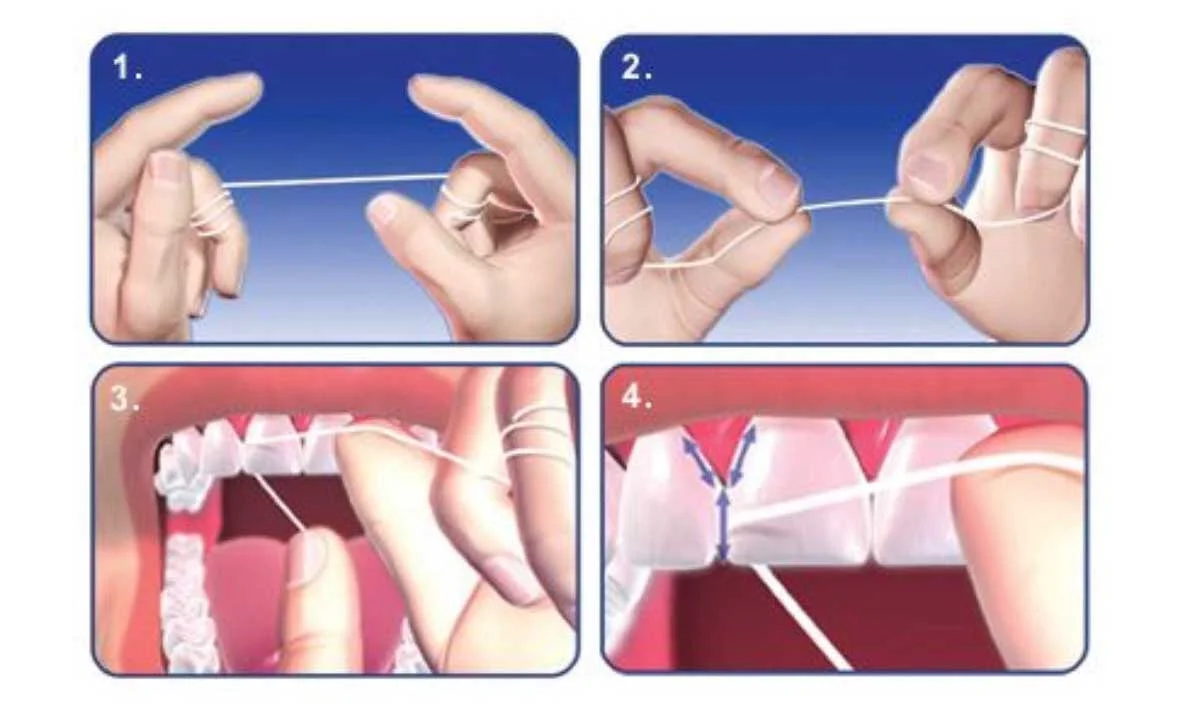
After brushing your teeth take around 18 inches of dental floss and wrap the majority of it around your middle finger.
Next, wrap the remaining loose floss around the opposite finger, leaving enough floss between them to rub between your teeth comfortably.
Holding it tight between thumbs and forefingers, insert the floss between your teeth using a careful seesaw motion. Don't do so too quickly as you may injure the sensitive gum tissue around your teeth if you do.
Once the dental floss is between your teeth curve it into a rough 'c' shape around one of them and rub up and down gently, ensuring that you keep the floss pressed against the tooth. Again, go slow to avoid injury.
Reverse the 'c' to clean the other side of the tooth, repeat the process and then gently remove the floss from your teeth.
Clean all of your teeth in this manner, using fresh floss as necessary. Pay special attention to your back teeth, as this is where a great many instances of gum disease and tooth decay begin, as the tartar and plaque buildup there is much harder to see with the naked eye.
As we mentioned, some people get pretty desperate when they are stuck with a toothache that just won't quit. Two aspirins didn't work, so they take four. Four don't work either so they take four more. That, however, is a terrible idea. The correct dosage of an anti-inflammatory OTC pain reliever might provide some relief - hopefully it does - but if it doesn't, taking so many more that you start to rattle a bit is not going to help.
It also won't help to try to booze away the pain. Well, it might for a little while, if you drink enough, but within a couple of hours you'll have a banging hangover AND a terrible toothache to contend with and, if you were also popping Advil, you could seriously have damaged your health.
Then there are those weird home remedies that Google's thrown up for you. A few temporary pain killing home remedies do work (more about that in a moment) but most are nonsense. Some suggest gobbling garlic over a visit to a dentist asap, but unless you are also dealing with a vampire infestation or something, that really won't help. And don't even think about trying something daft like pulling your own tooth, whatever Grandpa might say.
Alternatives to Standard Floss - Are They Any Good?
Standard dental floss - which is basically just specially coated string - is pretty cheap and easy to find in the shops. However, since, even when they do understand the right way to use it some people skip flossing because it's too time consuming a number of products have been launched in an attempt to make flossing easier. But are they actually any good?
One inexpensive alternative to standard floss in a box are floss sticks, or floss picks as they are also known. Lots of people do prefer these to standard floss as a lot of the measuring and guesswork is taken out of the equation and although you can only really use each pick once for hygiene reasons, making it a bit pricier to use them, the potential oral health benefits of actually flossing make the investment worth it.
There are also several different kinds of 'mechanical flossers' on the market. Some make use of water, some make use of air and they are priced anywhere between $10 and about $75, depending on the model you choose. Some do work well, and a water flosser can be an especially good choice for those with braces or bridges, as they can remove food particles that brushes and flosses often miss. Should you make the larger investment in one of these gadgets? If you struggle to floss now but think they might change that, by all means go ahead.
Emergency Dentist Sydney Says:
The bottom line is, however you floss, you still need to do so and there's no getting out of it if you want to maintain truly healthy teeth!

The Great Flossgate Debate
We take a look at the ongoing debate over flossing and if you should still be flossing away each day...
What's The Real Deal?
Dental floss. Chances are that you have some in your bathroom right now. And we wouldn't be too surprised if you've been wondering recently if it still actually belongs there. Over the last year or so dental floss - and the act of flossing at all - has become the subject of some rather heated debate worldwide, after an Associated Press 'investigation' published in 2016 suggested that the oral health benefits of flossing have been overblown. As you might expect, dentists across the globe for the most part disagreed. But what's the real story?
A Brief History of Dental Floss
If we are going to talk about dental floss and its real role in oral health it helps to know a bit about how it ever came to be in the first place. Although there is some evidence that even cave dwellers used rudimentary toothpicks, the concept of dental floss did not appear until the early 19th century courtesy of a scholarly dentist practicing in New Orleans in the US.
Levi Spear Parmly was not exactly your average dentist. He was a rather serious man who loved research as much as he did dentistry, becoming a noted author in the field at a relatively young age. It was in 1819 that he first wrote about his practice of making use of waxed silk threads to clean between his patient's teeth. He laid out his rationale for doing so by stating it was "to dislodge that irritating matter which no brush can remove and which is the real source of disease".
Dental floss was not made commercially available however until long after Parmly's death. In 1882 the Codman and Shurtleft company began producing unwaxed silk floss for general sale, but the concept didn't begin to really catch on until the Johnson & Johnson Corporation received a patent for dental floss made from the same silk thread that surgeons used for stitches.
Finally, dental floss as we know it came about during World War II, when a New Orleans doctor, Charles C. Bass, a man who had a great interest in how oral health affected general health, revisited Parmly's original concept of waxing the flossing thread, but he used nylon instead of silk, partially because it was cheaper and easier to work with than silk and partially because of its superior abrasion resistance.
Ask any dental student and they'll tell you that both Parmly and Bass are considered true pioneers in the field of preventative dentistry and that their work still influences the profession today. So, did two brilliant minds, working over half a decade apart, really get it all wrong?

Vintage advertising from Lister, above left and Crest, above right.
Dental Floss and THAT Report
Coming back to the 'Flossgate' debate (yes, people have called it that) of today, most dental educators dentists had similar responses to the AP report. The report, they said, missed the point completely when it comes the benefits of flossing for oral health.
Per many of them the research used as the basis for the piece did indeed show that yes, when flossing is performed incorrectly, there are no health benefits. But why would that come as a surprise to anybody they countered. In addition, the very same studies showed numerous benefits could be associated with flossing with proper technique. So, essentially, the "big" news was no news, simply a reiteration of what dentists had been saying all along, floss regularly and floss the RIGHT WAY and your oral health will be improved.
Let us not forget people who suffer from gum disease and other health problems resulting from less then sufficient oral hygiene habits. Patients with poor oral hygiene habits, poor diet and/or poor lifestyle habits may have early signs of oral disease or infection. Inheritance plays a massive role in periodontitis as well with genetics being a contributing factor in the onset of the disease.
Incorrect brushing techniques, regular smoking or a diet high in sugar may result in gum disease, which can be irreversible once the disease advances to periodontal disease. This may be even moreso for patients gentically predisposed to gum disease. For patients engaging in habits that lead to gum disease, they are often unaware of the physical signs and symptoms. For these patients regular flossing is imperative.
The Emergency Dentist Says:

Not everyone bought the arguments against the report and for some, the debate over flossing is still going on. However we side with majority of our peers and recommend regular flossing. Think you might need some help with your flossing technique? Make an appointment for a checkup (you know it's time anyway) and we'll be happy to give you a lesson.
Patient Care First

Keep Up-To-Date with All Things Oral & General Health
RECENT ARTICLES








For 15 years, we've had one mission - when Sydney has a dental emergency, Emergency Dentist Sydney is there
We're proud to celebrate 15 years of providing emergency dental services to Sydney CBD and surrounding suburbs.