
What's The Point of Wisdom Teeth Anyway
The evolution of wisdom teeth...
The Evolution of Wisdom Teeth

With such a grand sounding name you'd think that wisdom teeth served a grand purpose in the scheme of things related to your oral health. And, once upon a time, it's believed they certainly did. These days, however, for many people, they are nothing more than a big pain, literally.
What are Wisdom Teeth Anyway?
Although you may not have ever actually seen yours very clearly, everyone has two sets of wisdom teeth, one at the top, one at the bottom, at the very back of your mouth, behind the molars. These teeth often appear last, sometimes when a person is in their teens, occasionally not until some time later.

Why Do Wisdom Teeth Exist?
Wisdom teeth were once something of a puzzle to dentists and other medical professionals. It's now generally agreed however that they are evolutionary throwbacks that no longer serve the purpose they were designed for.
You see, back when prehistoric man - and woman - roamed the Earth their primary diet was, obviously, very different to ours. Lacking a cave-based Woolworths to food shop in they ate a lot of pretty tough, chewy stuff, including sticks and reed plants. This usually led to teeth falling out and wearing down, so wisdom teeth could move in as replacements.
As we all know eat much softer foods, and (should) practice much better oral hygiene wisdom teeth no longer have a purpose. The human mouth is designed to accommodate 28 teeth, so if the wisdom teeth come in, that goes up to 32 and then there's a problem, often a rather painful one.
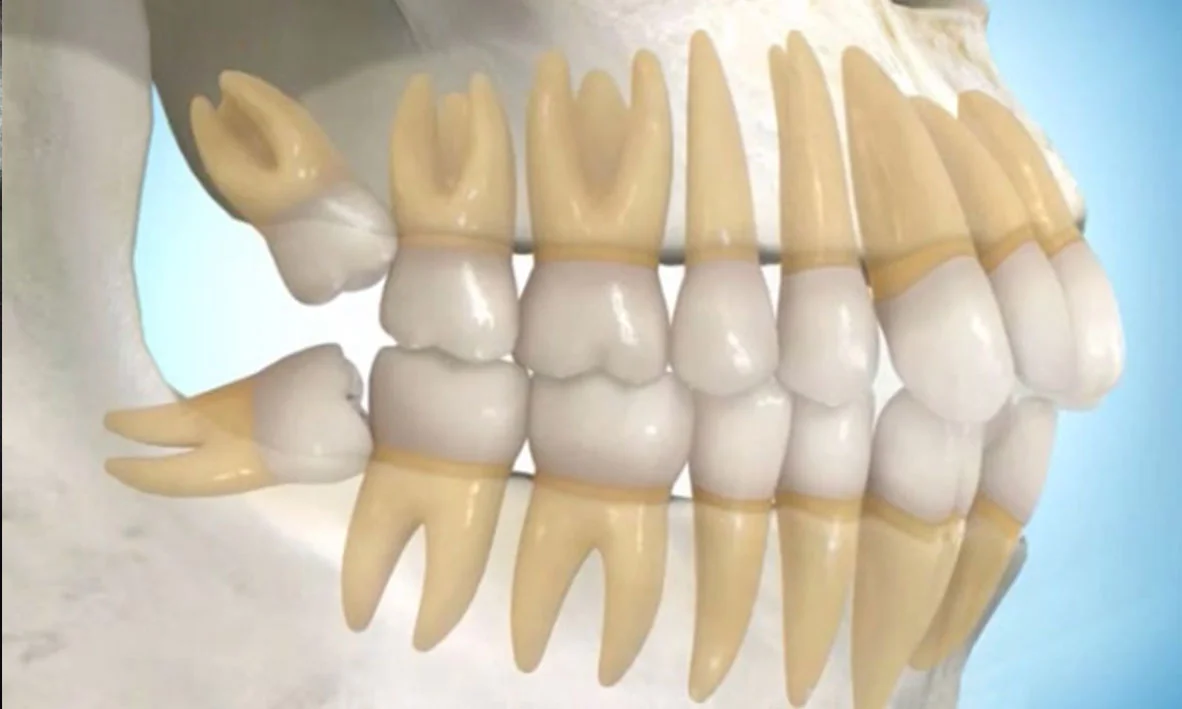
Partially impacted wisdom teeth.
Wisdom Tooth Eruption Problems
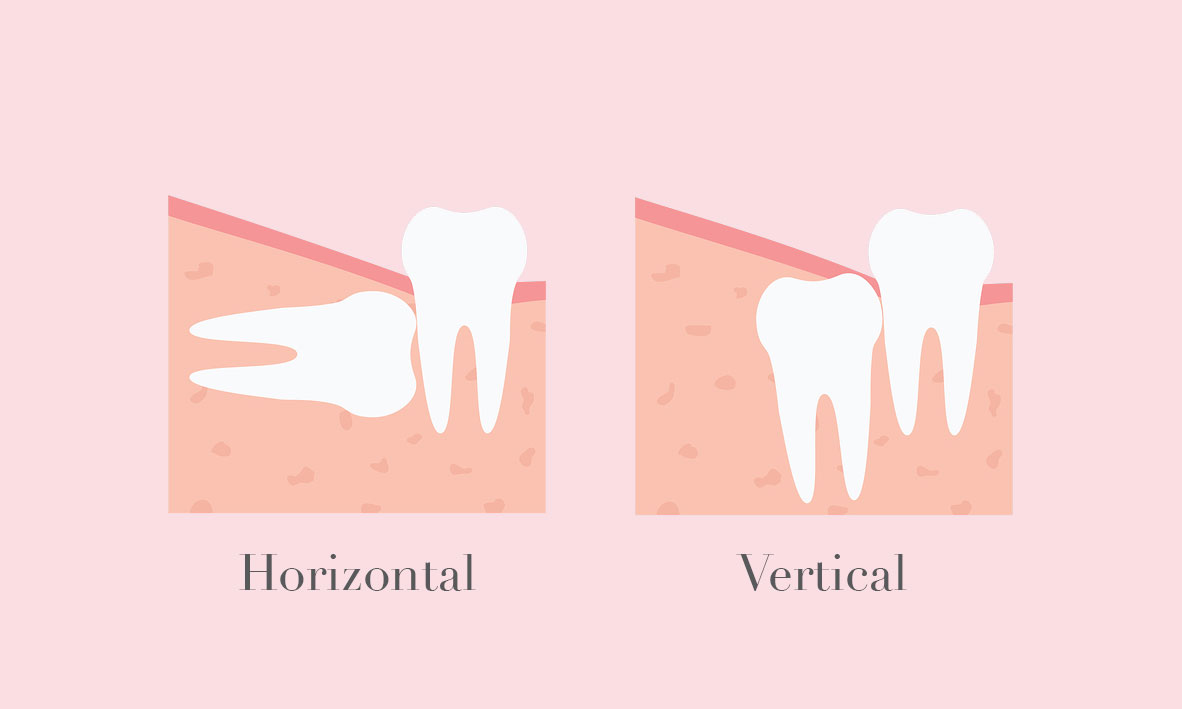
As there is no room for them to exist, it is not very common for a wisdom tooth to erupt nice and straight and then slide in without a problem. Instead, they usually impact, or partially impact, in the gum. There are four common types of wisdom tooth eruption (or lack of) and they break down as follows:
Angular - The wisdom tooth impacts into the gum, behind the molar, at an angle.
Vertical - The wisdom tooth is still straight, but it simply sits in the gum.
Partial Eruption - The tooth partially erupts from the gum and can be seen with the naked eye if you look hard enough.
Horizontal - The tooth 'falls over' and impacts sideways against the adjoining molar.
Wisdom Tooth Problems and What to Do About Them
In any of the scenarios mentioned above the potential for painful problems exists at all times, but sadly it's often at the most inconvenient times that they really become a nuisance. Signs that you probably need to see a dentist about a wisdom tooth can include all the following:
Pain, often centered at the back of the mouth
Swelling in the gum
Bad taste in the mouth
Redness
As an impacted wisdom tooth can cause all kinds of problems, including nasty infections, the usual course of action when one does begin to cause problems is to remove it asap. If the tooth has erupted it is an easier procedure than if it has become impacted but either way, in the hands of good dentist wisdom tooth removal is not anywhere near as bad as some might have you believe, and living with a wisdom tooth gone bad can be much, much worse.
The Emergency Dentist Says:
Did you know that these days it's often better to take a proactive, rather than a reactive approach to wisdom tooth problems? Discussing wisdom tooth extraction as a preventative measure, and then getting on with having it done now, can save you, and the rest of your teeth, a lot of pain and hassle later.

5 Things Your Tongue May be Trying to Tell You
Here's a look at five of the most common messages the tongue tries to send to warn its human that there might be something wrong...
Which Tongue Is Yours?
You know the drill; after the initial pleasantries at a dentist's appointment, you'll be asked to 'open and up and say 'ahh', so he or she can get a good look at your teeth. But your teeth aren’t all they are looking at, as the condition of your gums and tongue can be very telling as well.
Tongue? That surprised you maybe? The fact is however that this often overlooked - but large and important - body part can tell a dentist or a doctor more about your overall health than you might imagine. And learning to spot the warnings that your tongue might be trying to send to you between dentist visits can actually help you stay healthier. Here's a look at five of the most common messages the tongue tries to send to warn its human that there might be something wrong.
1. White Patches
Sometimes, white patches on the tongue are a sign that something is a little amiss with your daily oral hygiene routine. This can often be solved by making use of that bumpy backside of your toothbrush to clean your tongue when you clean your teeth. However, if you do that for a week or two with no change, something else may be wrong.
White patches and bumps on the tongue can also often be caused by a yeast infection, or can be a sign of a condition called leukoplakia, which is often caused by tobacco or chronic alcohol use. Both conditions are usually easily treated, so a call to the doctor sooner rather than later is almost certainly a good idea.
2. You're Seeing Red
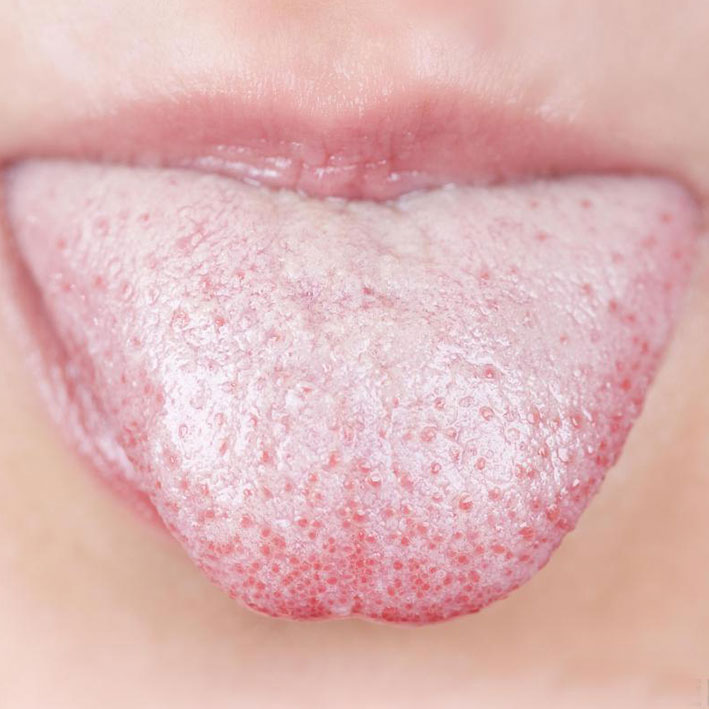
A red tongue can also be a sign of several different things. One of the most common is dry mouth, a situation you can remedy by remembering to stay hydrated and occasionally chewing on some sugar free gum. A rosy tongue can also signify that some of your taste buds are reacting badly to a certain food, to stress, or even a deficiency in a vitamin like folic acid or B12, both of which are important to their function.
Finally, a very red tongue accompanied by a sore throat is often a sign of an infection like strep throat or even scarlet fever. Both conditions can be treated easily with antibiotics and so once again, the faster you make a doctor's appointment, the sooner you'll feel better.
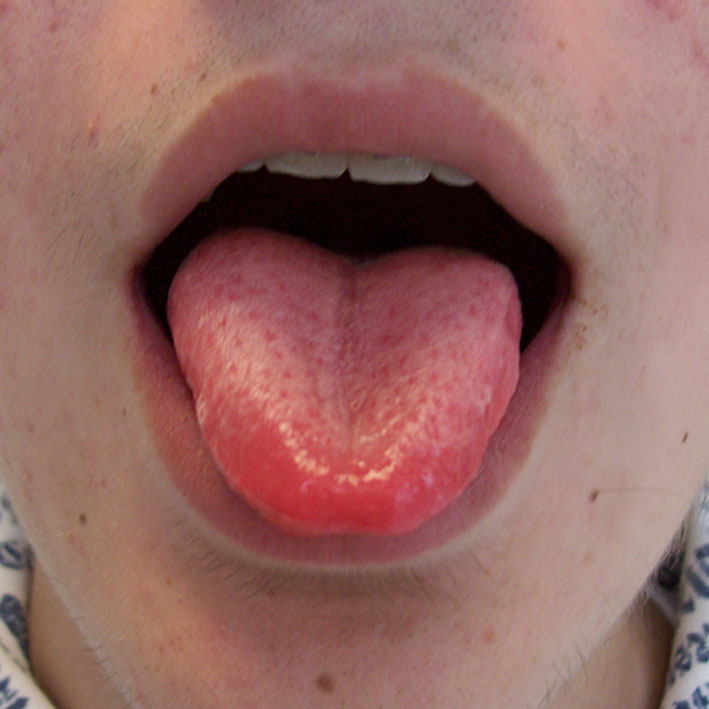
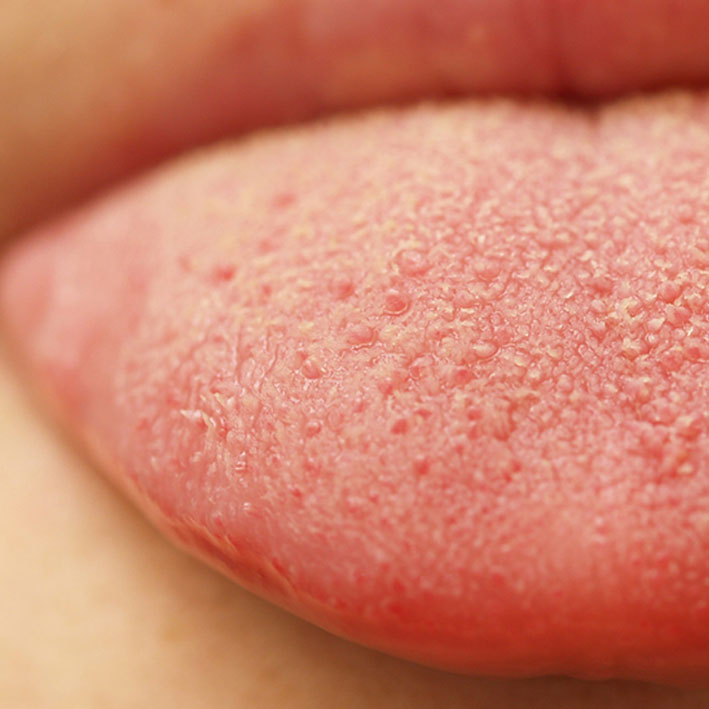
3. Things are Bumpy
Often bumps on the tongue are a temporary condition caused by a certain foodstuff you've recently consumed, especially things that are hot, both in terms of temperature and/or spice level. These will usually go away by themselves rather quickly.
Other causes of tongue bumps can include canker sores and herpes (cold sores), both of which will eventually go away on their own but can be treated to speed healing and ease discomfort. And in some cases, if you bite your tongue repeatedly (and some do, out of habit) a bump may actually be a fibroma and that should be looked at by your dentist, as in some cases they will need to be removed.
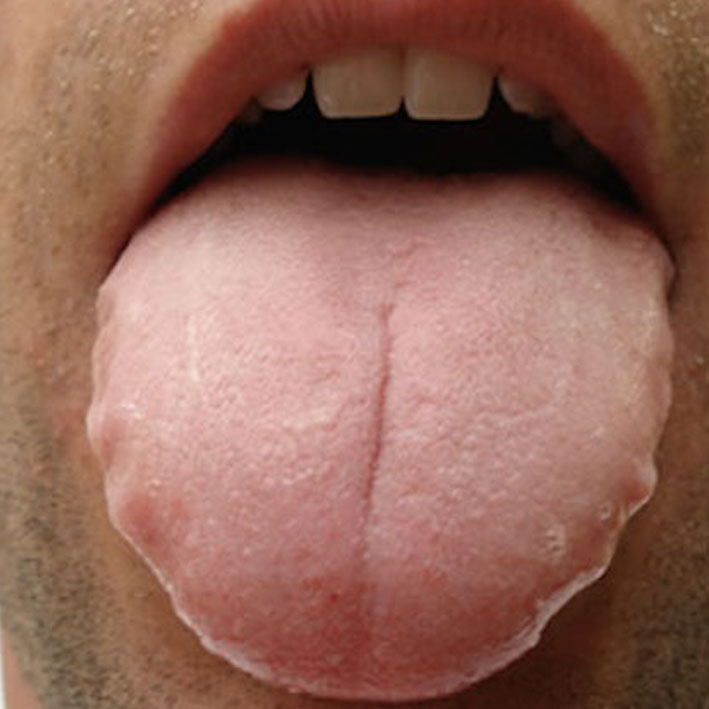
4. Ridges or Indentations
No tongue is perfectly smooth, and so in some cases ridges or indentations in your tongue are simply down to genetics. They may also be a sign that you have a fissured tongue, a long crack down the middle of the tongue that again, most people are just born with. It is something you should be aware of though, as it's easy for food to get stuck in that crack and cause bad breath and help the growth of potentially damaging to your teeth bacteria. Brushing your tongue will help, as will a chat with your dentist about the issue.
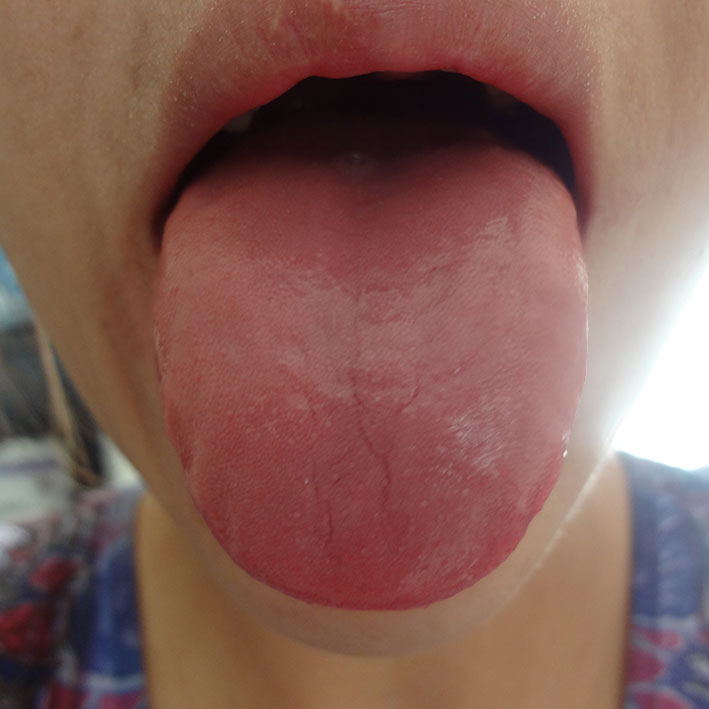
5. Swelling
A swollen tongue can be very temporary, a reaction to a cup of coffee that was a bit too hot, or accidentally biting your tongue instead of your food. This swelling is mild and will go away on its own, although sucking on an ice cube can help speed things up.
Sudden, more serious swelling however can be a sign that you allergic to something you just ate or drank. This can impair your breathing, something that is obviously dangerous, so medical attention should be sought right away.
The Emergency Dentist Says:
Your tongue is often trying to tell you something, so take notice! The health of your tongue is also important to your overall oral health. The best you can do to for your tongue is eat well and brush it daily!
NEED ADVICE OR EMERGENCY DENTAL CARE IN SYDNEY CBD?
Contact our friendly team

Patient Care First

Keep Up-To-Date with All Things Oral & General Health
RECENT ARTICLES







For 15 years, we've had one mission - when Sydney has a dental emergency, Emergency Dentist Sydney is there
We're proud to celebrate 15 years of providing emergency dental services to Sydney CBD and surrounding suburbs.