
Do Redheads Experience Less Pain?
And how this could affect your dental appointments
And how this could affect your dental appointments
Could the colour of your hair affect how much you feel pain? There have been a lot of rumours going around about the idea that redheads don’t feel pain as much as other people. This might sound like a ridiculous idea, after all how can hair colour affect your nerves? But there is actually some evidence to support it.
About Red Hair
Red is the rarest hair colour and occurs in less than 2 percent of the world’s population. To have a child with red hair, both parents need to pass on a specific, recessive gene trait. This trait causes mutations in the melanocortin 1 receptor (MC1R), which is responsible for producing skin pigment melanin. This gene contributes to eye colour, hair colour, and skin tone, which is why so many redheads have very pale skin.
But the differences that come along with being a redhead may be deeper than the skin. Evidence suggests that there’s also a significant different in how they experience and respond to pain.
More Pain, Less Analgesics
Contrary to general opinion, redheads don’t feel less pain. In fact, the opposite may be true. The MC1R gene which causes red hair also has receptors in the midbrain where pain perception is regulated. And this may indicate that the gene could influence how people respond to pain and injury. Studies that explore this link have found conflicting results. Here are just some of the conclusions of these studies:
To sedate them, you need 20 percent more anaesthesia.
Redheads may be able to tolerate 25 percent more pain than other people.
They need lower doses of pain killing analgesics.
They also need more topical anaesthetics, which explains why many redheads have a fear of dental pain and avoid dentists.
These results are contradictory. They indicate that redheads both feel more pain and less, that they’re more tolerant to pain and feel it more intensely. Further research is needed before the true extent of the link between hair colour and pain tolerance is clear. However, what comes out of these studies is the simple fact that hair colour can indicate a different way of processing and experiencing pain. And this means that dentists need to take an individual approach when managing the pain of dental treatments.
Proactive Pain Management
If you have red hair, then what can you do? Should you just avoid the dentist because you might have trouble coping with the pain? Obviously, this isn’t a helpful strategy and it could lead to more pain and trips to your after hours dentist in the long term. A better idea is to be proactive about pain during your regular dental appointments. Here are some ideas for how to do that:
Make sure that your dentist is aware that you might react different to pain and painkillers than other patients.
If you need anaesthesia for a dental treatment, address the issue before the procedure and let your dentist know that you might need more or be more sensitive to it.
Be wary of taking prescription medications, particularly opioids.
Emergency Dentist Sydney Says:
If you have a dental emergency, contact our Emergency Dentist in Sydney. Our caring and expert staff are available 24 hours a day to help you with all your emergency dental needs.

Our Top Picks for A Smashing Sydney Summer
Indoors & Outdoors
Fun Indoors & Outdoors
Do you ever stop to think how lucky we are to live in a place like Sydney? This summer it's the time of year when more tourists than ever flock here from all over the world to marvel at Sydney's sunny beaches, stroll our shoreline and take full advantage of the entertainment, dining and recreational opportunities the city has to offer in the summer. Here are just a few ideas from the team at Emergency Dentist Sydney
Secret Walks
Who wants to be stuck inside when the weather outdoors is gorgeous? But when you do have time to get outdoors why not so a little bit more than hang out at the beach? There are so many great walking trails all over the city, it's a shame not to try out at least one or two. One of our personal favourites is the Secret Sydney walking tour, which offers you the chance to explore the lesser known corners of the city. For instance, do you know where to go in Sydney to find a spectacular Taoist temple? No, neither did we until we tried this trip out.
Scale 'The Coathanger'
Something else we had never done, but can now recommend you do is stop looking up at the Sydney Harbour Bridge and actually climb it. You do have to dress up in jumpsuit that makes you look like you are auditioning for a very low budget remake of Ghostbusters, and yes it's kind of scary, even though you're actually perfectly safe. But as bucket list items go, conquering the maze of steel that makes up one of the most iconic bridges in the world and surveying your city from a completely new point of view should probably be on everyone's.
Sydney's Full of Musical Theatre
Sometimes, we admit, the theatre can be a bit stuffy, but that's rarely the case when the action onstage is a musical. And there are some great ones being staged across the city this summer, and certainly something to suit almost any taste. Over the summer, at various locations across the city you can catch a modern take on The Wizard of Oz, an onstage recreation of the modern classic Muriel's Wedding, a straight from Broadway production of Jersey Boys and, if you really feel like rocking out, American Idiot, the musical based on the Green Day album of the same name and written by Billie Joe Armstrong himself will be making its Australian debut this summer.
A Different Dinner Date With A Difference
Anyone who lives in Sydney knows that this is a city with far more than its fair share of dining options. But this summer why not try something different? For example, ditch the beer for a night and head out to Surry Hills to try out the Absinthe Salon, a recreation of the French drinking dives of years ago that even features gargoyles on the wall.
Emergency Dentist Sydney Says:
These are just a few ideas to get you started. There is so much more out there! And we'd like to hear from you? What are your favourite things to do with your Sydney summer?

What Should You Expect From an Emergency Dentist in 2017
Our Take
Our Take

Pictured: Dr David Graham & Dr Amrinder Oberoi
Patients have always had certain expectations they want their dentist to meet. They have always looked for expertise and compassion, experience and that all important gentle touch. Most of us have also always preferred to go to a dental surgery where the surroundings are clean and comfortable and the staff are nice and friendly. In 2017 however, patient expectations are even greater, and now, to satisfy the modern dental patient a practice needs to offer a little more. And why not? Anyone does have the right to expect great care AND great service from their dentist. But what kind of things should a 21st century dental practice be providing, apart from fantastic oral health care?
Here's what we think
Easy Appointments

Who has the time to spend ten minutes on hold on the phone to make a simple appointment? Not everyone. 'Back in the day' of course we usually had no choice, but as technology allows that to no longer be the case the best dentists should make it fast and easy to make an appointment, and it should be just as easy to change one too. We offer online appointment scheduling that allows our patients to choose the time and date of their consultation and book it online in a matter of seconds. And we think that every other dentist should be doing the same. After all we value our time, so it's only right that we value yours too.
Clear Directions

Pictured: The St James Trust Building at 185 Elizabeth Street, Sydney.
Who needs to spend ten minutes trying to find an address they've never been to before? To help ensure that our patients are not left wandering around like lost souls, we provide clear directions on our website - complete with map and public transport links and information. And if you are driving? You can call ahead and we'll make sure you'll have a parking spot close to the office when you arrive, so that you don't have to delay your treatment because you're driving around desperately looking for a place to park.
A Full Range of Emergency Services
No one wants to be in pain, and that really is why emergency dentists exist in the first place. But some after hours dental clinics only offer a very limited range of emergency services. We believe that for an emergency dental clinic to truly provide all of the care patients are looking for all of our services should be available after hours and at the weekends, as well as all of our helpful and caring staff.
Transparency

We have treated hundreds of patients in pain and, fortunately for us, many of those patients have later taken the time to give us some nice kudos online. Whether you are checking out of practice's reputation on Google, Facebook or another review service, we make sure you see them all. We don't pay random people to make up fake glowing reviews and we don't kill bad reviews just because we happen to disagree with them (we address them instead). We want our patients to feel secure in the knowledge that they are choosing the right dentist and think that this kind of total transparency should certainly be a big part of that. See what our patients have to say.
Extra Comforts

Pictured: Entertainment on the ceiling while you recline.
Very few people would put a trip to an emergency dentist at the top of their list of fun things to do with their evening or weekend, we know that and we're not offended. Because we are aware that a visit to our office can be a little daunting, and even a bit scary, we make sure we go the extra mile to make the experience as pleasant as possible. We always make sure there's tea, coffee and water on hand and to ease the anxiety a patient might feel while waiting to see the doctor, or waiting for an x-ray result, we installed TVs all over the office and offer access to Netflix, Spotify and YouTube so you can indulge in your favourite shows and/or music to help relax some of your cares away while we get to work on getting you out of pain.
Emergency Dentist Sydney Says:
In 2017 people want more from their dentist these days and we are happy to provide it, something that we think helps sets us apart from others and if you make an appointment to come and find out for yourself we think you'll agree

5 Reasons Why Your Teeth Might Be Hurting More This Winter
Winter in Sydney...
Winter in Sydney
Although it's not everyone's favourite season, winter in Sydney can be great for lots of reasons. But, as you may have noticed over the years, it's not always that great for your teeth. Colder weather often brings along with it tooth pain and especially tooth sensitivity, even if at your last dental check up your teeth got a relatively good bill of health.
The bad news is that the winter weather can indeed affect your teeth. The good news is that there are things you can do to minimise the damage - and pain - that the colder months can cause. With that in mind here's a look at the top five reasons why your teeth might give you extra problems this winter and what you can do about it.
1. Overly Aggressive Brushing
Yes, you have been told, correctly, since you were a kid that you need to brush your teeth at least twice a day. But the operative word here is brush, not scrub away like a maniac. If you brush your teeth too hard, or with a very stiff bristled toothbrush, you may begin stripping away enamel as well as plaque, leaving the softer inner part of your tooth exposed to the elements, something you'll feel a lot more when the air hitting them is cold.
When brushing your teeth take you time and use gentle strokes, as doing so will not only shield your smile from winter sensitivity but protect them from damage in general as well.
2. Winter Whitening Overkill
Winter in Sydney offers up all kinds of fun festivals and events that are a great excuse to get out and party. And if you are going to party, you want to look your best and dazzle everyone with a stellar smile. Those tempting home whitening kits at the chemists promise they can do that, but if you are considering using one this winter you'll need to take care.
Although home teeth whitening kits can have some effect, they often contain overly harsh chemicals that eat away at the enamel of the teeth, weakening them and making them more sensitive. A better way to go is to head to the dentist to discuss getting a professional whitening treatment that will look better, last longer and not leave lasting damage behind.
3. Your Hot Drink Habit
When winter comes we all tend to crave a few more hot drinks, especially if we're outdoors, something that's really only natural. This can have a downside for your teeth though, even if your tummy's warm and happy. The problem is that if your drink is hot - and the air is cold - the temperature difference can be quite a shock for your teeth and cause pain that rather sharp and stabby. To help prevent this, sip your hot chocolate - or whatever your preferred winter beverage option might be - slowly and try to stick to drinking it warm rather than boiling hot.
4. Colds and Flus
Not all winter tooth pain is directly related to your teeth. If you have a cold, the flu, or a sinus infection, all common winter ailments, then tooth pain may be just one of the nasty symptoms that come along with it. Often if your nose is all stuffed up your sinuses are all inflamed and that can put pressure on your teeth, especially those at the front. On this one there's not too much you can do, except practice good hygiene and take some extra Vitamin C to try to ward off winter colds and flus altogether.
5. Thermal Stress
Did you know that your teeth expand and contract in reaction to the weather in the same way as many other materials? It's only very slight, but it can cause pain, especially if you already have sensitive teeth.
Emergency Dentist Sydney Says:
Don't stress. Some winter tooth pain is temporary and goes away on its own, often when you get back to your nice warm house after a day in the cold.
However, if the pain is particularly bad, or lingers longer than a day or so it's a good idea to make an appointment to see the dentist to make sure something else - like decay or gum disease - is the problem, and not the winter weather after all.

Pregnancy vs The Dentist
We might have some answers for you...
What is Safe?
An expectant Mum spends a great deal of the nine months of her pregnancy visiting with medical professionals. But here's a question for you; is it safe for those visits to include trips to the dentist?
If you answered 'no', you are wrong. But you are far from alone. Over the years skipping professional dental care while pregnant has joined other outdated advice - pregnant ladies shouldn't ever exercise, expectant mums should eat for two. That has been debunked by the medical profession but is a myth that is perpetrated by scare-mongering blog posts or well-meaning (but incorrect) friends and relatives.
Why You Should Nor to Skip Dental Care in Pregnancy
Unfortunately, studies here in Australia, as well as research conducted in the UK and the States, has found that up to half of expectant mums in any given year deal with serious dental issues like bleeding gums and pain and fail to make a dental appointment to get them addressed either because they assume such things are just another of the not so nice aspects of pregnancy or that visiting the dentists while expecting simply isn't safe.
The fact is though, not only is it safe to do so but very much advisable, as recent research has found that a lack of dental care in pregnancy can harm an unborn baby as well as his (or her) Mum.
Gum Disease and Unborn Babies
The research we mentioned studied a connection between premature birth and low birth weight and periodontal (gum) disease. Several studies have demonstrated some connection, and while more are ongoing to confirm these initial findings the common wisdom so far is that the inflammation and low grade infection that gum disease often causes leads to the body into concluding that Baby would be safer out in the world rather than in Mum's tum, and premature labour is triggered.
Good daily brushing and flossing can help keep gum disease at bay but as the hormonal changes that occur in pregnancy often soften gum tissue a preventative visit to the dentist is never a bad idea, just make sure that the staff are aware of your pregnancy, as some things, like x-rays, are not safe in pregnancy without special precautions being taken.
The Morning Sickness Problem
Morning sickness is one of the biggest downsides of pregnancy for many women, but there is a lot of comfort to be found in the fact that, for most, it goes away by the end of the first trimester.
It can leave damage to the teeth behind it though. Vomiting every day can erode the enamel of the teeth significantly, leading to cavities that should be treated as soon as possible to avoid tooth damage (or tooth loss'). Therefore, waiting another six to seven months until Baby has arrived to see a dentist is not a good idea.
It is agreed by both dentists and OBs these days that simple procedures like dental cleanings and fillings are perfectly safe in pregnancy, although an expectant Mum may want to schedule elective dental procedures before the 20-week mark, simply for her own comfort, as an hour in the dentist's chair can be rather uncomfortable for a heavily pregnant lady. In fact, many OBs now advise that a dental exam be a standard part of those essential first trimester checkups, both for the sake of Mum and her unborn child.
The Emergency Dentist Says:
A visit to the dentist really isn't something you should skip in pregnancy, even if you are not one of our biggest fans! If a dental visit is something that usually scares you a bit anyway, remember this time you'll be protecting your baby's health as well as your own, and we promise we'll be gentle!

5 Things Your Tongue May be Trying to Tell You
Here's a look at five of the most common messages the tongue tries to send to warn its human that there might be something wrong...
Which Tongue Is Yours?
You know the drill; after the initial pleasantries at a dentist's appointment, you'll be asked to 'open and up and say 'ahh', so he or she can get a good look at your teeth. But your teeth aren’t all they are looking at, as the condition of your gums and tongue can be very telling as well.
Tongue? That surprised you maybe? The fact is however that this often overlooked - but large and important - body part can tell a dentist or a doctor more about your overall health than you might imagine. And learning to spot the warnings that your tongue might be trying to send to you between dentist visits can actually help you stay healthier. Here's a look at five of the most common messages the tongue tries to send to warn its human that there might be something wrong.
1. White Patches
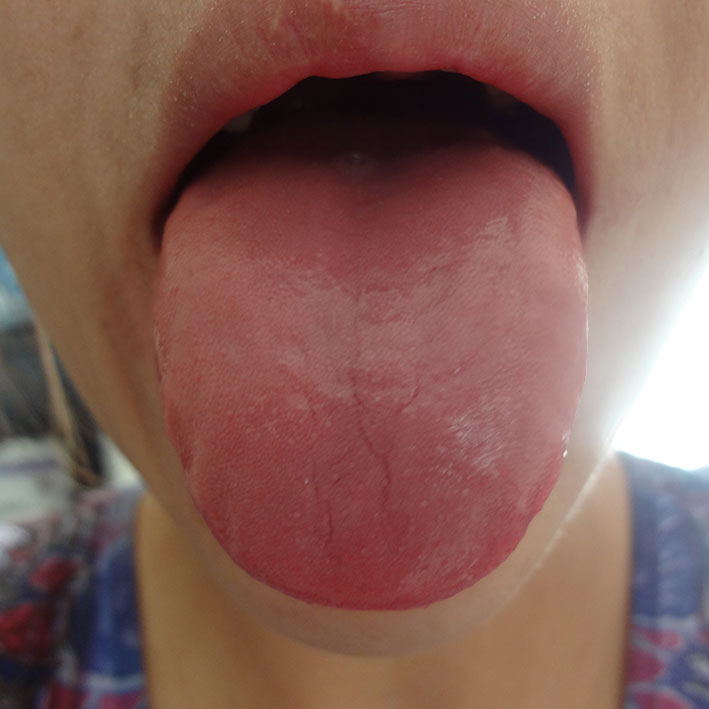
Sometimes, white patches on the tongue are a sign that something is a little amiss with your daily oral hygiene routine. This can often be solved by making use of that bumpy backside of your toothbrush to clean your tongue when you clean your teeth. However, if you do that for a week or two with no change, something else may be wrong.
White patches and bumps on the tongue can also often be caused by a yeast infection, or can be a sign of a condition called leukoplakia, which is often caused by tobacco or chronic alcohol use. Both conditions are usually easily treated, so a call to the doctor sooner rather than later is almost certainly a good idea.
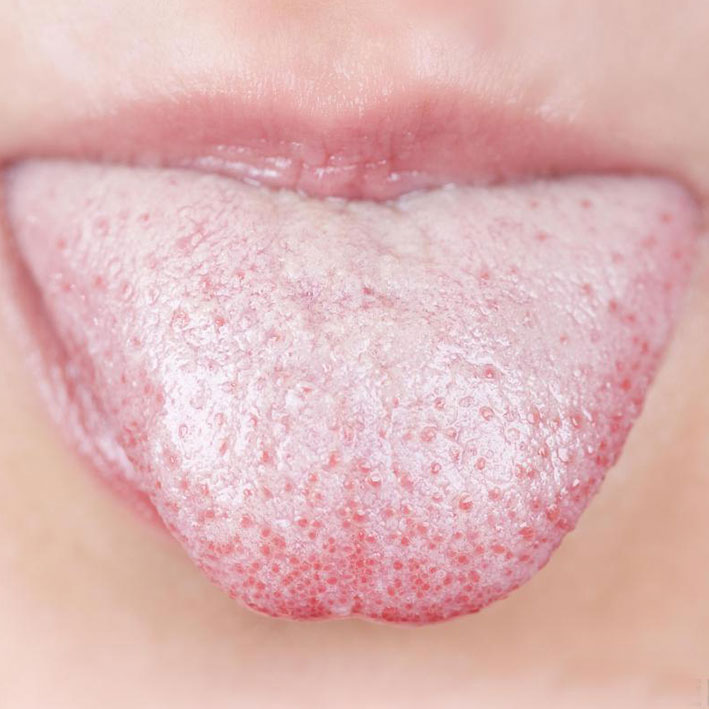
2. You're Seeing Red
A red tongue can also be a sign of several different things. One of the most common is dry mouth, a situation you can remedy by remembering to stay hydrated and occasionally chewing on some sugar free gum. A rosy tongue can also signify that some of your taste buds are reacting badly to a certain food, to stress, or even a deficiency in a vitamin like folic acid or B12, both of which are important to their function.
Finally, a very red tongue accompanied by a sore throat is often a sign of an infection like strep throat or even scarlet fever. Both conditions can be treated easily with antibiotics and so once again, the faster you make a doctor's appointment, the sooner you'll feel better.
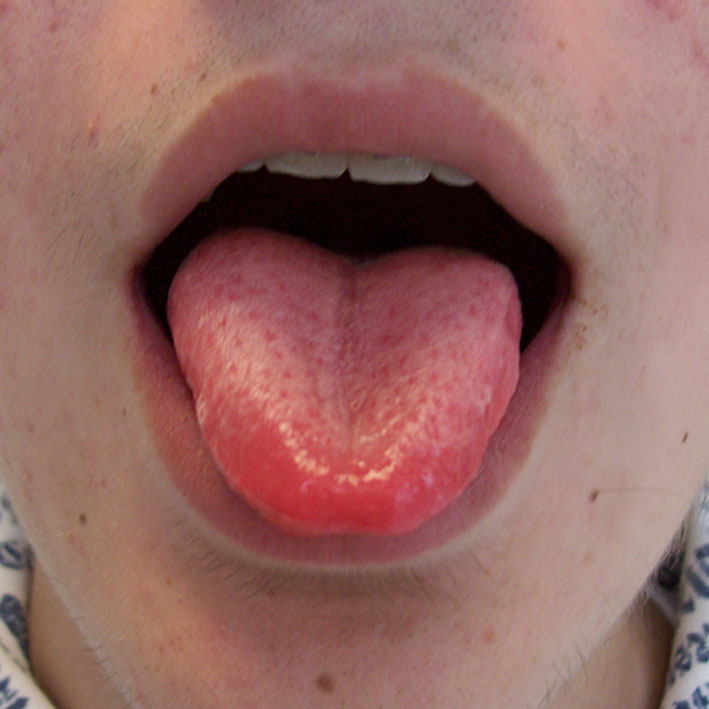
3. Things are Bumpy
Often bumps on the tongue are a temporary condition caused by a certain foodstuff you've recently consumed, especially things that are hot, both in terms of temperature and/or spice level. These will usually go away by themselves rather quickly.
Other causes of tongue bumps can include canker sores and herpes (cold sores), both of which will eventually go away on their own but can be treated to speed healing and ease discomfort. And in some cases, if you bite your tongue repeatedly (and some do, out of habit) a bump may actually be a fibroma and that should be looked at by your dentist, as in some cases they will need to be removed.
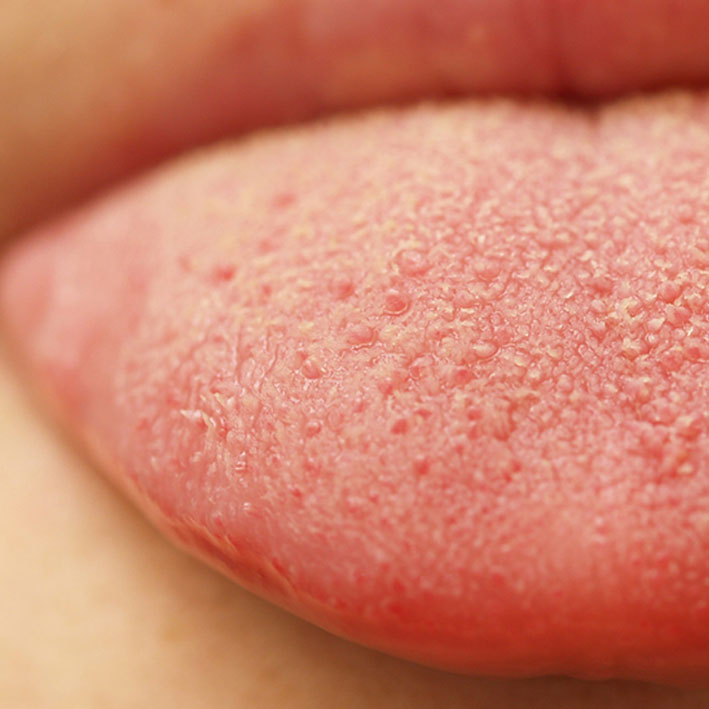
4. Ridges or Indentations
No tongue is perfectly smooth, and so in some cases ridges or indentations in your tongue are simply down to genetics. They may also be a sign that you have a fissured tongue, a long crack down the middle of the tongue that again, most people are just born with. It is something you should be aware of though, as it's easy for food to get stuck in that crack and cause bad breath and help the growth of potentially damaging to your teeth bacteria. Brushing your tongue will help, as will a chat with your dentist about the issue.
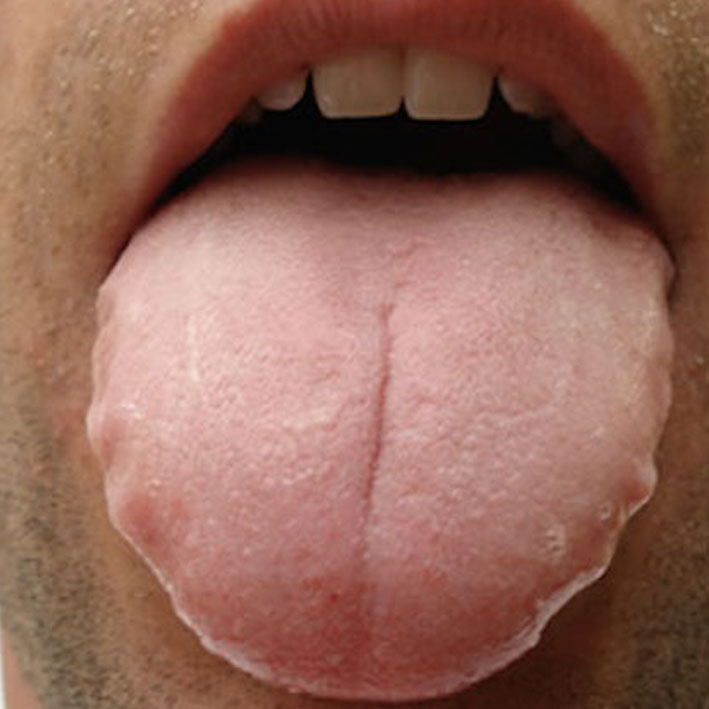
5. Swelling
A swollen tongue can be very temporary, a reaction to a cup of coffee that was a bit too hot, or accidentally biting your tongue instead of your food. This swelling is mild and will go away on its own, although sucking on an ice cube can help speed things up.
Sudden, more serious swelling however can be a sign that you allergic to something you just ate or drank. This can impair your breathing, something that is obviously dangerous, so medical attention should be sought right away.
The Emergency Dentist Says:
Your tongue is often trying to tell you something, so take notice! The health of your tongue is also important to your overall oral health. The best you can do to for your tongue is eat well and brush it daily!
NEED ADVICE OR EMERGENCY DENTAL CARE IN SYDNEY CBD?
Contact our friendly team


The Real Truth About Kid's Teeth vs Sugary Drinks
Is giving in and allowing your kid the occasional Pepsi really so bad? The real truth behind the kids and sugary drinks issue is a lot more complicated than that though...
From A Dentist's Perspective
Sugary drinks have, as we're sure you've noticed, been getting a particularly bad rap recently. Not just the obvious ones like cola though, but also soft drinks with high sugar content that is less apparent, like some of those flavoured 'energy' drinks and water beverages that are trendy right now.
The reasons that sugary drinks are under fire are many; they are, in many cases, packed with calories that can contribute to the increasing obesity problem in adults and kids that is plaguing Australia (and the rest of the world), that obesity can lead to type II diabetes in the same populations, and, of most concern to us, tooth decay.
But is giving in and allowing your kid the occasional Pepsi really so bad? Especially if you have them drink the diet stuff? After all, they're only kids and they can always brush their teeth, right? The real truth behind the kids and sugary drinks issue is a lot more complicated than that though.
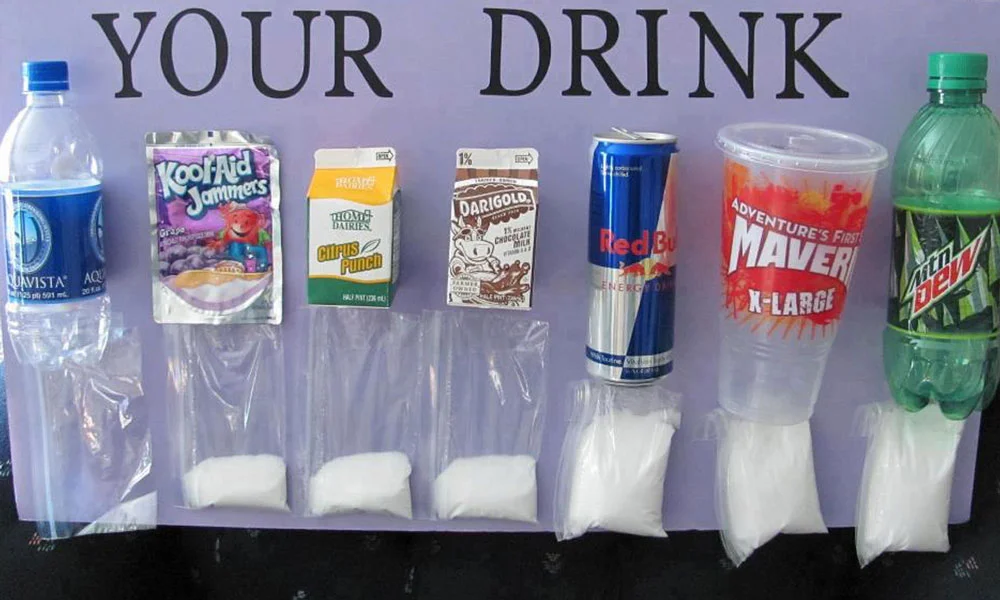
'Rethink Your Drink'. The much discussed and shared visual of how much sugary really is in our drinks.
What Soft Drinks are 'Bad Soft Drinks' Anyway?
OK. We can establish that a can of 'full strength' Coke a day - with its 161 calories and 10 teaspoons of sugar per 375mL can - is not a good habit to get into, even for a lively child who'll burn off those extra few calories by running around being a kid with ease. But colas and other similar fizzy drinks are not the only baddies here.
Take diet versions of colas. No, there are no calories in them, and no 'real' sugar, but they are highly acidic, even more so than their regular counterparts - real Coke has a pH of 2.53 versus diet's 2.45 - which is a terrible thing for the teeth. And those high levels of acid are even found in some of the fruit juices we often consider to be the best soft drinks to give to our kids.
This acid can cause a specific type of tooth decay; acid erosion. Dr Amrin from the Emergency Dentist Sydney says, "We have noted an increase over the past 16 months in the number of children we see who have the beginnings of tooth erosion. Unfortunately this type of erosion is unnatural and irreversible as it is not a result of bacteria and effects the structure of the tooth."
And the leading cause of it? Sugary and/or high acid content soft drinks. You see, if you were to encourage your child to only eat their three meals a day, with no sugary snacks or drinks in between, decay and erosion causing bacteria only have three opportunities to damage teeth. However, sugary drinks and snacks extend the time the bacteria are producing acid, and even the natural damage fighting power of saliva is diminished.
During the hours between tooth brushings, damage will be done. Dr Amrin advises, "Even children with the most health conscious and diligent parents will encounter foods and drinks with extremely high sugar content. Best practice is to brush immediately after consumption."
The Worst of a Bad Lot
Wondering which products should be put onto the 'worst' list? According to a report from the Australian Dental Association, which involved the results of testing on 35 different popular soft drink options found in most supermarkets, the following were the biggest risks to the health of teeth
Pepsi
Coca Cola
Diet Coke
Pepsi Max
V Energy Drink
Fruit cordials like Golden Circle Pineapple Crush
Fruit drinks like Pop Tops Apple Blackcurrant Drink
Heavy fruit juices, as the acid they contain is particularly resistant to the effects of saliva.
Of course, any parent will rightly ask what they are supposed to offer to their picky child in place of these admittedly pretty yummy drinks. If the warnings aren't enough just remember, "loss of tooth enamel in children can be extremely painful," says Dr Amrin.
"Treatment for tooth decay in children is often traumatic. Multiple courses of antibiotics are often required and teeth may need to be pulled," he says. "For a child having teeth taken out, it's a very scary experience for them and it can often result in the need for a general anaesthetic. Not to mention the knock-on effects socially and long-term effects of growth."
Milk is a good choice, as is water that has been 'infused' with real fruit, by steeping pieces of fresh fruit in a pitcher full of water.
The Emergency Dentist Says:
Most of the damage to you teeth caused by sugary drinks is done in the first 40 seconds. Even with twice a day brushing sugary drinks can do serious harm to children’s' teeth, so they really are better off without them, and so are their teeth.

5 Effective Ways to Overhaul Your Oral Hygiene Routine
It's important that your oral health routine focus on more than just the colour of your teeth...
Today
While most of us aspire to a celebrity-worthy pearly white smile, and will often spend a small fortune on whitening toothpastes, kits and treatments to achieve one, we can tend to overlook other important aspects of oral care and that's a big mistake. After all, what's the point in having pearly white gnashers if you also have rather rancid breath, inflamed gums, and or the beginnings of cavities lurking.
It's important that your oral health routine focus on more than just the colour of your teeth. Here are five very easy to implement changes you can make to your oral hygiene routine today to get a healthier smile, and not just a whiter one.
1. Practice Some Tongue Care
Your tongue is the single largest source of bacteria in your mouth, meaning it's a big contributor to bad breath and other oral nasties. And yet when most people clean their teeth they fail to clean their tongue, and it's very important to do so.
Yes, we know it sounds a bit weird but it's not a hard habit to get into. Some toothbrushes do come with a built-in tongue cleaner on the back, or you can buy an inexpensive tongue scraper. Either tool will strip your tongue of the excess gunk that builds up, but for an even better result follow up a scraping with a real brush of the tongue with toothbrush and toothpaste as well.
2. Forget the Hipster Toothpastes
Chances are your Mum and Dad have had you brushing with a fluoride toothpaste since you were a kid. But perhaps recently you've been noticing a number of new 'all-natural' toothpastes have been appearing that claim to do a better job at maintaining oral health than their traditional fluoride enhanced counterparts.
The simple fact is that they don't though. And while they may have cool packaging and funky, fun sounding flavours, we really do recommend sticking with the fluoride paste you grew up with. Fluoride guards your teeth from plaque and decay by strengthening the enamel and it's still a must in any effective oral hygiene routine.
3. Keep on Flossing
There's been a big debate of late over whether or not people really need to floss. It was opened up after a report was published that claimed research had shown that flossing had been overrated and that brushing might be enough.
Almost every dentist disagrees, but you don't even have to take their word for it. Even the fanciest, priciest toothbrush can't get all those little bits of food that get stuck between your teeth out, and if they stay where they are they'll begin to rot, leading to bad breath at best and cavities and infection at worst. Since flossing is a very effective way to get rid of between the teeth gunk on a daily basis to keep on using it really is just common sense.
4. Stay Hydrated
Bad breath - especially that rather potent 'morning breath' most of us are familiar with is, in large part, due to dehydration. When you sleep the production of cleansing saliva is decreased, as is the case when you are super-thirsty.
5. Don't Ditch Your Dental Appointments

Yes, we know, you're busy. And you really don't like going to the dentist. And because you do brush and floss every day like a good boy or girl you think your teeth are in pretty good shape, so it's probably OK to skip a check up this time around. But, no, it's really not.
In addition to that great deep cleaning you'll get, your dentist, as an expert in gum health as well, will be able to spot the signs of periodontal disease that it's harder for you to notice (until pain, swelling and/or infection sets in) and address it before it can cause any lasting damage. And although it sounds a bit morbid to mention it often the only way an oral cancer is diagnosed is after its symptoms are spotted by an eagle-eyed dentist.
The Emergency Dentist Says:
Good oral hygiene is about more than the shade of pearly white you can achieve with your 'brightening' toothpaste. An attractive mouth is one that is healthy as well as good looking, something that the tips we've shared here, really will help you achieve.

The Great Flossgate Debate
We take a look at the ongoing debate over flossing and if you should still be flossing away each day...
What's The Real Deal?
Dental floss. Chances are that you have some in your bathroom right now. And we wouldn't be too surprised if you've been wondering recently if it still actually belongs there. Over the last year or so dental floss - and the act of flossing at all - has become the subject of some rather heated debate worldwide, after an Associated Press 'investigation' published in 2016 suggested that the oral health benefits of flossing have been overblown. As you might expect, dentists across the globe for the most part disagreed. But what's the real story?
A Brief History of Dental Floss
If we are going to talk about dental floss and its real role in oral health it helps to know a bit about how it ever came to be in the first place. Although there is some evidence that even cave dwellers used rudimentary toothpicks, the concept of dental floss did not appear until the early 19th century courtesy of a scholarly dentist practicing in New Orleans in the US.
Levi Spear Parmly was not exactly your average dentist. He was a rather serious man who loved research as much as he did dentistry, becoming a noted author in the field at a relatively young age. It was in 1819 that he first wrote about his practice of making use of waxed silk threads to clean between his patient's teeth. He laid out his rationale for doing so by stating it was "to dislodge that irritating matter which no brush can remove and which is the real source of disease".
Dental floss was not made commercially available however until long after Parmly's death. In 1882 the Codman and Shurtleft company began producing unwaxed silk floss for general sale, but the concept didn't begin to really catch on until the Johnson & Johnson Corporation received a patent for dental floss made from the same silk thread that surgeons used for stitches.
Finally, dental floss as we know it came about during World War II, when a New Orleans doctor, Charles C. Bass, a man who had a great interest in how oral health affected general health, revisited Parmly's original concept of waxing the flossing thread, but he used nylon instead of silk, partially because it was cheaper and easier to work with than silk and partially because of its superior abrasion resistance.
Ask any dental student and they'll tell you that both Parmly and Bass are considered true pioneers in the field of preventative dentistry and that their work still influences the profession today. So, did two brilliant minds, working over half a decade apart, really get it all wrong?

Vintage advertising from Lister, above left and Crest, above right.
Dental Floss and THAT Report
Coming back to the 'Flossgate' debate (yes, people have called it that) of today, most dental educators dentists had similar responses to the AP report. The report, they said, missed the point completely when it comes the benefits of flossing for oral health.
Per many of them the research used as the basis for the piece did indeed show that yes, when flossing is performed incorrectly, there are no health benefits. But why would that come as a surprise to anybody they countered. In addition, the very same studies showed numerous benefits could be associated with flossing with proper technique. So, essentially, the "big" news was no news, simply a reiteration of what dentists had been saying all along, floss regularly and floss the RIGHT WAY and your oral health will be improved.
Let us not forget people who suffer from gum disease and other health problems resulting from less then sufficient oral hygiene habits. Patients with poor oral hygiene habits, poor diet and/or poor lifestyle habits may have early signs of oral disease or infection. Inheritance plays a massive role in periodontitis as well with genetics being a contributing factor in the onset of the disease.
Incorrect brushing techniques, regular smoking or a diet high in sugar may result in gum disease, which can be irreversible once the disease advances to periodontal disease. This may be even moreso for patients gentically predisposed to gum disease. For patients engaging in habits that lead to gum disease, they are often unaware of the physical signs and symptoms. For these patients regular flossing is imperative.
The Emergency Dentist Says:

Not everyone bought the arguments against the report and for some, the debate over flossing is still going on. However we side with majority of our peers and recommend regular flossing. Think you might need some help with your flossing technique? Make an appointment for a checkup (you know it's time anyway) and we'll be happy to give you a lesson.

Dentists Surprising Role in Treating Eating Disorders
Here are the facts...
Here Are The Facts
When most of us think about eating we associate it primarily with sustenance and pleasure. However, for a growing number of Australians, many of whom are young, the act of eating anything is a real trial, as they are one the increasing number of people suffering from an eating disorder. And, believe it or not, it is often their dentist who notices the problem first.
Eating Disorder Basic Facts
According to The National Eating Disorders Collaboration, Australia is in this case right in line with the rest of the developed world, in that that the incidence of eating disorders and body image issues has increased significantly over the last 30 years.
The NEDC estimates that approximately 9% of the Australian population currently suffers from an eating disorder and that figure is increasing, with eating disorders now being the 12th leading cause of mental health hospitalisation in Australia. And perhaps most worrying of all is the fact that up to 1 in 5 of the afflicted will die prematurely.
As we mentioned before, the problem is especially worrying among younger people. In a survey conducted by the NEDC 84.3% of the 15-25 year olds interviewed said that they personally knew of a peer that they believed suffered from an eating disorder and 62% said they knew of five or more.
How Dentists are Helping Those at Risk
No matter what kind of eating disorder a person is suffering from it is the norm that they are very secretive about both the problem and the behaviours it causes. It is very rare for them to voluntarily seek help alone, it usually takes the input of a concerned third party to persuade them to even begin to begin addressing their problem.
For the family GP, an eating disorder can be hard to spot, especially in a teenager or young twenty-something during a routine exam. The patient is not going to bring the issue up and fluctuations in weight are often considered fairly normal at this age. And as many young people are considered generally healthy they may not even visit the doctor anyway.
They probably do still visit the dentist though, at least once every six months, which is why it is becoming common that it is their dentist who notices a problem first.
The Toll of Eating Disorders on Oral Health
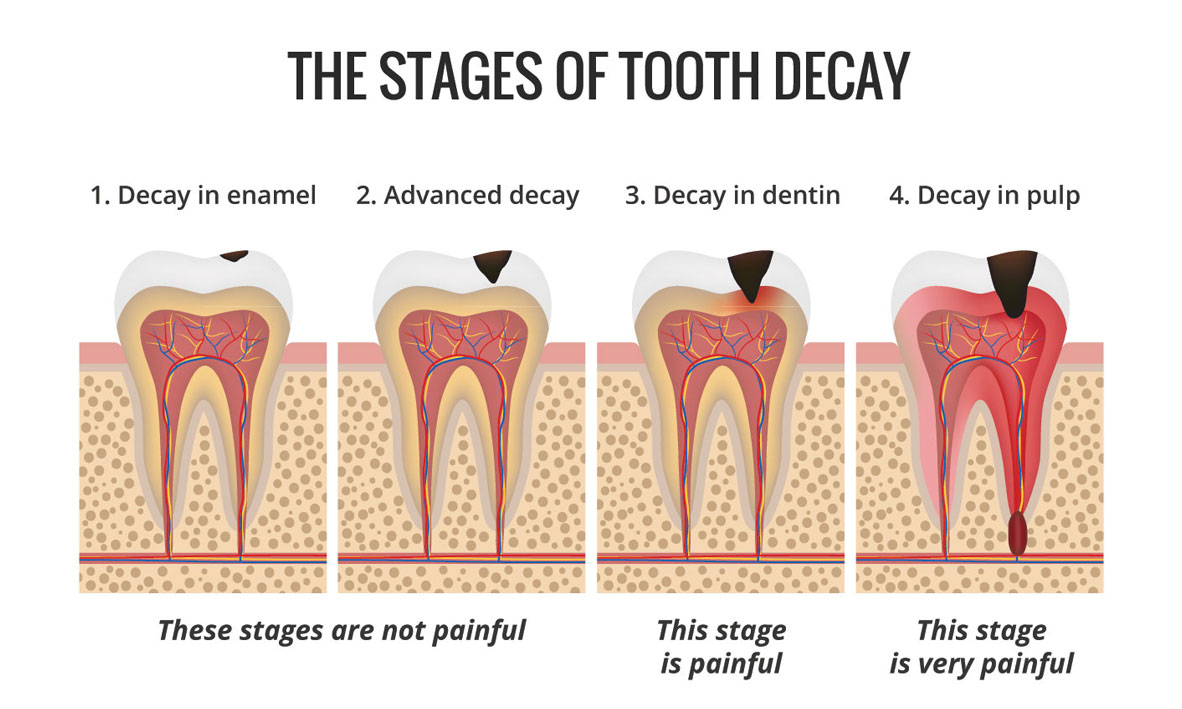
Eating disorders can - and do - take a real toll on the body, but much of this is not easily visible. Not everyone suffering is very obviously painfully thin and will often hide it even if they are with the way they dress. One place where symptoms and signs are more obvious however is the mouth, as eating disorders affect oral health in several significant ways.
One big reason for this is the vomiting that is characteristic of eating disorders. Stomach acid is potent stuff, so the teeth of a person vomits on a very regular basis are often discoloured, or even almost translucent and may appear to be 'wearing away'. They may suffer from very bad breath, bleeding gums, tooth sensitivity, continually chapped lips and more, all of which a routine dental exam will reveal.
If a dentist does suspect an eating disorder problem they are in a great position to gently suggest that the patient begin seeking the right help. They can also help make sure that the damage to the teeth is minimised. As eating disorders are closely tied to image and self-esteem issues it can be very comforting for a recovering person to realise that they may not have damaged their teeth permanently and that like the rest of the body, they can be 'nursed' back to health with the right treatments.
The Emergency Dentist Says:
Eating disorders are a serious issue but something that can be very hard to deal with. Parents who suspect their child may have a problem should consider scheduling them a dentist's appointment, as they should be able to spot the warning signs and help get the patient onto the treatment path they need to be on.

Give Bad Breath The Boot
There are a number of reasons why a person may suffer from bad breath. These are the most common causes...
5 Easy, Effective Ways to Combat a Bad Breath Problem

Bad breath. People who suffer from it are normally either unaware of the fact or truly embarrassed about it. They often wonder just what they should be doing about it, as strong chewing gums and breath sprays only seem to go so far. The good news is though that most cases of halitosis - that's the scientific name for bad breath - can be addressed pretty easily.
What Causes Bad Breath?
There are a number of reasons why a person may suffer from bad breath. The most common include:
- Poor dental hygiene
- Persistent dry mouth
- Tooth decay
- Gum disease
- Smoking
- The consumption of pungent foods (garlic etc.)
- Some medical conditions, including diabetes and acid reflux
In the case of the last item on that list it may be that the person has the best oral hygiene in the world but their health prevents them from having really fresh breath. In these cases a combination of a GP and a dentist's advice and care is called for to address a halitosis, problem. For many people though the issue can be solved with a change of habits and a little more awareness of the fact that the problem exists.
Here are usually very effective ways to combat bad breath:
- Improve Your Dental Hygiene.
Not only do people need to stick to the oft given advice that they brush at least twice a day with a good toothpaste they also need to address two other causes of bad breath due to poor dental hygiene; bacteria and food remnants stuck in the teeth.
It's not that hard to get food stuck in your teeth, but if it's allowed to remain there it will usually begin to rot (sounds horrible but it's true) and smell. Flossing on a daily basis (at least) will help remove stray food particles and bacteria can be addressed with an anti-bacterial mouthwash. Brushing your tongue, as strange as that may sound, will help as well.
- Stay Hydrated.
Dry mouth is another 'leading cause' of bad breath that can be fairly easily addressed. Many people don't realise that they are not drinking enough during the day but it's an easy fix. Get into the habit of sipping from a bottle of water throughout the day and try to consume the equivalent of two litres of water a day.
- Brush After You Eat Stinky Foods.
We could just say stop eating 'stinky' foods to avoid bad breath but, to be fair, there are a lot of great - and even great for you - foods that fall into that category.
A better idea then is to make sure you brush after consuming pungent foods, even when you are away from home. A travel toothbrush and paste isn't hard to fit into a handbag or pocket and these days you can even buy pre-pasted travel brushes relatively inexpensively that are even more convenient.
- Gum Can Be Your Friend.
Chewing gum can be a good way to remove stubborn food particles, keep dry mouth at bay and freshen breath, so yes, the adverts are right, it is always a good idea to keep a pack in your pocket.
- Don't Smoke.
We know, that's easier said than done. If you do still smoke these days despite all of the outside pressure to quit - and there's a lot - chances are you've been struggling to do so. In this case there's no shame in asking your GP or dentist to suggest ways to help, and they'll usually be quite happy to do so.
- Schedule Regular Checkups With Your Dentist.
Some underlying causes of bad breath, like tooth decay and gum disease - really need to be treated by a dentist. By making sure you stick to a regular check up schedule your dentist ill be able to spot - and treat - such problems and then help you tailor your dental hygiene plan to help prevent them from reoccurring.
The Emergency Dentist Says:

Bad breath is no laughing matter, it can really impact your life, especially your social life. In many cases though it's a problem that can be- with the help of your dentist - solved pretty easily.

Gum Disease & Your General Health
Do you happen to know what the leading cause of tooth loss is in Australian adults? Many adults often don't even know they have gum disease until it's almost too late...
Get the Facts Before It’s Too Late
Do you happen to know what the leading cause of tooth loss is in Australian adults? If you (logically) answered tooth decay then you aren't actually quite right. Although decay is responsible for more than its share of damage it is actually gum disease that wrecks the most havoc. And many adults often don't even know they have it until it's almost too late...
What is Gum Disease Anyway?
Gum disease - a condition that is also known by the posh scientific names of gingivitis and periodontitis - is primarily caused by plaque, just like tooth decay is. A plaque build up will damage the teeth but it won't stop there, it will damage the very structures that support the teeth, the gums doing damage that can, at times, be harder to treat than tooth decay is.
Gum disease can progress without ever showing any major symptoms. However all of the following can be big warning signs that all in the Land of Gum is not quite right:
Red, swollen or tender gums
Bleeding after brushing, flossing, or eating hard food
Gums that are recede or pulling away from the teeth, making teeth look longer than before
Teeth that feel looser than they did before
Persistent bad breath
Treating Gum Disease
As is almost always the case, when it comes to gum disease prevention is better than cure. But more about that in a minute. For now let's focus on how it's treated
Gum disease comes in two stages; gingivitis and periodontitis. When caught while it's still gingivitis treatment is relatively straightforward. Your dentists will use a process called scaling - a type of super intense cleaning - and then instruct you on how to improve your oral hygiene to help prevent the problem coming back. Gingivitis is totally reversible and so with prompt treatment your gums will return to their former healthy state.
Periodontitis is a bit of a different matter. It's usually more serious and calls for first more intensive scaling. You may need a local anaesthetic before the treatment and it may have to continue over the course of several treatments. In the most severe cases periodontitis may even need to be surgically treated by a dental specialist called a periodontist, one who has specialist in training in gum disease and its treatment.
Preventing Gum Disease
So we're sure by now that you've figured it out for yourself. Gum disease can be successfully treated by your dentist but it really would be a lot better - and easier - if it never came to that in the first place.
Daily oral hygiene is a big key to the prevention of gum disease. Teeth need to be brushed at least twice a day with a good toothbrush and a fluoride toothpaste. Smoking also increases the chance you'll develop gum disease so that is yet another reason to stop. Consider investing in an antibacterial mouthwash to be used on a regular basis and DO NOT skip those regular cleaning appointments at your dentist's office.
The Emergency Dentist Says:
Gum disease is nasty stuff, but it can be prevented, and if needed treated, very effectively with your dentist's help. You just have to make that first call.
Patient Care First

Keep Up-To-Date with All Things Oral & General Health
RECENT ARTICLES






For 15 years, we've had one mission - when Sydney has a dental emergency, Emergency Dentist Sydney is there
We're proud to celebrate 15 years of providing emergency dental services to Sydney CBD and surrounding suburbs.