

Our Top 5 Emergency Treatments
The Biggest Threats to Your Oral Health After Hours
The Biggest Threats to Your Oral Health After Hours

If you have a problem with your teeth at night or on the weekends, you’ll probably need to see our after-hours dentist. This is more common than you think. It’s normal to want to avoid thinking about a niggling pain in your tooth for as long as possible. But unfortunately, this means that it can flare up just at the wrong time. When this happens you’ll need to see a dentist as soon as possible. At our Emergency Dentist in Sydney, we see all sorts of dental problems after hours, but there are some that are more common than others. To learn about these procedures, and their treatments, keep reading.
1. Extractions
If you have a tooth that’s too damaged to fix then you may need an extraction. This type of damage is usually caused by injury or decay. During an extraction the affected tooth is removed from the socket bone. If the tooth is clearly visible in the mouth, your dentist will loosen it and then remove it with forceps. However, if the tooth is broken off below the gum line or hasn’t come through the gum then it will have to be removed surgically. This is a more complicated procedure during which the gum is opened up to remove the offending tooth.
2. Root Canal Treatment
If you have an infection or inflammation in a tooth then you may need a root canal. This is a very common reason for trips to the after-hours dentist and causes a great deal of pain and discomfort. Tooth infections happen by deep decay, a chip or crack in the tooth, or previous dental surgeries.
If you need to have a root canal your dentist will remove all the infected pulp from inside the tooth. The whole area will be cleaned and sterilised to remove all traces of the infection before a filling is inserted into the tooth to replace the tooth pulp. This procedure can save the affected tooth and help you avoid further surgeries.
3. Fillings & Dental Bonding
If you have a hole in your tooth because of decay, then you’ll probably need a filling. This is a very common procedure and an easy way to alleviate the pain that can occur with decay. During a filling procedure, your dentist will remove the damaged section of the tooth and replace it with a filling. A filling can be made of a number of different types of material depending on the size of the hole and its position in your mouth.
Another common emergency procedure is dental bonding. This is the cheapest and quickest way to improve the appearance of a damaged, broken or decayed tooth. The bonding material is attached to the surface of the tooth and vastly improves its appearance. During this procedure, your dentist will lightly abrade the surface of the affected tooth, apply a conditioning liquid and attach the resin. This is like plastic, so it can be moulded to fit the shape of your tooth. The material is smoothed and then hardened using an ultraviolet light.
4. Wisdom Teeth
Wisdom teeth usually grow in the late teens or early twenties. Unfortunately, not everyone has enough room in their mouth for these extra teeth. If this is the case for you, the new wisdom teeth can push other teeth out of the way or become impacted, causing infection and pain. This can come on quite suddenly and result in a trip to the after-hours dentist.
At the dentist, you will need to have an exam to determine what the problem is and what has to be done to alleviate it. If there isn’t enough room for your wisdom teeth, you will probably need to have them taken out. However, wisdom teeth can also cause pain in the gums and jaw when they’re coming through. So even if they hurt, you won’t necessarily have to have them removed. That’s why it’s important to get them checked so you can plan your next step.
5. Re-cementing of Crowns, Veneers & Bridges
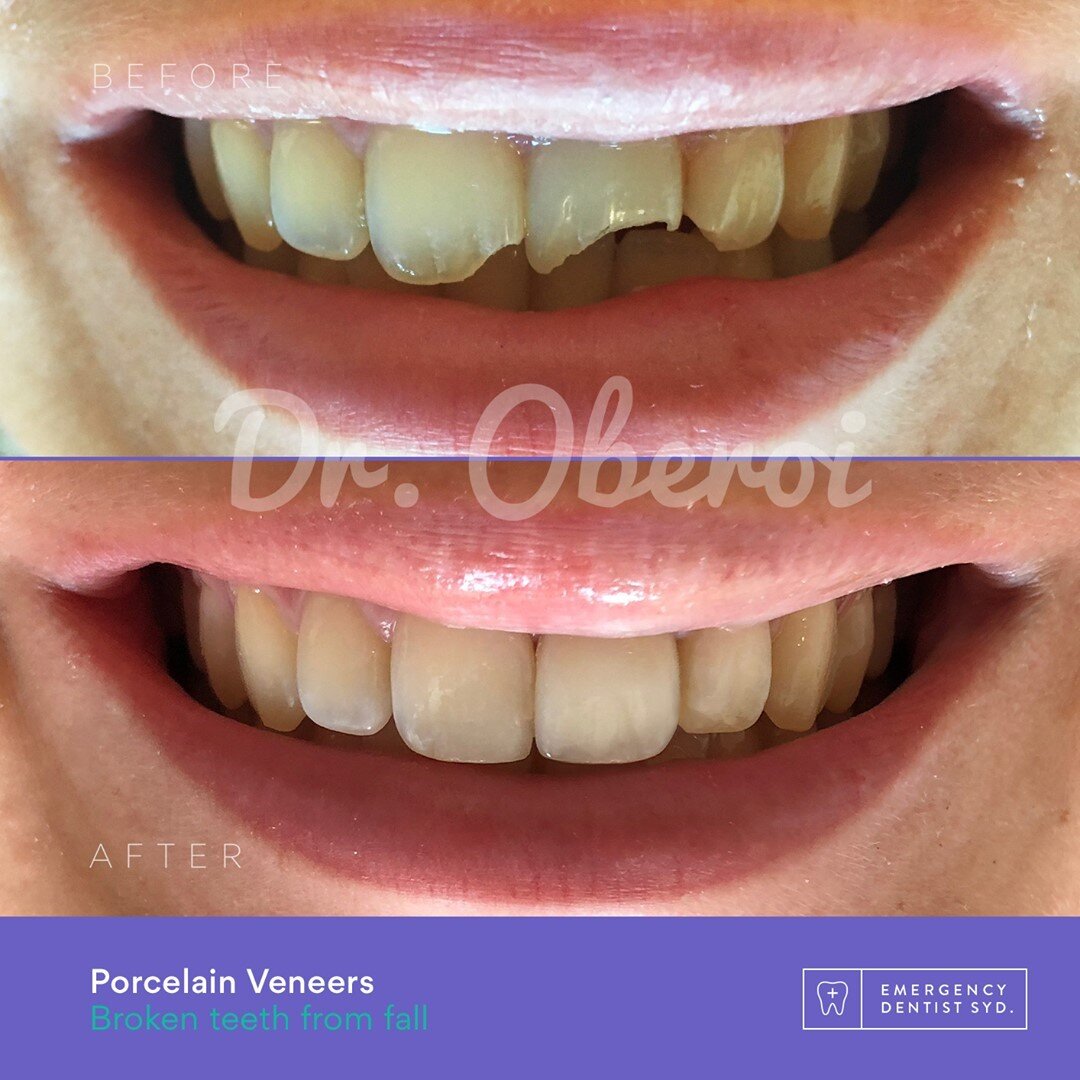
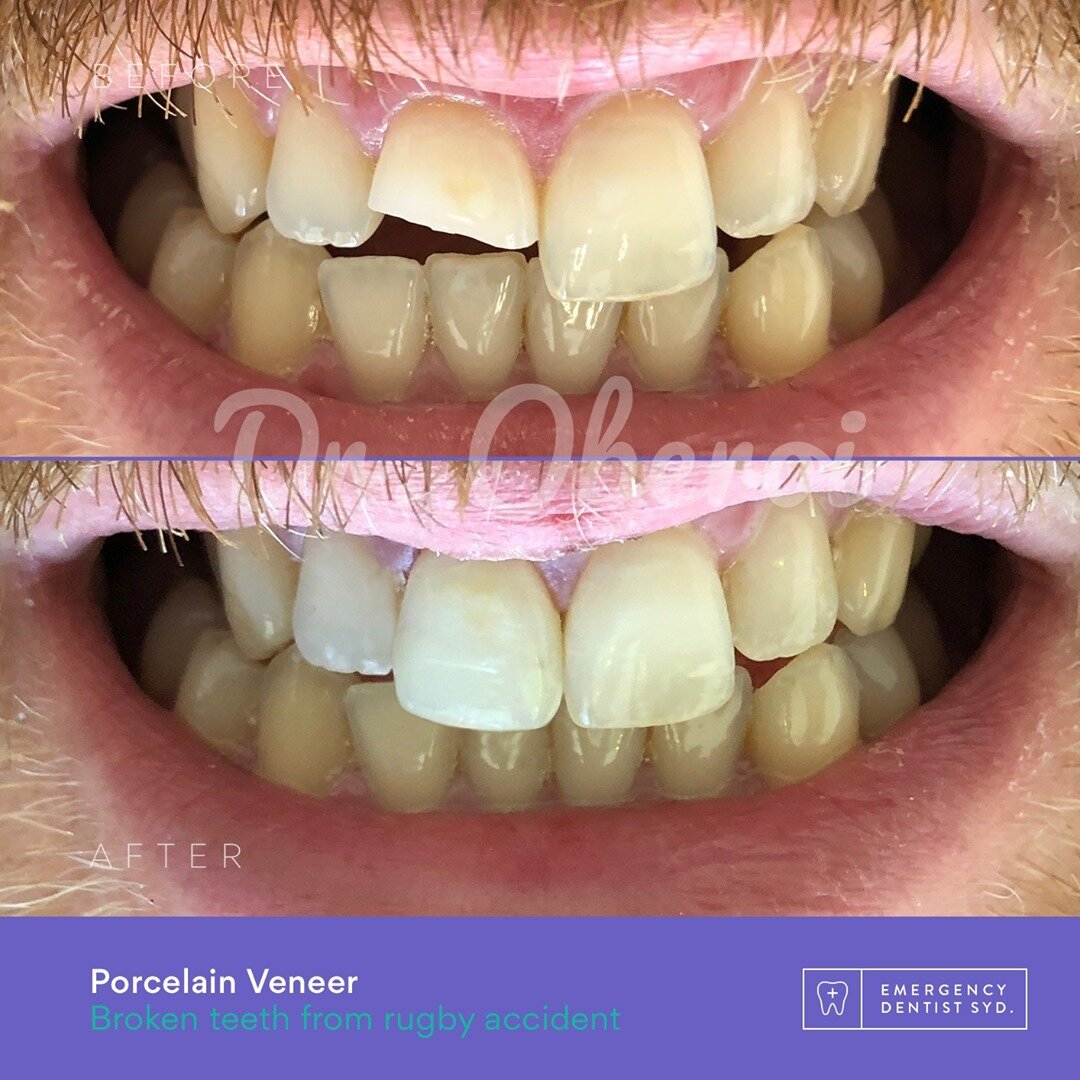
Crowns, veneers and bridges are all used to replace missing or damaged teeth. Crowns are used to encase an entire tooth. They’re most often used when the tooth is decayed or damaged and improve the strength and the appearance of the tooth. Veneers cover the front side of the tooth, the part that faces outward, and improve the appearance of a damaged or broken tooth. And finally, a bridge is an artificial tooth that’s attached to surrounding teeth.
Despite the strength and durability of these dental additions, they can sometimes become damaged or loose. This can occur when the procedure is fairly recent and hasn’t completely set yet, because of injury, or while you’re eating something hard. If you lose a crown, veneer or bridge, your dentist will need to evaluate the area to see if the original addition can be re-applied. If not, you will have to decide what step to take next. If the dental addition can be reapplied your dentist will clean your mouth and the implant and reattach it.
Emergency Dentist Sydney Says:
If you have a toothache after office hours, make sure you contact our Emergency Dentist in Sydney. Our caring and expert staff are available now to take care of all your emergency dental needs.

Cracked a Tooth?
What to Expect When You Visit the Dentist
What to Expect When You Visit the Dentist
Cracked teeth happen, but they can happen in a number of different ways. A trip, a fall, a blow to the mouth. Biting down on an apple that's just a bit too hard. Grinding your teeth at night and doing so just a little too hard. Or maybe you notice that after such an incident your tooth doesn't seem to be cracked or broken but it does seem to have been dislodged or pushed back and that too is rather disconcerting.
Sometimes there isn't actually much pain involved when a tooth gets cracked. Sometimes it's only painful when you eat or drink something very hot or very cold. Sometimes there is lots of pain. So, when should you actually see a dentist? Should you even bother?
The answer to the second question will always be a 'yes'. Whenever a tooth has been cracked, fractured or dislodged there is a very real danger of permanent damage. Should you see a dentist on an emergency basis? That may vary from case to case, but to be on the safe side it may be a good idea to call an emergency dentist for advice as to how best to proceed based upon what has happened to you.
How are Cracked Teeth Treated?
So, you are headed to the dentist to get your damaged tooth looked at. What can you expect once you get there? That again will depend very much upon what damage has actually been done to the tooth. In some cases, cracked teeth can cause nerve damage as well as damage to the outer surface of the tooth. In others, there may be a danger of infection to any exposed pulp. And in almost every case we see, a patient is concerned about what can be done to minimise the aesthetic damage to their smile.
Common treatments for cracked or broken teeth, however, include all of the following:
Porcelain Crowns or Veneers
Temporary braces or brackets
Teeth Whitening
Removal of the teeth or Extractions
Gum Treatment or Periodontal Treatment
As you can see, the possible treatments vary quite widely. Just which will be appropriate for you is a decision you and your dentist will make after you have undergone a thorough dental examination and, very importantly, x-rays, that will help determine just what damage has been done.
Whatever treatments you do eventually need for your cracked or dislodged tooth the one thing you should not do is ignore the problem or put off a trip to the dentist. Modern dental techniques can help repair all kinds of damage and save teeth that may otherwise have had to be pulled, but often time is of the essence.
Emergency Dentist Sydney Says:
Cracked or dislodged teeth can be effectively treated and repaired. Prompt treatment is the key, however, so the faster you see a dentist after cracking a tooth the better
Patient Care First

Keep Up-To-Date with All Things Oral & General Health
RECENT ARTICLES







For 15 years, we've had one mission - when Sydney has a dental emergency, Emergency Dentist Sydney is there
We're proud to celebrate 15 years of providing emergency dental services to Sydney CBD and surrounding suburbs.