
Can Toothache Be Prevented?
How to Avoid Toothaches by Protecting Your Oral Health
How to Avoid Toothaches by Protecting Your Oral Health
Toothaches are fairly common but also extremely unpleasant. There are a number of problems that can cause toothaches including infection and abscesses. However, the most common cause is tooth decay. When this occurs, it means you will have to make an expensive trip to the dentist for a filling. Fortunately, it’s also fairly easy to avoid this kind of toothache. You just need to take better care of your oral health with the following steps.
1. Regular Brushing
You should brush your teeth at least twice a day for at least 2-3 minutes if you want to avoid emergency trips to the dentist with a toothache. And don’t guess at the timing either, make sure you take a watch with you, at least while you’re getting used to your new habit.
2. Floss Every Day
Brushing is good but it can’t get rid of the small particles of food that get stuck between your teeth. Flossing at least once a day will help you avoid the build-up of food and bacteria between your teeth that causes cavities.
3. Avoid Sugar and Sticky Foods
The bacteria in your mouth need sugars to survive and multiply. This means that your diet is incredibly important in determining the health of your teeth. Try to avoid sugary foods like soft drink and juice. You should also cut down on the amount of sticky foods you eat because they can easily become stuck to and between your teeth. This means cutting down on candy and caramels, or at least brushing and flossing well when you do eat them.
4. Eat Vegetables
If you want healthy teeth and a healthy body you need to eat lots of raw, healthy vegetables. Vegetables are packed with essential vitamins and nutrients and they also contain lots of water, which can help to clean the bacteria from your teeth.
5. Drink Lots of Water
Water is essential for every system in your body and that applies to your teeth as well. Drinking water helps to wash bacteria away from your teeth and it also encourages saliva production, which protects your teeth in between brushing.
6. Have Regular Check-Ups
If you want to keep your mouth healthy, you need to visit your dentist twice a year for a check-up. Your dentist will be able to see signs of problems early, which is key to quick and easy treatments. This will help you avoid late night visits to your after hours dentist. Your dentist will also give your teeth a complete and thorough cleaning, which will improve your overall oral health.
Emergency Dentist Sydney Says:
If you have a toothache after office hours, make sure you contact our Emergency Dentist in Sydney. Our caring and expert staff are available now to take care of all your emergency dental needs.

Give Bad Breath The Boot
There are a number of reasons why a person may suffer from bad breath. These are the most common causes...
5 Easy, Effective Ways to Combat a Bad Breath Problem

Bad breath. People who suffer from it are normally either unaware of the fact or truly embarrassed about it. They often wonder just what they should be doing about it, as strong chewing gums and breath sprays only seem to go so far. The good news is though that most cases of halitosis - that's the scientific name for bad breath - can be addressed pretty easily.
What Causes Bad Breath?
There are a number of reasons why a person may suffer from bad breath. The most common include:
- Poor dental hygiene
- Persistent dry mouth
- Tooth decay
- Gum disease
- Smoking
- The consumption of pungent foods (garlic etc.)
- Some medical conditions, including diabetes and acid reflux
In the case of the last item on that list it may be that the person has the best oral hygiene in the world but their health prevents them from having really fresh breath. In these cases a combination of a GP and a dentist's advice and care is called for to address a halitosis, problem. For many people though the issue can be solved with a change of habits and a little more awareness of the fact that the problem exists.
Here are usually very effective ways to combat bad breath:
- Improve Your Dental Hygiene.
Not only do people need to stick to the oft given advice that they brush at least twice a day with a good toothpaste they also need to address two other causes of bad breath due to poor dental hygiene; bacteria and food remnants stuck in the teeth.
It's not that hard to get food stuck in your teeth, but if it's allowed to remain there it will usually begin to rot (sounds horrible but it's true) and smell. Flossing on a daily basis (at least) will help remove stray food particles and bacteria can be addressed with an anti-bacterial mouthwash. Brushing your tongue, as strange as that may sound, will help as well.
- Stay Hydrated.
Dry mouth is another 'leading cause' of bad breath that can be fairly easily addressed. Many people don't realise that they are not drinking enough during the day but it's an easy fix. Get into the habit of sipping from a bottle of water throughout the day and try to consume the equivalent of two litres of water a day.
- Brush After You Eat Stinky Foods.
We could just say stop eating 'stinky' foods to avoid bad breath but, to be fair, there are a lot of great - and even great for you - foods that fall into that category.
A better idea then is to make sure you brush after consuming pungent foods, even when you are away from home. A travel toothbrush and paste isn't hard to fit into a handbag or pocket and these days you can even buy pre-pasted travel brushes relatively inexpensively that are even more convenient.
- Gum Can Be Your Friend.
Chewing gum can be a good way to remove stubborn food particles, keep dry mouth at bay and freshen breath, so yes, the adverts are right, it is always a good idea to keep a pack in your pocket.
- Don't Smoke.
We know, that's easier said than done. If you do still smoke these days despite all of the outside pressure to quit - and there's a lot - chances are you've been struggling to do so. In this case there's no shame in asking your GP or dentist to suggest ways to help, and they'll usually be quite happy to do so.
- Schedule Regular Checkups With Your Dentist.
Some underlying causes of bad breath, like tooth decay and gum disease - really need to be treated by a dentist. By making sure you stick to a regular check up schedule your dentist ill be able to spot - and treat - such problems and then help you tailor your dental hygiene plan to help prevent them from reoccurring.
The Emergency Dentist Says:

Bad breath is no laughing matter, it can really impact your life, especially your social life. In many cases though it's a problem that can be- with the help of your dentist - solved pretty easily.

Gum Disease & Your General Health
Do you happen to know what the leading cause of tooth loss is in Australian adults? Many adults often don't even know they have gum disease until it's almost too late...
Get the Facts Before It’s Too Late
Do you happen to know what the leading cause of tooth loss is in Australian adults? If you (logically) answered tooth decay then you aren't actually quite right. Although decay is responsible for more than its share of damage it is actually gum disease that wrecks the most havoc. And many adults often don't even know they have it until it's almost too late...
What is Gum Disease Anyway?
Gum disease - a condition that is also known by the posh scientific names of gingivitis and periodontitis - is primarily caused by plaque, just like tooth decay is. A plaque build up will damage the teeth but it won't stop there, it will damage the very structures that support the teeth, the gums doing damage that can, at times, be harder to treat than tooth decay is.
Gum disease can progress without ever showing any major symptoms. However all of the following can be big warning signs that all in the Land of Gum is not quite right:
Red, swollen or tender gums
Bleeding after brushing, flossing, or eating hard food
Gums that are recede or pulling away from the teeth, making teeth look longer than before
Teeth that feel looser than they did before
Persistent bad breath
Treating Gum Disease
As is almost always the case, when it comes to gum disease prevention is better than cure. But more about that in a minute. For now let's focus on how it's treated
Gum disease comes in two stages; gingivitis and periodontitis. When caught while it's still gingivitis treatment is relatively straightforward. Your dentists will use a process called scaling - a type of super intense cleaning - and then instruct you on how to improve your oral hygiene to help prevent the problem coming back. Gingivitis is totally reversible and so with prompt treatment your gums will return to their former healthy state.
Periodontitis is a bit of a different matter. It's usually more serious and calls for first more intensive scaling. You may need a local anaesthetic before the treatment and it may have to continue over the course of several treatments. In the most severe cases periodontitis may even need to be surgically treated by a dental specialist called a periodontist, one who has specialist in training in gum disease and its treatment.
Preventing Gum Disease
So we're sure by now that you've figured it out for yourself. Gum disease can be successfully treated by your dentist but it really would be a lot better - and easier - if it never came to that in the first place.
Daily oral hygiene is a big key to the prevention of gum disease. Teeth need to be brushed at least twice a day with a good toothbrush and a fluoride toothpaste. Smoking also increases the chance you'll develop gum disease so that is yet another reason to stop. Consider investing in an antibacterial mouthwash to be used on a regular basis and DO NOT skip those regular cleaning appointments at your dentist's office.
The Emergency Dentist Says:
Gum disease is nasty stuff, but it can be prevented, and if needed treated, very effectively with your dentist's help. You just have to make that first call.

What Advice Would You Give Your Younger Self?
When it comes to dental care and oral hygiene we know now how important it is to begin good habits from a young age...
What Advice Would You Give Your Younger Self?

At the Emergency Dentist Sydney we got to talking about our habits as children and what we might say to our younger selves. When it comes to dental care and oral hygiene we know now how important it is to begin good habits from a young age. Not everyone is knowledgable on the effects of poor oral hygiene on quality of life in your later years.
Toothache or pain and loss of teeth, resulting in the inability to chew comfortably can lead to malnutrition, weight loss, weakening of the immune system and infection. As we age we notice the obvious stuff like wrinkles and hair loss but we may not be as aware of changes in our teeth and mouths.
We asked ourselves the question, what advice would you give your younger self about oral hygiene and dental care? These are our top responses:
- Don’t smoke, if you do, stop, yuk!
- Stick to the food pyramid when it comes to eating. Eat a variety of food, eat food which is full of vitamins, minerals and fibres and get lots of variety where you can.
- Visit a dentists regularly for checkups, no excuses.
- Learn how to floss properly and do it daily.
- Brush twice daily, regardless of how tired you are at night or how busy you are in the morning.
- Rinse your mouth with water during the day when you’ve eaten processed foods, sweet foods or foods and drinks that can stain the teeth.
- Don’t put off dental problems. If you have concerns make sure you see your Dentist and avoid long-term complications.
You may think it doesn’t really matter, you can just get dentures, veneers, browns or crewed in teeth when you’re older, but this comes at some loss to your long term health.
Well looked after teeth are a reflection of your general health. Retaining your real teeth means better health long term. The American Journal of Public Health reports that ‘chewing with removable dentures is at least 30 to 40 percent less efficient than chewing with natural teeth. Persons with extensive or complete tooth loss are more likely to substitute easier-to chew foods such as those rich in saturated fast and cholesterol for foods high in carotenes, vitamin C and fibre’. Poorly looked after gums also comes with an array of long term side effects.
These are a few of the more common side effects of poor oral health:
- Loss. To the structure of your jaw and face.
- Cardiovascular Disease. Bacteria from inflamed mums and periodontal disease can enter your bloodstream and travel to your arteries in the heart. This can then cause such things as heart attack or stroke resulting in an endocarditis or myocarditis.
- Dementia. Bacteria from gingivitis may enter the brain and can lead to the development of Alzheimer’s disease.
- Respiratory Infections. The Journal of Periodontology warns gum disease can cause infections in your lungs, including pneumonia. This isn’t always an instant infection but, imagine breathing in bacteria over time from infected teeth and gums.
- Diabetic Complications. Poor oral hygiene can make it harder to control your blood sugar. This can increase the symptoms of diabetes and make them worse.
The #EmergencyDentist Says:
The the beauty of hindsight means we can see how things could be. With the knowledge of what can very well happen, we think sticking to these 7 tips will keep your oral health and your general health kicking strong in to the future.

Oral Health Tip #01 – Brushing
Brushing your teeth effectively is important to making your twice daily brush count. You may have never been shown how or you might be in need a refresher...
Effective bushing
Brushing your teeth effectively is important to making your twice daily brush count. You may have never been shown how or you might be in need a refresher.
When should I brush my teeth?
Simple rule, when you wake up and before you go to sleep.
Mornings. There is debate as to wether you should brush before or after breakfast. The evidence is bacteria grows while your asleep and responds to the food and their production of acids after you have breakfast. As such, the teeth are softened by the reaction taking place in your mouth. Brushing after this process will remove substances however, brushing before eating will remove most bacteria before this takes place. Best practice is to brush before and rinse after if you feel you need to.
Night time. It is very important to brush before you go to sleep. If you don't, particles from food or drink are left in contact with the teeth and have the whole night to cause permanent damage to your teeth and gums. Brushing before sleep ensures the best possible conditions for your mouth to protect your teeth while you sleep.
How do I brush correctly?
Start on top. First brush the insides. Technique: Circular and forward motioning.
Then brush the outside. Technique: Circular motioning with a mix of soft and hard pressure.
Next brush the biting surfaces. Technique: Firm pressure, back and forth motion.
Repeat these three steps.
Lastly brush your tongue. Technique: Side to side, back and forth.
How long do I brush my teeth?
4 minutes. Most dentists, including The #EmergencyDentist Sydney, agrees 4 minutes of brushing is optimum. Be practical, divide your time between your teeth. 2 minutes for the top, 2 for the bottom. Then, 1 minute each for the back and for the front.
Do I brush first or floss?
We say, floss first. Everyone has a different opinion on this, we take a practical approach.
When you floss you are cleaning in between your teeth and, in most cases, you are moving particles of food from between your teeth to the inside of your mouth or the surfaces of your teeth. We therefore would recommend brushing after doing this. We like to compare it to cleaning under your nails vs washing your hands. Most people would want to wash their hands after removing dirt or other nasty things from under their finger nails. That's our theory.
But there is no concrete evidence to support either order of brushing vs flossing. As long as you are disrupting the happy lives of bacteria who build little communities and multiply on and in between your teeth, you are doing the right thing.
If you do prefer to brush before flossing, we recommend thoroughly rinsing after flossing.
The #EmergencyDentist Says:
Brush before breakfast – It doesn't really matter if your brush before or after you floss

Dental Care 101: Prevention Tip
Let's get started with a few dental hygiene prevention tips...
Prevention Is Your Best Friend: Here's Our TOP 10 List
Every person's smile is unique and so is their dental care requirements. However, there a few things we can all do, from a young age, to ensure we keep the teeth we have and keep them healthy. Let's get started with a few dental hygiene prevention tips:
Our top tips:
Brush Regular!It's simple but lots of us don't do this most simplest of activities. So, brush twice a day, after meals where possible.
Floss Regular. Twice a day to be exact! A slow sawing motion is the best way to do it. If you're not sure how to do it ask your Dentist at your next visit. If you are a regular 'flosser' you should check your technique at your next check-up, just in case. For detailed info on how to floss right check out our flossing tips page (link to come).
Choose The Right Toothbrush For You. The toothbrush you choose should have a head small enough so that you can reach behind your back teeth. The bristles should also be soft, these will be kinder to your gums long term.
Right. The average adult should brush their teeth for about 3 minutes and combine a technique of up and down on teeth surfaces and soft circular motion where your teeth meet your gums. Anything shorter and you're probably not paying enough attention to where and how you're brushing. If you brush longer than 3 minutes you may be causing gum or plaque damage, so keep it close to 3 minutes. For detailed instructions on how to brush right check out our brushing tips page (link to come).
Limit Acidic Foods & Drinks. These include things like soft drink or fizzie drinks, cordials and fruit juices. The acidic levels in these manufactured foods and drinks are concentrated and above the desired standard levels. They will dissolve the minerals contained in the enamel that coats and protects your teeth, leading to cavities (holes).
Limit Sugary Foods. These include things like lollies and candies, sweeteners, dried fruits, cakes, jams, some cereals and sauces. The bacteria in dental plaque change sugars in to acids and we all know what that does.
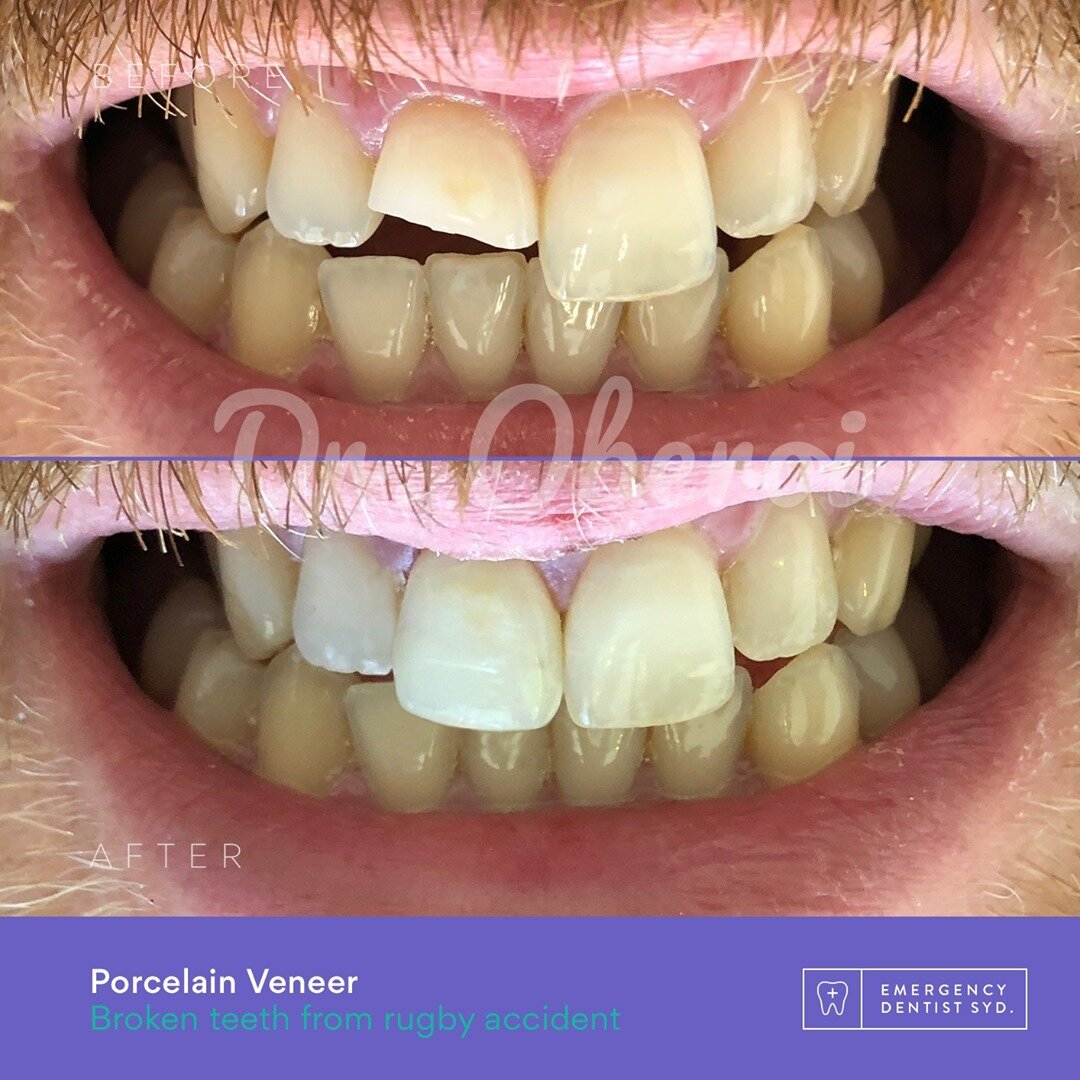
Protect Teeth From Injury. Always wear a mouthguard or full-face helmet when playing any contact sports.
Save Dislodged Teeth. Should your teeth be knocked out while playing sport or in an altercation or accident, seek medical advice immediately. Once you have done this you should wrap the tooth in plastic or place it in a container of milk until you are able to seek medical advice.
Use Your Teeth To Chew! Doing things like cracking nuts, opening bottles by popping off the lid with your teeth, or sucking on a hard boiled lollies or candies can crack or chip your teeth. These may not be evident or noticeable at the time they occur but will develop in to bigger problems with time.
Use A Fluoridated Toothpaste. Fluoride hardens your tooth enamel and helps greatly to reduce the risk of tooth decay.
Patient Care First

Keep Up-To-Date with All Things Oral & General Health
RECENT ARTICLES







For 15 years, we've had one mission - when Sydney has a dental emergency, Emergency Dentist Sydney is there
We're proud to celebrate 15 years of providing emergency dental services to Sydney CBD and surrounding suburbs.