
How Much Bacteria Is in My Mouth?
The Problems and Solutions
The Problems and Solutions

You might look in the mirror and think your teeth are clean but it’s the things you can’t see that matter. Bacteria are tiny organisms that live in every organ in your body and over every inch of your skin. And most of the time they’re absolutely harmless as well as essential to your continued health and wellbeing. But when it comes to your oral health, there are a few bacteria that can do a lot of damage.
Tooth Decay Bacteria


Bacteria can be found all through your mouth and can build up depending on what you eat and do. The most common type of bacteria that causes tooth decay is called Streptococcus mutans. This bacteria is always found in the mouth and feeds on the sugars and starches that you eat. The worst bit is that it secretes acids that attack the enamel of your teeth, causing cavities and gum disease.
Gum Disease Bacteria


Gum disease can cause a lot of damage to your mouth. There are two types of bacteria that usually cause gum disease, known as Treponema denticola and Porphyromonas gingivalis. These bacteria can increase in number and secrete toxins that disrupt the normal balance of bacteria in your mouth. When this occurs, the bacteria attack the gums and cause infection, pain, and even tooth loss. Gum disease can be a serious problem, so if you think you have it make sure you seek professional help as soon as possible as it must be treated by a qualifies dentist to ensure the best outcome possible.
How to Keep Your Mouth Healthy

It’s impossible to get rid of all the bacteria in your mouth, and if you managed to do so you would be extremely sick. However, you need to be aware of the problems that some of these bacteria can cause and take measures to control their numbers and keep your mouth healthy. The following steps will help you do that:
Brush at least twice a day, especially after meals.
Floss your teeth every time you brush.
Make sure you see your dentist regularly for check-ups and cleans.
Chew sugarless gum after meals to encourage saliva
Use an anti-bacterial mouthwash regularly.
Avoid sugary foods and drinks.
Emergency Dentist Sydney Says:
For the best general and emergency dental care, contact our Emergency Dentist in Sydney. Our caring and expert staff are available 24 hours a day to help you with all your emergency dental needs.

Is Tooth Enamel Loss Really Permanent?
Keep it Healthy
Keep it Healthy
Your tooth enamel is pretty tough and it has to be. It’s under constant assault from foods and drinks, not to mention the bacteria that grows in between brushing. Plus, every time you drink a soft drink or eat something sugary, it makes your enamel weaker. And that’s a problem because your enamel defends your teeth against decay, and when it gets damaged you’ll probably end up having to make an emergency trip to an after hours dentist. If you want to avoid that, here’s what you need to know about this essential part of your teeth.
What is Enamel?
Enamel is the hard coating over the softer parts of your teeth. It’s made primarily of a mix of minerals, and is the hardest substance in the body, harder even than your bones. However, once your enamel is damaged or worn away, it doesn’t grow back. Though your dentist can repair small lesions that weaken enamel, once it’s gone you’re going to have serious problems with your teeth for the rest of your life.
There are a number of things that can damage the enamel on your teeth. The most problematic are:
Soft drinks, because the high sugar content eats away at the enamel and weakens it overall.
Sugary foods, which have the same effect as soft drinks.
Certain medications can soften the enamel.
Conditions like Bruxism or teeth grinding, because the constant motion wears the enamel away.
Diseases like Acid Reflux Disease, where stomach acids rise from the gut and can wear away the teeth.
Genetics.
How to Tell if Your Enamel is Worn
It’s usually pretty easy to tell if your enamel has been damaged or worn away in any areas. With the enamel gone, the soft inner surfaces of your teeth will be exposed to the open air and to any food and drink that you consume. This means that the affected teeth will become discoloured or stained more easily. Your teeth will also become more sensitive to hot and cold foods or drinks.
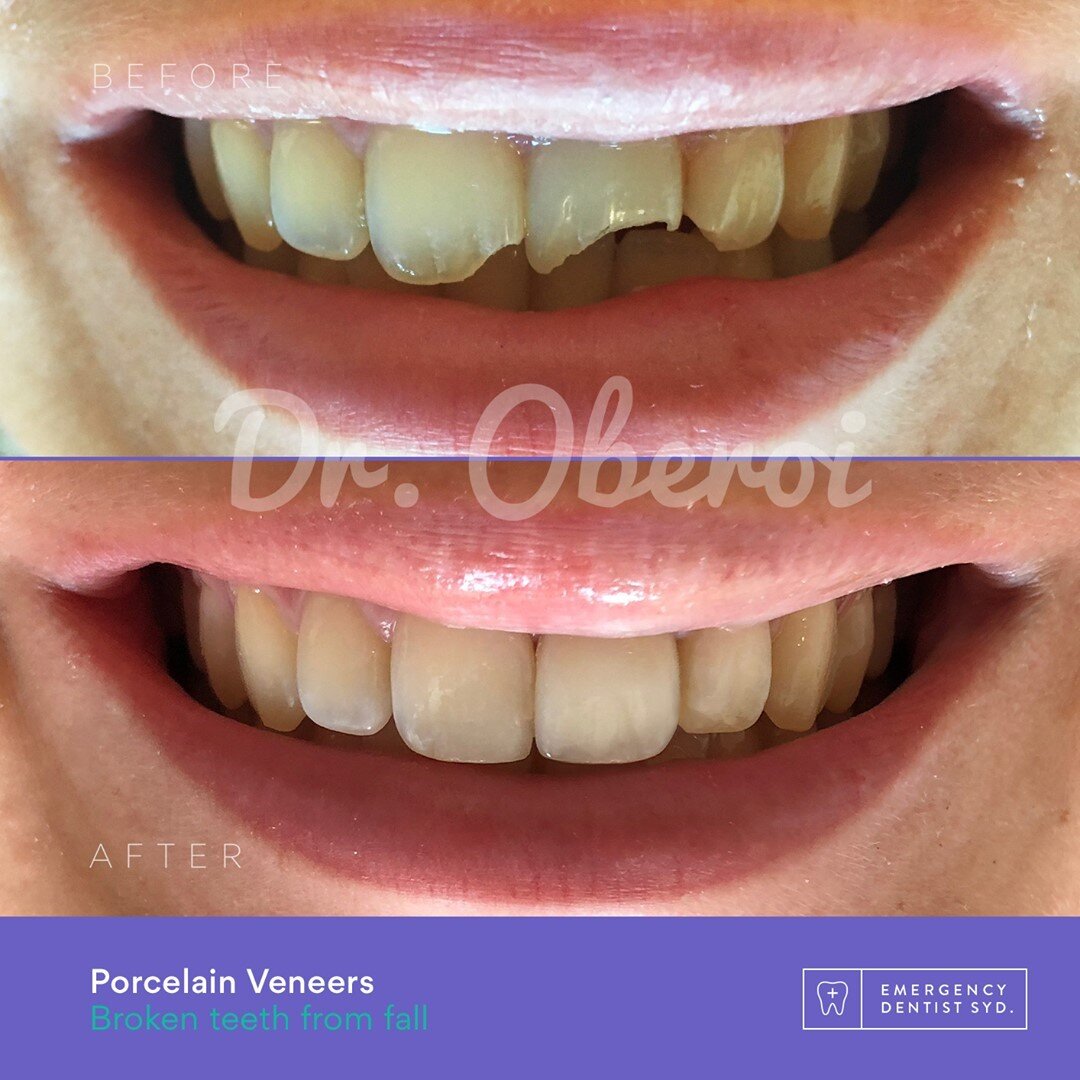
Enamel is very strong, which is why your teeth are fairly hard to break. But when the enamel wears away, you will also notice that your teeth chip or break more easily. This is why you need to visit your dentist if you notice any changes in your teeth. Because once your teeth start to break, fixing the problem becomes much more difficult.
Strengthening and Repairing Enamel
Once your enamel is gone, it can’t be replaced. However, if you know ahead of time that your enamel is thinning then you can take steps to try and boost its health. That’s one reason why you need to make regular trips to the dentist for check-ups, because they’ll be able to tell you if you have a problem with your enamel.
Products that contain fluoride can be very helpful in keeping your enamel strong. Fluoride acts as a barrier between food and drinks and your enamel, preventing damage or degradation. You can also find toothpastes that contain minerals that will help to strength enamel weak spots by inundating them with calcium. This will help prevent further damage to the enamel and hopefully prevent it from being completely worn away from your tooth or teeth.
How to Prevent Enamel Loss
You can’t replace enamel that’s been lost, that’s why the best strategy to preserve your oral health is to avoid things that cause damage. So if you grind your teeth, talk to your dentist about a mouth guard. Try to avoid medications such as aspirin which cause enamel erosion. Avoid sugary foods and drinks as much as possible. And most of all, take a proactive role in your oral health. This means informing yourself about the health of your enamel and talking to your dentist about any issues before they become serious problems.
Emergency Dentist Sydney Says:
If you have a dental emergency, contact our Emergency Dentist in Sydney. Our caring and expert staff are available 24 hours a day to help you with all your emergency dental needs.

The Truth About Tooth Enamel
Tooth Enamel Facts You Need to Know
Tooth Enamel Facts You Need to Know
Tooth enamel is the hard, outer layer covering each tooth. It is the hardest substance in the human body and protects the sensitive inner layers from the discomfort of foods and drinks that are really hot and cold. You are also probably familiar with its vital role in protecting our teeth from damage and decay. What other tooth enamel facts do you know? Check out these common tooth enamel facts and tips below.
1. The Difference Between Abrasion and Erosion
There are two types of tooth enamel damage. Abrasion occurs when something brushes against your teeth, for example, using a hard-bristled toothbrush or scraping your teeth with a hard object. Erosion is caused by certain foods and drinks that are sugary and acidic. These foods and drinks are most damaging because when they interact with the bacteria in your mouth, lactic acid is produced, and this is something that can lead to the start of a cavity. When your teeth are eroding, you will notice that your teeth are becoming sensitive and are appearing slightly yellow.
2. Tooth Enamel Doesn't Come Back

Once your tooth enamel has eroded, it will not regrow. Enamel is made from minerals so it does not contain any living cells, making it impossible for it to repair itself. However, there are ways you can prevent this from happening and ways to treat the damage. Dental bonding can be used, or crowns can be applied but your dentist will be able to recommend you the right treatment option for you. In terms of prevention methods, you can start by eliminating certain foods and drinks out of your diet. When you have that craving for your favourite soda, use a straw. Another great tip is to gently rinse your mouth with water after eating because if you brush your teeth too soon after eating acidic food, that can actually make it worse. You can also start chewing sugarless gum.
3. Don't Neglect the Damage
Ignoring the damage or avoiding the dentist will not only cause more pain to your eroded teeth but will make treatments more expensive. As your teeth enamel erodes, your teeth will become overly sensitive as it will expose the inner sensitive layer underneath called ‘dentin’. Because your teeth won’t have the protection it needs from enamel, they will be susceptible to decay quickly. Your teeth will also be stained, giving your teeth a yellow appearance. Always make sure to have 6 monthly check ups so your dentist knows the state of your teeth.
Enamel is so important for our teeth and we need to take care and protect them as they protect us. It is vital to follow some of the tips mentioned above to prevent your enamel from eroding. It may sound difficult to give up your favourite sugary snacks and soft drinks, but the damage is way worse. If you do consume sugary and acidic foods and drinks, always remember to maintain good oral hygiene.
Emergency Dentist Sydney Says:
Protect your enamel and your overall dental health by practicing good oral hygiene habits like twice daily brushing and flossing. And don’t forget to visit your dentist every 6 months!
The Charcoal Toothpaste Trend
Should You Try It?
Should You Try It?
Health fads and trends come and go. Remember last year, when half your mates were declaring they were going to change their lives by eating like a caveman on the Paleo diet? Or when that girl at work told you that she was getting ready for summer bikini season by squishing herself into an elastic corset belt because Kim Kardashian does and swears it works?
Fortunately, these kinds of very questionable health trends do tend to die out quickly. Your Paleo eating mate gave that up when he realised that life without meat pies, pizza and a nice big sandwich occasionally was pretty sad. And the waist trainer woman went back to working out at the gym to get a beach bod rather than suffocating herself with Kardashian approved underwear after the third time she passed out at her desk because she couldn't breathe.
Charcoal Toothpaste. Black = White?
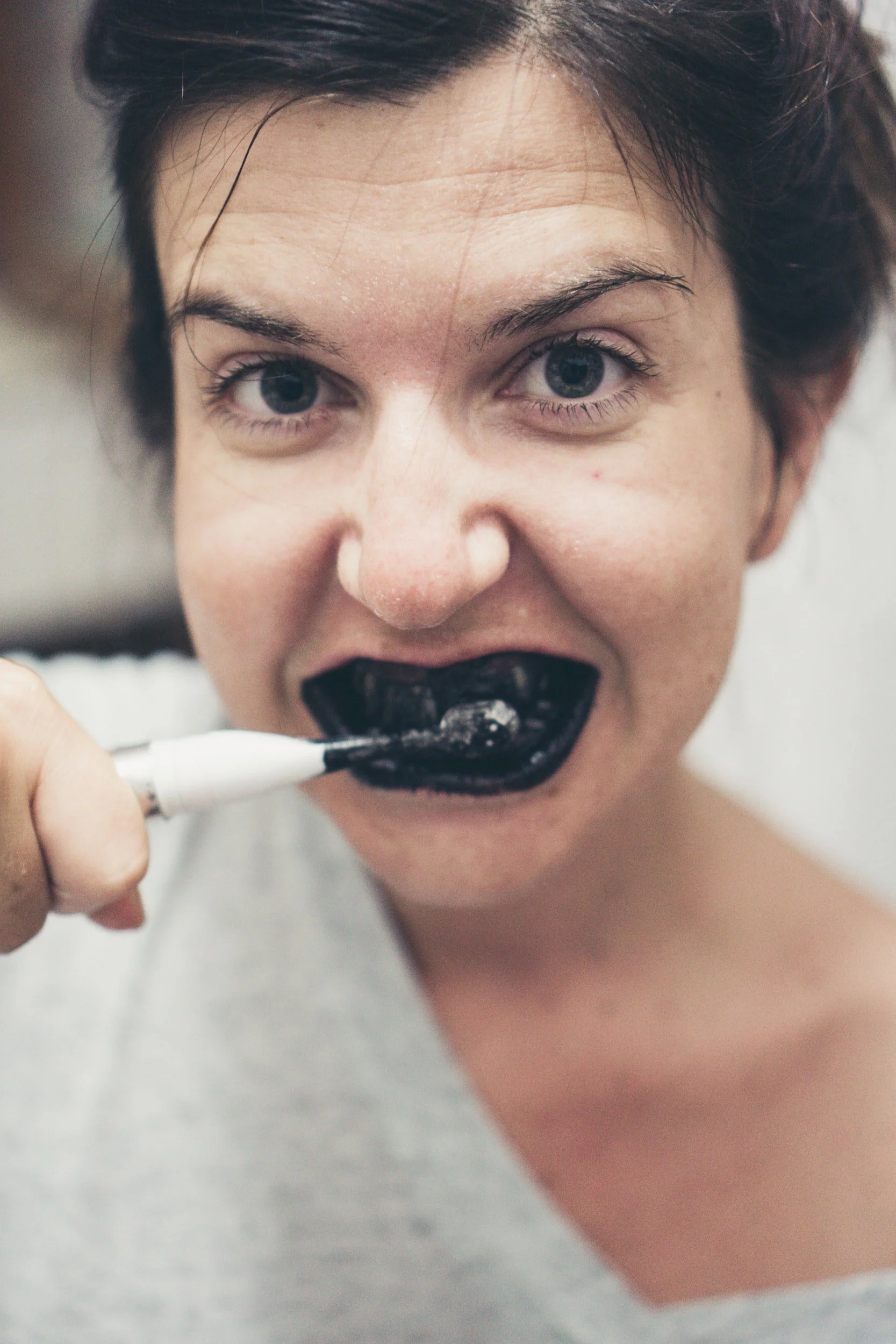
One very questionable 'trend' that is still going strong however is the idea of using charcoal toothpaste to get bright, white teeth. If you haven't tried it (and we hope you haven’t, but we'll get to that in a minute) you've seen it on your Facebook or Instagram feed. Someone with a mouthful of what looks like black tar and a big grin on their face because they can assure you that this rather gross looking toothpaste is going to give you the whitest, brightest smile possible.
If you do a quick Google search, you'll see that everyone and his Aunty is selling their own version of this new 'wonder; toothpaste. Some of it is even mixed with other 'miracle' ingredients like clay, 'minerals' and coconut shells (!??) And none of it's cheap. But it is vegan. So, here's the big question; should you hop on the charcoal toothpaste bandwagon and plonk down your $20 (and up) for a little tube of black gloop? After all, summer's coming and you do want to look your best from head to toe.
The Truth About Charcoal Toothpaste
Now, the idea of using charcoal to clean your teeth is not new, whatever that nice hipster lady on YouTube says in her 'infomercial'. The Ancient Romans used charcoal to clean their teeth over two thousand years ago. But that's not really much of an endorsement, as they also used urine as a mouthwash, washed their faces with gladiator blood to get a clearer complexion and made a habit of vomiting half way through a big meal just so they could eat more. So not exactly the health experts you want to follow, to say the least.
The fact is not only will charcoal toothpaste not make your teeth any whiter, prolonged use will actually destroy them. Activated charcoal is hugely abrasive, so yes, it may get some stains off your teeth, but it will also begin to take the enamel off as well. Once your enamel is gone, you can never get it back. At that point the next 'layer' of the tooth, dentin, will be exposed, and as that has a natural yellow tinge you'll be left with teeth that look yellower than ever before and that are at a much greater risk for decay and damage.
The lesson here is sometimes the boring old ways just work. However uncool it is, a good old-fashioned fluoride toothpaste is still the best way to clean your teeth. And if you are concerned about the colour of your teeth, a professional whitening treatment at your dentist's office won't cost you too much more than that trendy charcoal toothpaste and it'll actually work.
Emergency Dentist Sydney Says:
Should you try it? No. Why use charcoal toothpaste to whiten your teeth when we already have medical grade, safe, dental board approved products that do that for you and don't destroy your teeth in the process.
Many of the odd health trends out there are pretty harmless, but charcoal toothpaste isn't one of them. It's not worth potentially damaging your teeth for good for the sake of being trendy, so stick to your tried and tested toothpaste and save all that extra cash for something that might actually benefit the appearance of your teeth, like visiting us for a good clean and polish.

5 Reasons Why Your Teeth Might Be Hurting More This Winter
Winter in Sydney...
Winter in Sydney
Although it's not everyone's favourite season, winter in Sydney can be great for lots of reasons. But, as you may have noticed over the years, it's not always that great for your teeth. Colder weather often brings along with it tooth pain and especially tooth sensitivity, even if at your last dental check up your teeth got a relatively good bill of health.
The bad news is that the winter weather can indeed affect your teeth. The good news is that there are things you can do to minimise the damage - and pain - that the colder months can cause. With that in mind here's a look at the top five reasons why your teeth might give you extra problems this winter and what you can do about it.
1. Overly Aggressive Brushing
Yes, you have been told, correctly, since you were a kid that you need to brush your teeth at least twice a day. But the operative word here is brush, not scrub away like a maniac. If you brush your teeth too hard, or with a very stiff bristled toothbrush, you may begin stripping away enamel as well as plaque, leaving the softer inner part of your tooth exposed to the elements, something you'll feel a lot more when the air hitting them is cold.
When brushing your teeth take you time and use gentle strokes, as doing so will not only shield your smile from winter sensitivity but protect them from damage in general as well.
2. Winter Whitening Overkill
Winter in Sydney offers up all kinds of fun festivals and events that are a great excuse to get out and party. And if you are going to party, you want to look your best and dazzle everyone with a stellar smile. Those tempting home whitening kits at the chemists promise they can do that, but if you are considering using one this winter you'll need to take care.
Although home teeth whitening kits can have some effect, they often contain overly harsh chemicals that eat away at the enamel of the teeth, weakening them and making them more sensitive. A better way to go is to head to the dentist to discuss getting a professional whitening treatment that will look better, last longer and not leave lasting damage behind.
3. Your Hot Drink Habit
When winter comes we all tend to crave a few more hot drinks, especially if we're outdoors, something that's really only natural. This can have a downside for your teeth though, even if your tummy's warm and happy. The problem is that if your drink is hot - and the air is cold - the temperature difference can be quite a shock for your teeth and cause pain that rather sharp and stabby. To help prevent this, sip your hot chocolate - or whatever your preferred winter beverage option might be - slowly and try to stick to drinking it warm rather than boiling hot.
4. Colds and Flus
Not all winter tooth pain is directly related to your teeth. If you have a cold, the flu, or a sinus infection, all common winter ailments, then tooth pain may be just one of the nasty symptoms that come along with it. Often if your nose is all stuffed up your sinuses are all inflamed and that can put pressure on your teeth, especially those at the front. On this one there's not too much you can do, except practice good hygiene and take some extra Vitamin C to try to ward off winter colds and flus altogether.
5. Thermal Stress
Did you know that your teeth expand and contract in reaction to the weather in the same way as many other materials? It's only very slight, but it can cause pain, especially if you already have sensitive teeth.
Emergency Dentist Sydney Says:
Don't stress. Some winter tooth pain is temporary and goes away on its own, often when you get back to your nice warm house after a day in the cold.
However, if the pain is particularly bad, or lingers longer than a day or so it's a good idea to make an appointment to see the dentist to make sure something else - like decay or gum disease - is the problem, and not the winter weather after all.
Patient Care First

Keep Up-To-Date with All Things Oral & General Health
RECENT ARTICLES







For 15 years, we've had one mission - when Sydney has a dental emergency, Emergency Dentist Sydney is there
We're proud to celebrate 15 years of providing emergency dental services to Sydney CBD and surrounding suburbs.