
Smokers vs. The Dentist
The Tough Truth
The Tough Truth
There's been a lot of good news about smoking in Australia recently. According to the Australian Bureau of Statistics the number of smokers in the country has decreased by nearly 10% over the last two decades. Back in 1994 one in four Aussie adults smoked. By 2015 that had been cut to one in seven, and the numbers are still dropping.
However, that's still plenty of people lighting up on a regular basis. Do most of those people probably want to quit? More than likely. But it's tough, we know that. Lots of folks have to try, try and try again before they finally manage to kick the habit for good, so if you're struggling, you're not alone.
The one thing we do know as dentists is that whether they are actively trying to stop smoking or not, lots of smokers avoid coming to see us. And even if they do, they are often embarrassed, because they know that the lingering 'smoker's breath' and the discolouration years of nicotine causes on the teeth isn't attractive at all.
There are however, even bigger oral health concerns that smokers should be aware of. Smokers are at an increased risk for all of the following:
A dulled sense of taste and smell, even if they don’t know it. Often, when a person stops smoking it's the first time they realise all of the wonderful taste experiences and everyday scents they've been missing!
Slow healing after a tooth extraction or other dental surgery. This can seriously impact the effectiveness of what can be rather helpful and sometimes even transformative oral health treatments.
Gum disease. Gum disease is nasty stuff. It does not just affect smokers of course but it does tend to be a little worse, and harder to treat effectively, if the patient being treated smokes.
Oral cancer. This is obviously the biggie. Not to be overly heavy but smoking seriously increases the risk that you will develop some form of oral cancer.
By the way, we should point out that it is not just cigarette smokers who are at an increased risk for these oral health problems. Cigar smoking and tobacco chewing can be just as bad. And the bad news for vapers is that an increasing number of dental case studies and research projects are finding that vaping can potentially be as bad for your oral health as smoking regular cigarettes.
The one thing you should not do as you try to kick your habit though? Avoid seeing the dentist on a regular basis. Dentists, although yes, we will try and encourage you to stop smoking/vaping are not overly judgmental people. We get that it's hard and what we'd like to do is to address any damage you've already suffered to your oral health as a smoker while helping you learn to minimise future problems.
If you are still smoking, try all of the following, starting today:
Cut down as far as you are able. Every little step counts!
Pay particular attention to brushing your teeth at least twice a day
Try making use of a smoker's toothpaste (but make sure it's one that contains fluoride too)
Keep trying to quit. It really is better for your oral health, your overall health and even all the people around you.
Emergency Dentist Sydney Says:
Smoking is not good for your health, including your oral health. But it should not be a reason to skip dental treatment. Sticking to your regular checkup schedule - and seeking help right away if you experience tooth pain - can help minimize the damage smoking does to your teeth and gums.

The Dental Diet
The Tooth Friendly Foods You Should be Eating Now
The Tooth Friendly Foods You Should be Eating Now
Oral health is far more important than many people realise. It's certainly nice to have sparkly white teeth and a filling free mouth, but there are even more important reasons to make your oral health more of a priority.
The state of a person's teeth and gums can cause more than toothache (not that that is anything to be taken lightly). Numerous research studies have found that poor oral health can be directly linked to an increase in the incidence of cardiovascular disease, celiac disease, diabetes, sinus infection, rheumatoid arthritis, irritable bowel disease, and gastroesophageal reflux in some people. In fact, there are times when a dentist spots the signs of these serious health issues before a traditional medical doctor does.
Like any other aspect of our health, nutrition plays a key role in your overall oral health. Many are familiar with the common enemies that teeth have; sugary snacks and sugary drinks. But did you know that certain foods and beverages are actually oral health friendly, and consuming them more often will not only boost your oral health but help support your overall well-being as well?
Dental Friendly Foods
Here's a look at some of the best of these dental friendly foods and the benefits they offer your teeth and gums as well as the rest of you:
Probiotics
The term probiotics has become something of a dietary buzzword over the past few years, but the benefits of these 'gut friendly' bacteria are usually associated with improving digestive health.
However, as researchers explored that connection they discovered another possible benefit; a decrease in the risk of gingivitis and cavities thanks to the fermenting nature of these bacteria slowing the growth of bacteria in the oral cavity.
Live yoghurt is the best source of additional probiotics, and the calcium it contains can also help strengthen teeth as well.
Cheese
If you are a cheese lover, here's another reason why your preference isn't a bad one at all. In addition to the calcium it contains several studies have found that when you eat it the PH in the mouth is raised, lowering the risk of tooth decay.
Leafy Greens
You'll find leafy greens on almost any list of healthy foods you should be eating, and this one is no exception. Basically, the original 'superfoods', leafy greens - spinach, kale, Swiss chard, romaine lettuce etc. - are high in calcium, which helps strengthen tooth enamel and in folic acid, which has been shown to help prevent gum disease, especially in pregnant women.
Apples
Yes, apples are sweet and sticky. But as far as your teeth are concerned, in this instance that can be a good thing. They have a very high water content, so eating an apple can help wash away bacteria in the mouth rather effectively until you can get to a bathroom to brush your properly. Celery is great for your teeth for the same reasons, but perhaps not quite as much fun to eat.
Green Tea
Green tea is clever stuff as it has all kinds of potential overall health benefits. It can help improve oral health thanks to the polyphenols it contains that have been shown to help fight plaque causing bacteria rather effectively.
Water
Again, drinking plenty of water is almost always included in any healthy diet advice. In terms of your oral health not only is a big glass of water a lot better for you than soda or juice it will help rinse away bacteria as well.
Emergency Dentist Sydney Says:
By eating these foods more frequently you'll be healthier overall, and your oral health will get a big boost too. Couple that with regular dental checkups and you can do big things to improve your oral health in 2018 with very little effort at all.
The Charcoal Toothpaste Trend
Should You Try It?
Should You Try It?
Health fads and trends come and go. Remember last year, when half your mates were declaring they were going to change their lives by eating like a caveman on the Paleo diet? Or when that girl at work told you that she was getting ready for summer bikini season by squishing herself into an elastic corset belt because Kim Kardashian does and swears it works?
Fortunately, these kinds of very questionable health trends do tend to die out quickly. Your Paleo eating mate gave that up when he realised that life without meat pies, pizza and a nice big sandwich occasionally was pretty sad. And the waist trainer woman went back to working out at the gym to get a beach bod rather than suffocating herself with Kardashian approved underwear after the third time she passed out at her desk because she couldn't breathe.
Charcoal Toothpaste. Black = White?
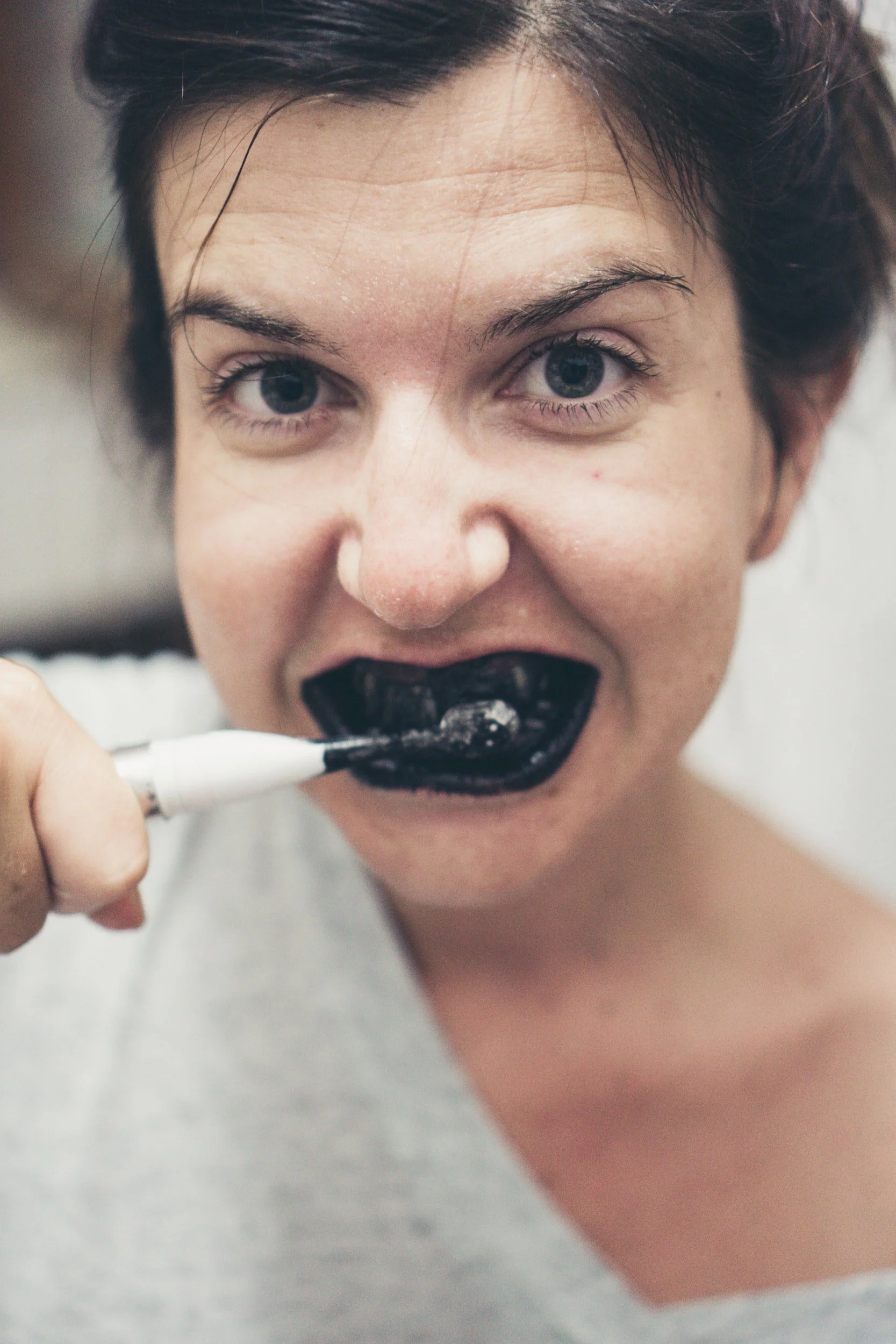
One very questionable 'trend' that is still going strong however is the idea of using charcoal toothpaste to get bright, white teeth. If you haven't tried it (and we hope you haven’t, but we'll get to that in a minute) you've seen it on your Facebook or Instagram feed. Someone with a mouthful of what looks like black tar and a big grin on their face because they can assure you that this rather gross looking toothpaste is going to give you the whitest, brightest smile possible.
If you do a quick Google search, you'll see that everyone and his Aunty is selling their own version of this new 'wonder; toothpaste. Some of it is even mixed with other 'miracle' ingredients like clay, 'minerals' and coconut shells (!??) And none of it's cheap. But it is vegan. So, here's the big question; should you hop on the charcoal toothpaste bandwagon and plonk down your $20 (and up) for a little tube of black gloop? After all, summer's coming and you do want to look your best from head to toe.
The Truth About Charcoal Toothpaste
Now, the idea of using charcoal to clean your teeth is not new, whatever that nice hipster lady on YouTube says in her 'infomercial'. The Ancient Romans used charcoal to clean their teeth over two thousand years ago. But that's not really much of an endorsement, as they also used urine as a mouthwash, washed their faces with gladiator blood to get a clearer complexion and made a habit of vomiting half way through a big meal just so they could eat more. So not exactly the health experts you want to follow, to say the least.
The fact is not only will charcoal toothpaste not make your teeth any whiter, prolonged use will actually destroy them. Activated charcoal is hugely abrasive, so yes, it may get some stains off your teeth, but it will also begin to take the enamel off as well. Once your enamel is gone, you can never get it back. At that point the next 'layer' of the tooth, dentin, will be exposed, and as that has a natural yellow tinge you'll be left with teeth that look yellower than ever before and that are at a much greater risk for decay and damage.
The lesson here is sometimes the boring old ways just work. However uncool it is, a good old-fashioned fluoride toothpaste is still the best way to clean your teeth. And if you are concerned about the colour of your teeth, a professional whitening treatment at your dentist's office won't cost you too much more than that trendy charcoal toothpaste and it'll actually work.
Emergency Dentist Sydney Says:
Should you try it? No. Why use charcoal toothpaste to whiten your teeth when we already have medical grade, safe, dental board approved products that do that for you and don't destroy your teeth in the process.
Many of the odd health trends out there are pretty harmless, but charcoal toothpaste isn't one of them. It's not worth potentially damaging your teeth for good for the sake of being trendy, so stick to your tried and tested toothpaste and save all that extra cash for something that might actually benefit the appearance of your teeth, like visiting us for a good clean and polish.

Easy Ways To Improve Your Dental Health in 2018
Avoid Needing Emergency Dental Care
Avoid Needing Emergency Dental Care

Most of us make resolutions for each new year and chances are at least a few of them are still in effect right now. Sticking to those promises you have made to yourself can be tough, but not impossible if you are serious about them. Take a resolution to keep your teeth healthier for example. Sticking to that need not be hard at all, especially if you follow these basic tips...
Cut Back the Sugar, For Real This Time
Yes, we sound like a broken record on this issue sometimes, but we're OK with that as it is such an important piece of advice for the good of your teeth and gums. And the good of your body overall.
Unlike calcium, or proteins, or even carbohydrates, no-one's body actually needs sugar, we just really like it. It's also very hard to avoid sometimes as it is included in all kinds of processed foods that you'd usually consider savory. But it's terrible for your teeth and pretty bad for your body overall as well.
If you can't imagine life without the occasional sweet treat we do understand; neither can we. But make it just that, occasional, and get into the habit of checking food labels when shopping for added extra sugars that could be avoided by making a different choice.
Commit to Flossing Daily
In case you are questioning if we even need to floss anymore, check out our myth busting article 'The Great Flossgate Debate'. With that out of the way, we know flossing can seem annoying but it doesn't taken that long once you get the hang of it.
To make it easier to do, consider investing in some purse and wallet friendly pre-made flossers from the chemists or, if you want to push the boat out a bit further (and are a bit of a tech head anyway) you can pick up an electric flosser for around $50 from your chemist or dentist.
Learn to Love Your Dentist

Very few people will tell you that a visit to the dentist is at the top of their list of favourite pastimes. But it really isn't as scary, or as much of a hassle, as you think. Modern dentistry focuses around providing great oral care with a minimum of pain and as little fuss and extra expense as possible.
In addition to a six-month regular checkup you could consider making this the year you invest in your smile in a bigger way, whether that means a few whitening treatments or a bit of cosmetic dentistry that makes a bigger difference.
Emergency Dentist Sydney Says:
Resolving to take better care of your teeth in 2018 is a great idea to maintain or improve your oral and general health and to avoid unnecessary dental expenses, such as emergency dentistry. If you are looking for dental advice or considering cosmetic dental treatment, get in touch with us today.

Sweet Treat Alternatives For Summer
Kid & Teeth Friendly :)
Kid & Teeth Friendly :)
Summer has arrived in Sydney and with it comes the festive season and the temptations of sweet and cool treats. It’s easy to reach for the more visible and tempting options like ice creams and ice blocks. But while the occasional indulgence in such things is probably OK, a summer filled with sticky, sugary, sweets is not a great idea. It's not great for a kid's overall health and it's certainly not very good for anyone’s diet.
Knowing all of this is one thing and putting it into practice without having to deal with a lot of moaning and groaning is quite another. There are however plenty of healthier, and yet still scrumptious, treats that are kinder to our teeth. Here's a quick look at just five of our favorites.
‘One Ingredient’ Banana Ice Cream
One of the ideal replacements for sticky sweets is fruit. Did you know you can make creamy banana ice cream with just a single ingredient? It's actually very easy. Chop semi ripe bananas into largish chunks and then freeze them solid (which will take about two hours) Next, pop them all in a blender, blend until smooth and, without the need for any added sugar at all you can serve an 'ice cream' treat that's surprisingly close to the 'real thing'.
Frozen Grapes
An old fave! Turning to the freezer again, if you freeze some juicy fresh grapes after a couple of hours you'll have chilly - but pretty healthy - balls of cooling natural sweetness that make a great alternative to sugar packed, sticky boiled sweets. Freeze both green and red grapes and they'll look pretty cool in the bowl when you serve them up.
Strawberry Yoghurt Bites
And this one is our new fave. While getting your daily helping of both fruits and dairy you also get the pleasure of this rich, creamy and cool treat.Frozen yoghurt strawberry bites can be easily prepared in just a few seconds. Pop some vanilla yoghurt in to brownie trays, place a whole strawberry in to each mould and freeze!
Frozen Greek Yogurt Buttons
This one's easy too. Blend together a pot of plain Greek yogurt with a handful of the fresh fruit of your choice until nice and creamy. Drop spoon sized dollops of the mixture onto a lined baking tray and freeze. To make things even more fun for the kids add a few drops of food colouring into the mixture as well, for a tasty rainbow coloured treat.
Pineapple Cooler
This one can be either a nice slushy-style drink for the kids or add a little vodka to make it a nice cocktail. Not only is it creamy and delicious but it’s a huge immune boost which is packed full of vitamin C.
Blend the following to make this cool summer treat:
1 cup fresh pineapple
1 banana
1 cup orange juice
1 cup ice cubes
3/4 cup Water
1/2 cup coconut milk
(Alcohol if desired)
Emergency Dentist Sydney Says:
Treat yourself this Sydney summer with all of the healthy treats you and your friends and family deserve.

What Should You Expect From an Emergency Dentist in 2017
Our Take
Our Take

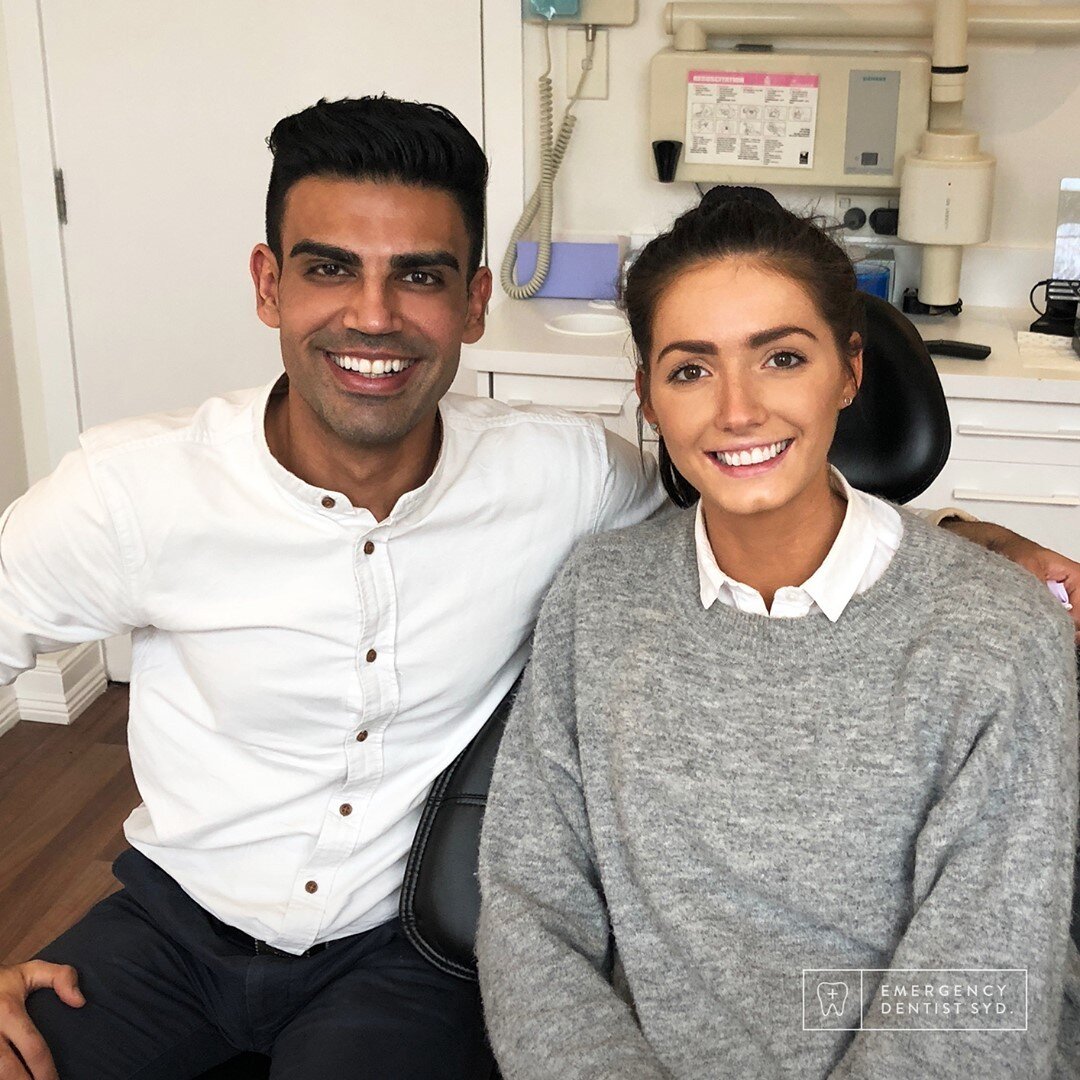
Pictured: Dr David Graham & Dr Amrinder Oberoi
Patients have always had certain expectations they want their dentist to meet. They have always looked for expertise and compassion, experience and that all important gentle touch. Most of us have also always preferred to go to a dental surgery where the surroundings are clean and comfortable and the staff are nice and friendly. In 2017 however, patient expectations are even greater, and now, to satisfy the modern dental patient a practice needs to offer a little more. And why not? Anyone does have the right to expect great care AND great service from their dentist. But what kind of things should a 21st century dental practice be providing, apart from fantastic oral health care?
Here's what we think
Easy Appointments

Who has the time to spend ten minutes on hold on the phone to make a simple appointment? Not everyone. 'Back in the day' of course we usually had no choice, but as technology allows that to no longer be the case the best dentists should make it fast and easy to make an appointment, and it should be just as easy to change one too. We offer online appointment scheduling that allows our patients to choose the time and date of their consultation and book it online in a matter of seconds. And we think that every other dentist should be doing the same. After all we value our time, so it's only right that we value yours too.
Clear Directions

Pictured: The St James Trust Building at 185 Elizabeth Street, Sydney.
Who needs to spend ten minutes trying to find an address they've never been to before? To help ensure that our patients are not left wandering around like lost souls, we provide clear directions on our website - complete with map and public transport links and information. And if you are driving? You can call ahead and we'll make sure you'll have a parking spot close to the office when you arrive, so that you don't have to delay your treatment because you're driving around desperately looking for a place to park.
A Full Range of Emergency Services
No one wants to be in pain, and that really is why emergency dentists exist in the first place. But some after hours dental clinics only offer a very limited range of emergency services. We believe that for an emergency dental clinic to truly provide all of the care patients are looking for all of our services should be available after hours and at the weekends, as well as all of our helpful and caring staff.
Transparency

We have treated hundreds of patients in pain and, fortunately for us, many of those patients have later taken the time to give us some nice kudos online. Whether you are checking out of practice's reputation on Google, Facebook or another review service, we make sure you see them all. We don't pay random people to make up fake glowing reviews and we don't kill bad reviews just because we happen to disagree with them (we address them instead). We want our patients to feel secure in the knowledge that they are choosing the right dentist and think that this kind of total transparency should certainly be a big part of that. See what our patients have to say.
Extra Comforts

Pictured: Entertainment on the ceiling while you recline.
Very few people would put a trip to an emergency dentist at the top of their list of fun things to do with their evening or weekend, we know that and we're not offended. Because we are aware that a visit to our office can be a little daunting, and even a bit scary, we make sure we go the extra mile to make the experience as pleasant as possible. We always make sure there's tea, coffee and water on hand and to ease the anxiety a patient might feel while waiting to see the doctor, or waiting for an x-ray result, we installed TVs all over the office and offer access to Netflix, Spotify and YouTube so you can indulge in your favourite shows and/or music to help relax some of your cares away while we get to work on getting you out of pain.
Emergency Dentist Sydney Says:
In 2017 people want more from their dentist these days and we are happy to provide it, something that we think helps sets us apart from others and if you make an appointment to come and find out for yourself we think you'll agree

What Bad Breath?
Don't Be Embarrassed To Discuss Bad Breath With The Dentist...
Don't Be Embarrassed To Discuss Bad Breath With The Dentist
Bad breath. It's always an elephant in the room. The chances are that those who suffer from it won't ever hear about it from their friends and their significant other may never say too much about it either. The whole issue is an embarrassing one that, the chances are, you probably don't even want to be reading about right now because it kind of makes you feel uncomfortable.
There are many causes of bad breath, and, with the right information, and sometimes the right treatment, they can be very effectively addressed. And the best person to turn to for help is your dentist.
The Causes of Bad Breath
Bad breath - medically known as halitosis - can have a number of different causes. Some are pretty obvious while others less so. Forgetting to brush and floss on a regular basis, smoking, a love of garlic. All pretty obvious causes of bad breath to most people. But what if you, like more people than you might imagine - do brush and floss and avoid garlic every bit as much as Dracula does and still battle bad breath?
Well, did you know that dehydration causes bad breath? And that following one of those uber trendy low carb diets can do the same because that way of eating causes your body to release something called ketones that can be smelled on your breath and they often smell pretty bad? Or that an as yet unseen forming cavity can really do a number on your breath as well?
Well you may not have done, but your dentist does. He or she also knows about a number of other causes of bad breath, like taking a certain medication. They also know that, in rare cases, halitosis can be a symptom of an underlying, non oral related disease that will call for a medical doctor's care. And while they may not know the minute you sit down in the chair just what's causing the problem they will keep working with you until it's figured out.
But I Don't Want to Talk to My Dentist About Bad Breath!
We get it, you're embarrassed and you really don't want to bring up the halitosis thing with anyone, including your dentist. You'd rather keep chewing on a new stick of gum every five minutes and downing enough mouthwash to sink a ship and hope for the best.
However, even if you just finished your 12th stick of Extra of the day before you hopped up into the dentist's chair they will detect that bad breath. It's their job. But fear not, they are not going to recoil in horror or call you out in front of the entire office. They know you're upset. They know you're puzzled. And they are just going to help you deal with the problem in a quiet, discreet and non-judgmental way. Then you can finally face the world - and all your friends - with great breath and an improved sense of self confidence, that, to be honest, will be worth every minute you felt a bit squirmy talking about all of this at all.
Emergency Dentist Sydney Says:
Dentists are here to help, not to judge. Never be afraid to discuss bad breath - or any other oral health concern - with us. Trust us, we've pretty much seen it all before and our only concern is helping to fix the problem, not to make you feel bad about it.

First Impressions Count
"...And Remember To Smile
And Remember To Smile
Nelson Mandela once famously said, “Appearances matter, and remember to smile”. As dentists we have adopted the latter part of that quote, #RememberToSmile. In context, Mandela was talking to Time Magazine about some important lessons he had learnt during his 90 years and we can see why.
Before an interview, a big presentation and certainly before a date or a night out you take great care to make sure your clothes are on point, your hair looks good and everything smells good. In fact, you no doubt spend more than a bit of time and money on these efforts to make the best possible first impression. But here's a question for you, how much did you spend on your smile?
“Appearances matter, and remember to smile”
You've heard the expression 'million-dollar smile' right? It's more than just a jaded saying though. Your smile has a far bigger impact on that great first impression than you might realise. According to a psychologist from the States, Dr Paul Ekman, professor of psychology at the University of California and a man known as 'Professor Smiles', as he has devoted his career to studying them, people respond to a great smile from up to 30 meters away. And a smile, he says, lets people they are likely to get a good reception, making it hard not to reciprocate. In other words a smile is a great way to set up a good interaction before you ever say a word, a real plus when you are on that big interview or first date.
That having been said a great smile is about a lot more than the ability to get those facial muscles into the right place. The focus is on the mouth when you smile, which means your teeth. A bright white smile and a set of healthy, well-cared for teeth and gums can say an awful lot about you, mainly that you take pride in your appearance and that your health is important to you. It is also a confidence booster for you, as people with teeth that are stained, cracked, discoloured or otherwise imperfect smile a lot less than people with 'good teeth', whether they realise it or not, and people who avoid smiling often come across as self-conscious, nervous or even rather rude.
The Keys to a Confident Smile

These 'smile problems' are far from unusual of course, lots of people have problems with more than just the colour of their teeth, their teeth might also be broken, cracked and/or crooked. And they may think there is not too much they can do about those latter problems other than keep their mouth closed as much as possible. However, that really isn't the case anymore. Modern dentistry has a 'fix' for pretty much all of them.
A good smile really starts in the most mundane of ways; with a simple check up at the dentist. Regular checkups and basic cleanings really are the foundations of a great smile and they are also the way that more serious issues can be examined, addressed, and yes, fixed, so that you can begin your journey to that 'million dollar smile.
Emergency Dentist Sydney Says:

Regular dental checkups and good oral hygiene are the first steps to a healthy smile. And remember, a smile comes from the inside out.

Don’t Fear The X-Ray
Dental X-Rays Explained...
Dental X-Rays Explained
For years now, x-rays have been a standard part of dental care and most of us are used to the idea and have been since we were little kids. Being used to something does not always mean being OK with it though, and it's fair to say that more than a few people are a little nervous and scared about dental x-rays and some even avoid them, fearing that an x-ray may in some way be harmful to their health.
The fact is that dental x-rays are very safe, and in the 21st century they are safer than ever before. Yes, a very low level of radiation is produced when an x-ray is taken - that is, after all, how they do their 'job' - but you are actually exposed to more radiation during an hour's flight on a plane than you are during a routine four image bite wing x-ray session!
However, if you are still a little wary it might help for us to explain dental x-rays, why we need them and what they really involve in a little more detail:
Who Needs Dental X-Rays?

Our Dentists. Dr Amrinder Oberoi & Dr David Graham
Dental x-rays are used by dentists to help them get a clear look at oral health issues that may be hard - or even impossible - for them to see with the naked eye, even the very trained eye of a dentist. Making use of these images your dentist can:
Decay, including areas of decay that are often 'hiding' between the teeth or underneath an old filling or crown.
Abscesses, which are basically areas of infection that sit at the root of a tooth or between a tooth and the gum.
Bone loss caused by gum disease
Changes or abnormalities in the root canal of a tooth
If an x-ray is not performed some of these issues may be missed and go untreated until the condition is more serious and painful than it needed have been. In addition a dental x-ray can also help a dentist when they are preparing fillings, crowns and braces.
Kids and Dental X-Rays
Some parents are especially concerned that dental x-rays may be harmful to their kids, as they are younger and smaller and their bodies are still growing and developing. However, the very low levels of radiation are so low that they are safe for kids of all ages and a dental x-ray can be especially useful to a dentist when he or she is treating a child. Why? Because thanks to an x-ray a dentists can:
Ensure the child's mouth is big enough to properly accommodate incoming teeth.
Determine whether or not primary teeth are loosening properly to allow secondary teeth to erupt properly.
Monitor the growth of wisdom teeth.
Identify gum disease and decay at an earlier stage.
It is especially important that children visit the dentist regularly - at least every six months - and that get x-rays when their dentists recommends them. Childhood is a crucial time in terms of oral health and a lack of dental care when you are a kid can have serious lasting effects well into adulthood.
Dental X-Rays and Pregnancy
As a general rule pregnant women are advised to avoid x-rays while pregnant, not because there is any real proven danger to them or their unborn child but as a matter of simple and sensible precaution.
Dental care is very important during pregnancy though and there are certain situations in which a very carefully administered x-ray may still be necessary. For example, it is an accepted fact that periodontal disease in pregnant women can have adverse effects on their pregnancy, and so in some cases a patient's dentist and OB may agree that an x-ray presents far less of a risk than the damage that can be caused by gum disease, as several bodies of research have found that women suffering from gum disease during pregnancy are at an increased risk for giving birth to a pre-term or low birth weight baby.
If an x-ray is called for during pregnancy a dentist consults with a patient's OB first and extra protections like having the patient wear a lead lined apron and thyroid collar and keeping the number of images taken to an absolute minimum.
Every dental professional does understand that there are lots of things that many people find scary and daunting about a visit to the dentist's office and are more than happy to discuss concerns they have before any procedure, including dental x-rays, is started. If you have concerns about x-rays and whether or not they are really needed, ask and any dentists will be more than willing to address - and allay - your fears, even if they seem a bit silly to you.
One inexpensive alternative to standard floss in a box are floss sticks, or floss picks as they are also known. Lots of people do prefer these to standard floss as a lot of the measuring and guesswork is taken out of the equation and although you can only really use each pick once for hygiene reasons, making it a bit pricier to use them, the potential oral health benefits of actually flossing make the investment worth it.
There are also several different kinds of 'mechanical flossers' on the market. Some make use of water, some make use of air and they are priced anywhere between $10 and about $75, depending on the model you choose. Some do work well, and a water flosser can be an especially good choice for those with braces or bridges, as they can remove food particles that brushes and flosses often miss. Should you make the larger investment in one of these gadgets? If you struggle to floss now but think they might change that, by all means go ahead.
Emergency Dentist Sydney Says:
Dental x-rays are safe and the images they produce are the key to making sure we receive the correct information to treat you appropriately.

Dental Implants for Sleep Apnea Sufferers
Are Dental Implants the wrong choice for sleep apnea sufferers?
Are Dental Implants the Wrong Choice for Sleep Apnea Sufferers?

It's probably fair to say that no-one ever aspires to end up wearing dentures. In fact, avoidance of them is one of the biggest reasons that some people finally get a little more serious about looking after the teeth they have. Sometimes however the damage is unavoidable. This can be especially true for people who suffer from sleep apnea, as one of the complications that often comes along with that bothersome condition is something called sleep bruxism.
What is Sleep Bruxism?
Sleep bruxism is the 'proper' term for the sleep disorder involving the habit of clenching and grinding your teeth as you sleep. Although it can be a standalone condition many people who do grind their teeth also suffer from other sleep disorders like snoring and sleep apnea, a condition which causes pauses in breathing.
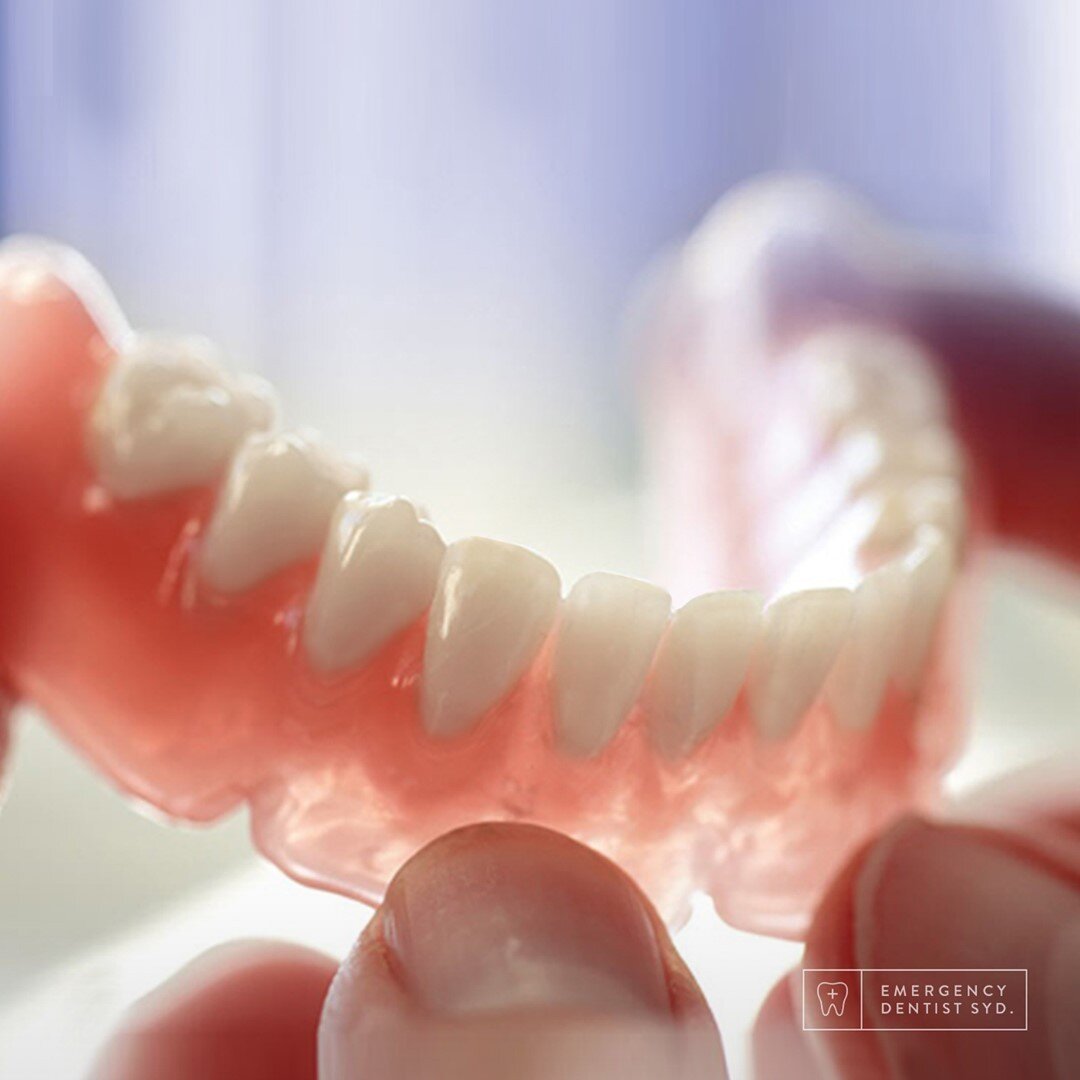
If a person does grind their teeth at night sadly, over the years, it can cause significant damage to the teeth, sometimes so much so that a tooth is damaged beyond repair, which is why it's not uncommon for those who suffer from sleep bruxism to end up needing partial dentures, or as is becoming more common, a dental implant.
Sleep Bruxism and Dental Implants
As an alternative to dentures or partial dentures, dental implants are quickly gaining popularity, and for lots of good reasons. Implants are permanent replacements, look more natural than even the best dentures and, obviously, make it easier to eat, drink, and smile with confidence than dentures might. They also seem like they would be the perfect solution for those who lose teeth due to sleep bruxism, but some recent studies have found that may not be the case.
Researchers from OSI Araba University Hospital in Victoria, Spain were conducting a study to determine if the most common form of sleep apnea, obstructive sleep apnea, affected the proper function and longevity of dental implants. They worked with a group of 67 people, some of whom had been diagnosed with OSA and some who had not. Of the 16 people in the study who eventually experienced complications with their dental implants 13 also suffered from obstructive sleep apnea, seeming to indicate that the damage to the implants might be directly related to OSA.
Implants, Sleep Apnea and Your Dentist
It should be noted that the study we have just mentioned was a small one and that more work needs to be done before assuming that for those who suffer from OSA dental implants are not the right solution for them.
When dealing with sleep bruxism, sleep apnea and trying to prevent possible tooth damage before dental implants are ever needed it's common wisdom that patients should work with both their doctor and their dentist to come up with a proper treatment and dental health plan. This allows patients to receive the best possible care to address both conditions.
With the right treatments, sleep apnea can be improved, and the same is true of sleep bruxism, and since the latter is considered a dental disorder it's your dentist who can help you out there. See them early enough and dental implants may never have to even become a consideration, something that we think you'd agree is the best possible outcome all around.
The Emergency Dentist Says:
The best way to deal with the possible dental complications that sleep apnea and sleep bruxism can cause, including the need for dental implants, is to speak to your dentist about it. Once you do that a proper treatment plan, one that may very well save your teeth altogether, allowing to keep your natural smile.

Pregnancy vs The Dentist
We might have some answers for you...
What is Safe?
An expectant Mum spends a great deal of the nine months of her pregnancy visiting with medical professionals. But here's a question for you; is it safe for those visits to include trips to the dentist?
If you answered 'no', you are wrong. But you are far from alone. Over the years skipping professional dental care while pregnant has joined other outdated advice - pregnant ladies shouldn't ever exercise, expectant mums should eat for two. That has been debunked by the medical profession but is a myth that is perpetrated by scare-mongering blog posts or well-meaning (but incorrect) friends and relatives.
Why You Should Nor to Skip Dental Care in Pregnancy
Unfortunately, studies here in Australia, as well as research conducted in the UK and the States, has found that up to half of expectant mums in any given year deal with serious dental issues like bleeding gums and pain and fail to make a dental appointment to get them addressed either because they assume such things are just another of the not so nice aspects of pregnancy or that visiting the dentists while expecting simply isn't safe.
The fact is though, not only is it safe to do so but very much advisable, as recent research has found that a lack of dental care in pregnancy can harm an unborn baby as well as his (or her) Mum.
Gum Disease and Unborn Babies
The research we mentioned studied a connection between premature birth and low birth weight and periodontal (gum) disease. Several studies have demonstrated some connection, and while more are ongoing to confirm these initial findings the common wisdom so far is that the inflammation and low grade infection that gum disease often causes leads to the body into concluding that Baby would be safer out in the world rather than in Mum's tum, and premature labour is triggered.
Good daily brushing and flossing can help keep gum disease at bay but as the hormonal changes that occur in pregnancy often soften gum tissue a preventative visit to the dentist is never a bad idea, just make sure that the staff are aware of your pregnancy, as some things, like x-rays, are not safe in pregnancy without special precautions being taken.
The Morning Sickness Problem
Morning sickness is one of the biggest downsides of pregnancy for many women, but there is a lot of comfort to be found in the fact that, for most, it goes away by the end of the first trimester.
It can leave damage to the teeth behind it though. Vomiting every day can erode the enamel of the teeth significantly, leading to cavities that should be treated as soon as possible to avoid tooth damage (or tooth loss'). Therefore, waiting another six to seven months until Baby has arrived to see a dentist is not a good idea.
It is agreed by both dentists and OBs these days that simple procedures like dental cleanings and fillings are perfectly safe in pregnancy, although an expectant Mum may want to schedule elective dental procedures before the 20-week mark, simply for her own comfort, as an hour in the dentist's chair can be rather uncomfortable for a heavily pregnant lady. In fact, many OBs now advise that a dental exam be a standard part of those essential first trimester checkups, both for the sake of Mum and her unborn child.
The Emergency Dentist Says:
A visit to the dentist really isn't something you should skip in pregnancy, even if you are not one of our biggest fans! If a dental visit is something that usually scares you a bit anyway, remember this time you'll be protecting your baby's health as well as your own, and we promise we'll be gentle!

5 Things Your Tongue May be Trying to Tell You
Here's a look at five of the most common messages the tongue tries to send to warn its human that there might be something wrong...
Which Tongue Is Yours?
You know the drill; after the initial pleasantries at a dentist's appointment, you'll be asked to 'open and up and say 'ahh', so he or she can get a good look at your teeth. But your teeth aren’t all they are looking at, as the condition of your gums and tongue can be very telling as well.
Tongue? That surprised you maybe? The fact is however that this often overlooked - but large and important - body part can tell a dentist or a doctor more about your overall health than you might imagine. And learning to spot the warnings that your tongue might be trying to send to you between dentist visits can actually help you stay healthier. Here's a look at five of the most common messages the tongue tries to send to warn its human that there might be something wrong.
1. White Patches
Sometimes, white patches on the tongue are a sign that something is a little amiss with your daily oral hygiene routine. This can often be solved by making use of that bumpy backside of your toothbrush to clean your tongue when you clean your teeth. However, if you do that for a week or two with no change, something else may be wrong.
White patches and bumps on the tongue can also often be caused by a yeast infection, or can be a sign of a condition called leukoplakia, which is often caused by tobacco or chronic alcohol use. Both conditions are usually easily treated, so a call to the doctor sooner rather than later is almost certainly a good idea.
2. You're Seeing Red
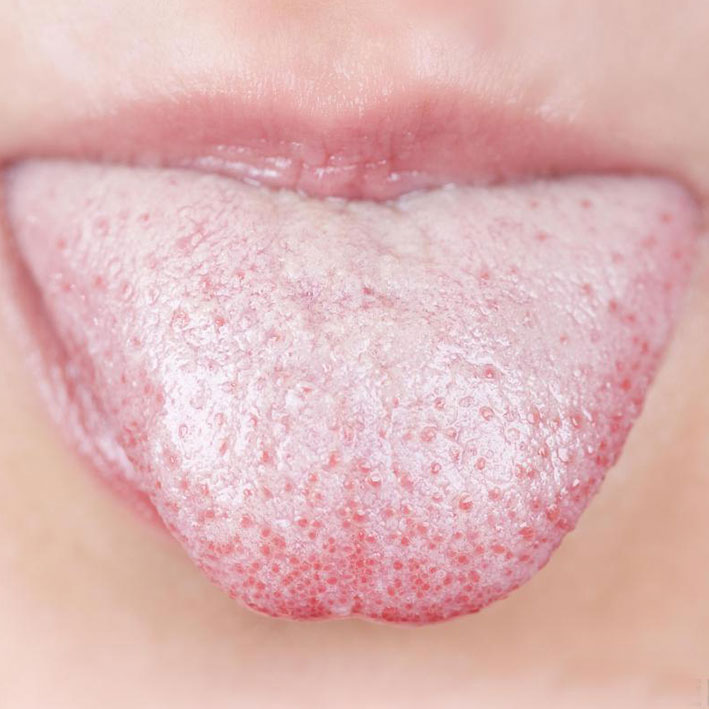
A red tongue can also be a sign of several different things. One of the most common is dry mouth, a situation you can remedy by remembering to stay hydrated and occasionally chewing on some sugar free gum. A rosy tongue can also signify that some of your taste buds are reacting badly to a certain food, to stress, or even a deficiency in a vitamin like folic acid or B12, both of which are important to their function.
Finally, a very red tongue accompanied by a sore throat is often a sign of an infection like strep throat or even scarlet fever. Both conditions can be treated easily with antibiotics and so once again, the faster you make a doctor's appointment, the sooner you'll feel better.
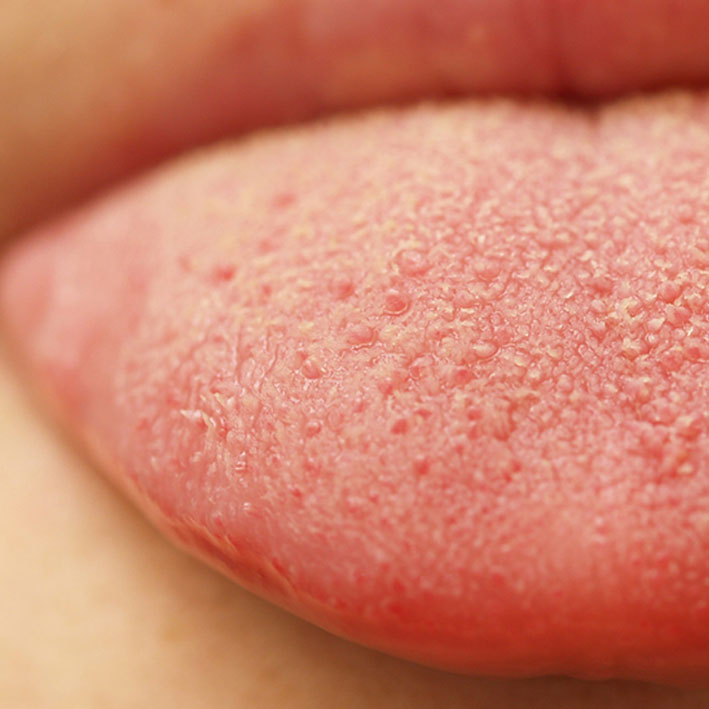
3. Things are Bumpy
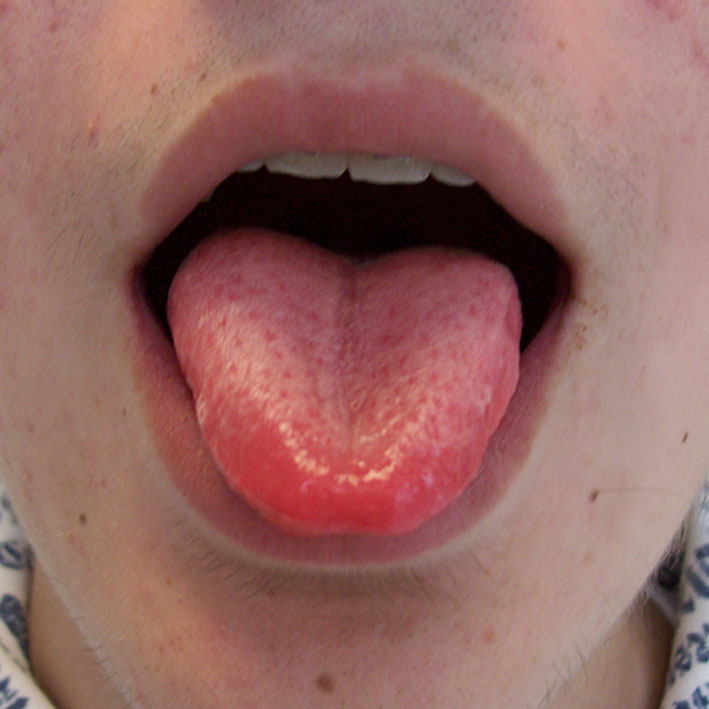
Often bumps on the tongue are a temporary condition caused by a certain foodstuff you've recently consumed, especially things that are hot, both in terms of temperature and/or spice level. These will usually go away by themselves rather quickly.
Other causes of tongue bumps can include canker sores and herpes (cold sores), both of which will eventually go away on their own but can be treated to speed healing and ease discomfort. And in some cases, if you bite your tongue repeatedly (and some do, out of habit) a bump may actually be a fibroma and that should be looked at by your dentist, as in some cases they will need to be removed.
4. Ridges or Indentations
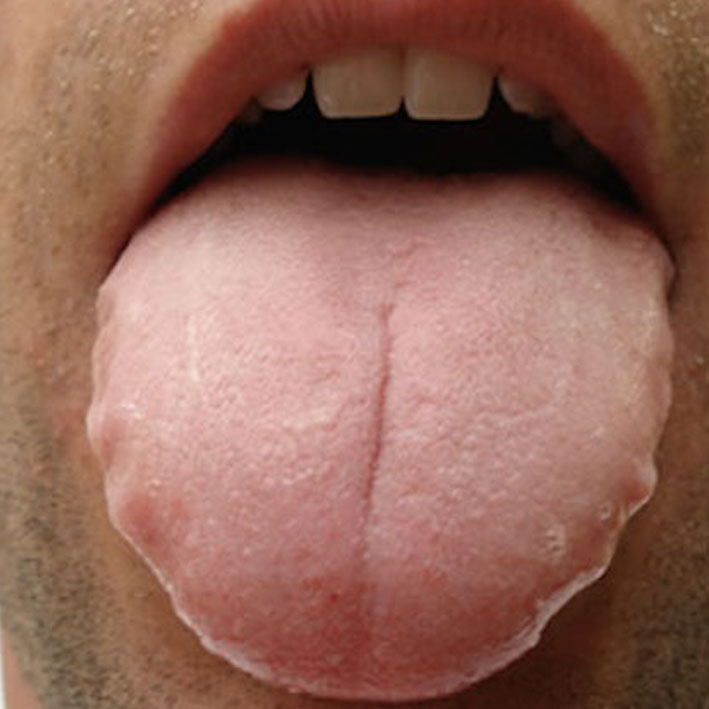
No tongue is perfectly smooth, and so in some cases ridges or indentations in your tongue are simply down to genetics. They may also be a sign that you have a fissured tongue, a long crack down the middle of the tongue that again, most people are just born with. It is something you should be aware of though, as it's easy for food to get stuck in that crack and cause bad breath and help the growth of potentially damaging to your teeth bacteria. Brushing your tongue will help, as will a chat with your dentist about the issue.
5. Swelling
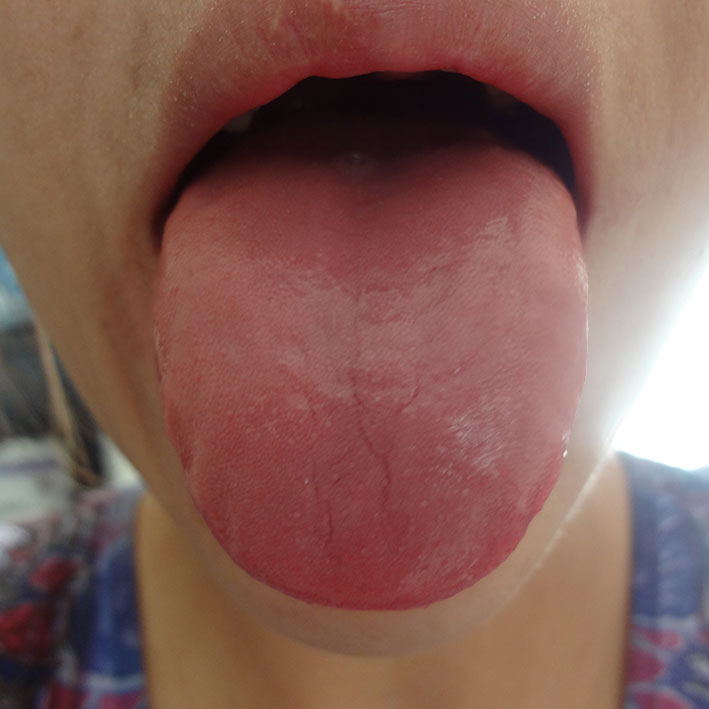
A swollen tongue can be very temporary, a reaction to a cup of coffee that was a bit too hot, or accidentally biting your tongue instead of your food. This swelling is mild and will go away on its own, although sucking on an ice cube can help speed things up.
Sudden, more serious swelling however can be a sign that you allergic to something you just ate or drank. This can impair your breathing, something that is obviously dangerous, so medical attention should be sought right away.
The Emergency Dentist Says:
Your tongue is often trying to tell you something, so take notice! The health of your tongue is also important to your overall oral health. The best you can do to for your tongue is eat well and brush it daily!
NEED ADVICE OR EMERGENCY DENTAL CARE IN SYDNEY CBD?
Contact our friendly team

Patient Care First

Keep Up-To-Date with All Things Oral & General Health
RECENT ARTICLES




For 15 years, we've had one mission - when Sydney has a dental emergency, Emergency Dentist Sydney is there
We're proud to celebrate 15 years of providing emergency dental services to Sydney CBD and surrounding suburbs.