

Our Top 5 Emergency Treatments
The Biggest Threats to Your Oral Health After Hours
The Biggest Threats to Your Oral Health After Hours

If you have a problem with your teeth at night or on the weekends, you’ll probably need to see our after-hours dentist. This is more common than you think. It’s normal to want to avoid thinking about a niggling pain in your tooth for as long as possible. But unfortunately, this means that it can flare up just at the wrong time. When this happens you’ll need to see a dentist as soon as possible. At our Emergency Dentist in Sydney, we see all sorts of dental problems after hours, but there are some that are more common than others. To learn about these procedures, and their treatments, keep reading.
1. Extractions
If you have a tooth that’s too damaged to fix then you may need an extraction. This type of damage is usually caused by injury or decay. During an extraction the affected tooth is removed from the socket bone. If the tooth is clearly visible in the mouth, your dentist will loosen it and then remove it with forceps. However, if the tooth is broken off below the gum line or hasn’t come through the gum then it will have to be removed surgically. This is a more complicated procedure during which the gum is opened up to remove the offending tooth.
2. Root Canal Treatment
If you have an infection or inflammation in a tooth then you may need a root canal. This is a very common reason for trips to the after-hours dentist and causes a great deal of pain and discomfort. Tooth infections happen by deep decay, a chip or crack in the tooth, or previous dental surgeries.
If you need to have a root canal your dentist will remove all the infected pulp from inside the tooth. The whole area will be cleaned and sterilised to remove all traces of the infection before a filling is inserted into the tooth to replace the tooth pulp. This procedure can save the affected tooth and help you avoid further surgeries.
3. Fillings & Dental Bonding
If you have a hole in your tooth because of decay, then you’ll probably need a filling. This is a very common procedure and an easy way to alleviate the pain that can occur with decay. During a filling procedure, your dentist will remove the damaged section of the tooth and replace it with a filling. A filling can be made of a number of different types of material depending on the size of the hole and its position in your mouth.
Another common emergency procedure is dental bonding. This is the cheapest and quickest way to improve the appearance of a damaged, broken or decayed tooth. The bonding material is attached to the surface of the tooth and vastly improves its appearance. During this procedure, your dentist will lightly abrade the surface of the affected tooth, apply a conditioning liquid and attach the resin. This is like plastic, so it can be moulded to fit the shape of your tooth. The material is smoothed and then hardened using an ultraviolet light.
4. Wisdom Teeth
Wisdom teeth usually grow in the late teens or early twenties. Unfortunately, not everyone has enough room in their mouth for these extra teeth. If this is the case for you, the new wisdom teeth can push other teeth out of the way or become impacted, causing infection and pain. This can come on quite suddenly and result in a trip to the after-hours dentist.
At the dentist, you will need to have an exam to determine what the problem is and what has to be done to alleviate it. If there isn’t enough room for your wisdom teeth, you will probably need to have them taken out. However, wisdom teeth can also cause pain in the gums and jaw when they’re coming through. So even if they hurt, you won’t necessarily have to have them removed. That’s why it’s important to get them checked so you can plan your next step.
5. Re-cementing of Crowns, Veneers & Bridges
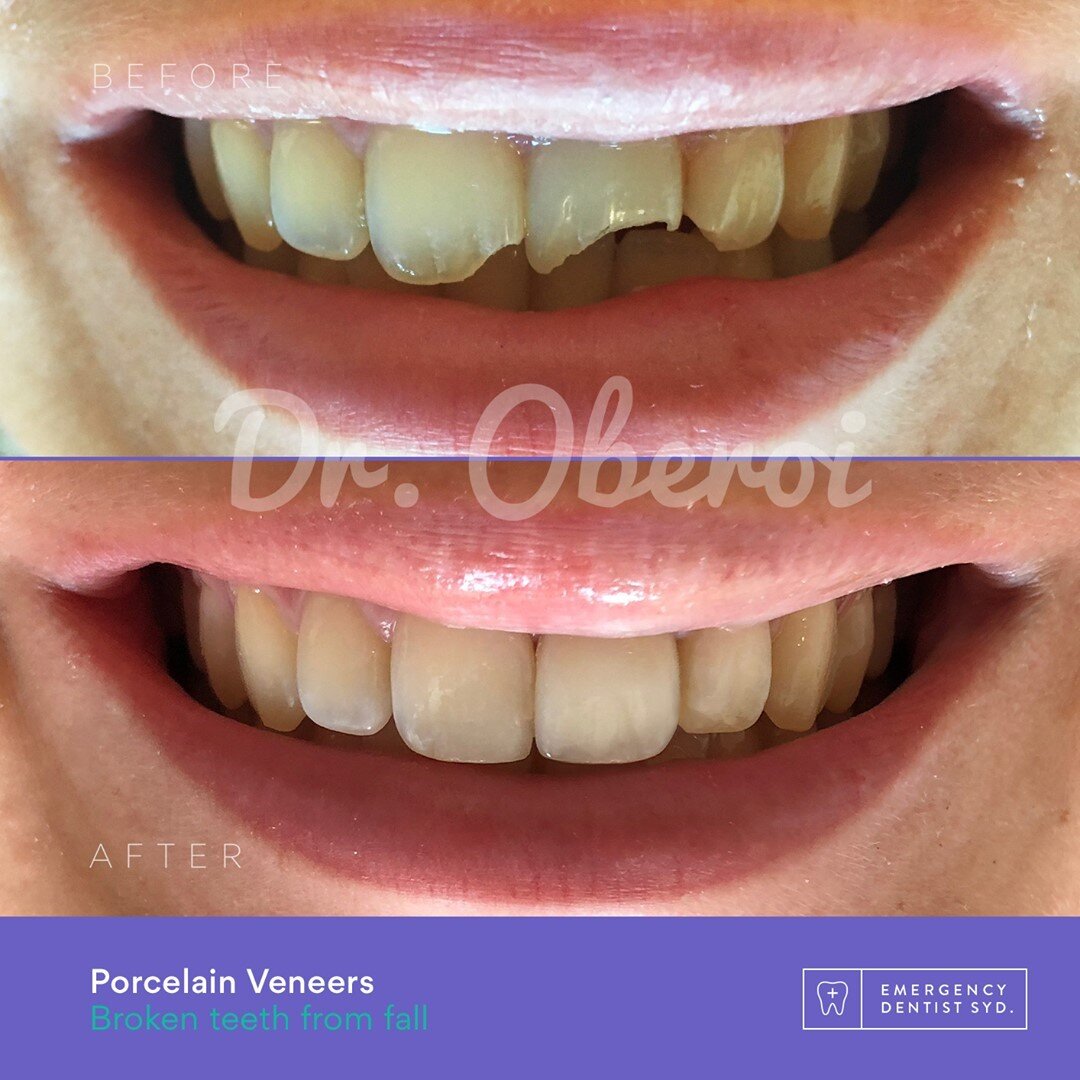
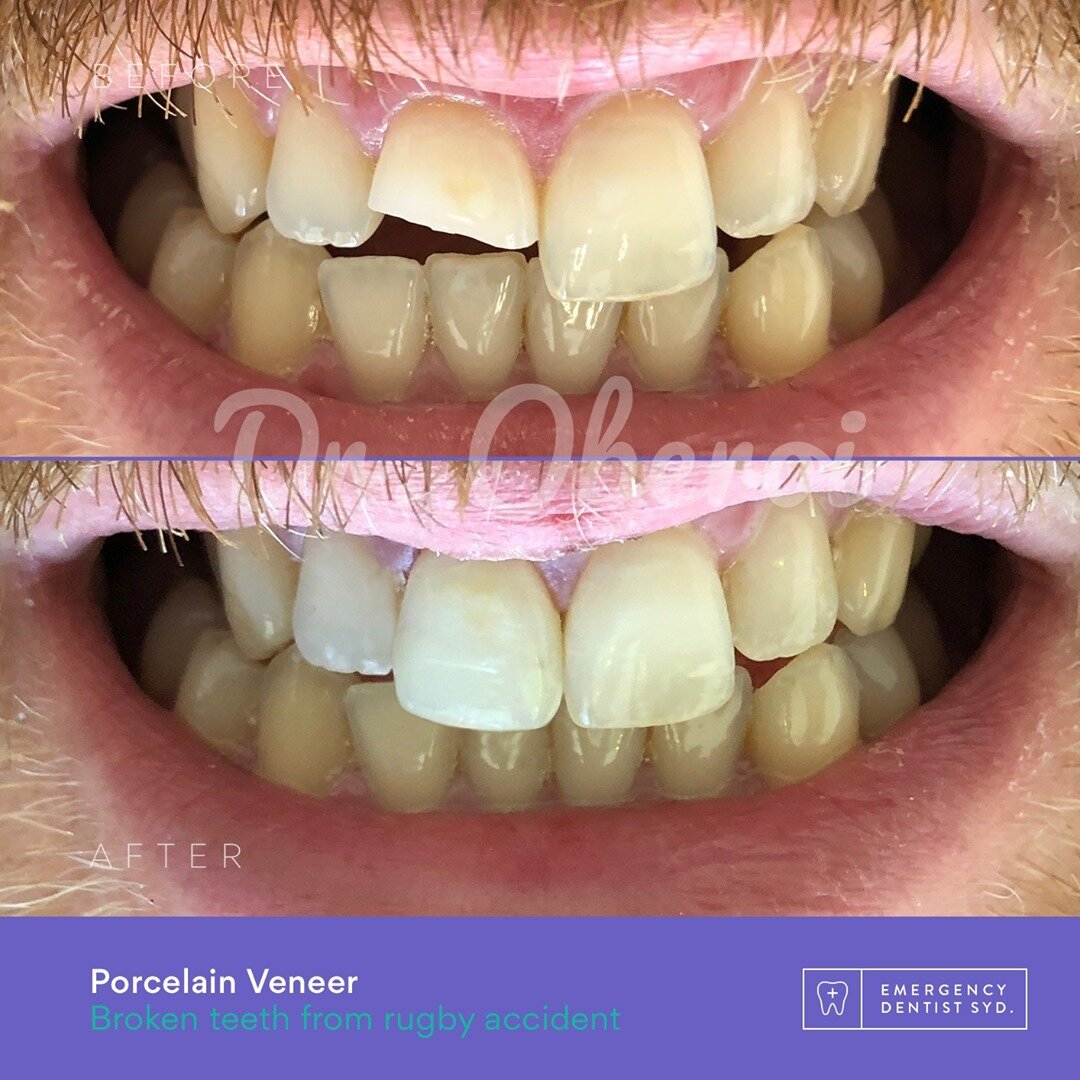
Crowns, veneers and bridges are all used to replace missing or damaged teeth. Crowns are used to encase an entire tooth. They’re most often used when the tooth is decayed or damaged and improve the strength and the appearance of the tooth. Veneers cover the front side of the tooth, the part that faces outward, and improve the appearance of a damaged or broken tooth. And finally, a bridge is an artificial tooth that’s attached to surrounding teeth.
Despite the strength and durability of these dental additions, they can sometimes become damaged or loose. This can occur when the procedure is fairly recent and hasn’t completely set yet, because of injury, or while you’re eating something hard. If you lose a crown, veneer or bridge, your dentist will need to evaluate the area to see if the original addition can be re-applied. If not, you will have to decide what step to take next. If the dental addition can be reapplied your dentist will clean your mouth and the implant and reattach it.
Emergency Dentist Sydney Says:
If you have a toothache after office hours, make sure you contact our Emergency Dentist in Sydney. Our caring and expert staff are available now to take care of all your emergency dental needs.

Tooth Extractions
You Have Nothing to be Afraid of
You Have Nothing to be Afraid of
You might have chipped a tooth from a fall or cracked a tooth from accidently biting down on something hard. Whatever the reason for your toothache or pain, a tooth extraction will most likely not be the first procedure your dentist will suggest. Tooth extractions are actually only done as a last resort. However, if you are in a situation where your tooth needs extracting, there is totally nothing to fear!
Tooth Extraction is the Last Resort
Dental treatments and techniques are rapidly advancing. At Emergency Dentist Sydney, our dentists will always discuss with you the right treatment options for your dental emergency. We avoid tooth extraction as there are a number of treatments that can be done first instead and most importantly, we want to save your tooth. This means if you have a broken tooth and are avoiding the dentist because you're fearing the extraction procedure, call your dentist now as an extraction may not be the case. Your dentist will try to fix your damaged tooth with a filling, crown or other treatment.
The Extraction Procedure
Sometimes, there may be too much damage for the tooth to be repaired. This is when the tooth will need to be extracted. The Procedure itself is fairly quick. Dr. Oberoi states that it usually takes under a minute to actually remove the tooth. He says that “I spend more time talking to the patient and making sure they’re comfortable than doing the procedure itself.” The care at Emergency Dentist Sydney is personalised to the patient, to ensure the procedure is as comfortable and stress free as possible.
A Painless Dentist Procedure
What we will always do is make sure that the area we are performing the extraction is completely numb. Even administering the anaesthetic is painless with the help of some numbing cream. At Emergency Dentist Sydney, we also have a number of options for anxious patients including local anaesthesia, happy gas or even IV sedation. Your dentist will discuss with you the best option for your situation and condition.
Tooth Extraction After-Care
Aftercare is almost as important as the extraction itself. Your dentist will stay in touch with you over the days after the procedure. They will be able to answer any questions or concerns you might have and provide assistance in the unlikely case of complications.
Emergency Dentist Sydney Says:
Extractions sound scary but in reality, they’re usually very quick and pain-free. Our dentists always ensure a pain-free and comfortable procedure for all patients so come and see us if you have concerns about your smile.

The Truth about Temporary Fillings
They're just temporary
They're just temporary
Temporary fillings seem like such a strange idea. After all, if you have a hole in your tooth, why would your dentist only fit it for a short time?
But this is a simplistic view. Temporary fillings can be a very useful tool if used in the right circumstances. They’re a short term solution that eases the pain of damage and makes it possible for you to go about your life as normal until you can get the proper treatment. If you need to get a temporary filling, here is a quick guide to their use and care.
What is a temporary filling?
A temporary filling is a filling that has been placed to seal or build up part of a tooth. It is generally made from softer materials and is not intended as a permanent solution.
What is the procedure for a temporary filling?
The procedure for a temporary filling is similar to the procedure for a normal filling except much shorter. There is hardly ever any drilling or teeth shaving required, because the filling is not meant to be there forever, and so it can be done quickly so the patient can go about their day again. There are usually no needles needed for this procedure either.

Why do temporary fillings fall out?
Temporary fillings are temporary treatments for a number of problems. They aren’t meant to last forever. If you get a temporary filling, and don’t go back for the treatment, the filling will fall out sooner or later. Generally speaking, a temporary filling can last anywhere from a couple of days to a few months depending on where it’s located. This is dependent on other factors of course, such as general mouth health, food intake, and whether you ‘play’ with the filling a lot. But, if you’re careful and you go back to your dentist for the proper treatment, your temporary filling should last until the dentist can put something more permanent in there.
How can I care for my temporary filling?
When you have a temporary filling, mostly you need to be careful what you eat. Biting into hard foods such as nuts or seeds can cause the filing to come loose and fall out. If possible, chew on the side away from the filling. Apart from this, you can brush your teeth as normal without dislodging the filling. Just make sure you keep your tongue away from it as well. When temporary fillings fall out, it’s often because the patient is constantly digging at it with their tongue. With this kind of treatment, it’s no wonder they don’t last.
Emergency Dentist Sydney Says:
If you need professional and compassionate dental care, come and see us here at Paramount Dental Sydney. We’d be happy to work with you towards the best oral health of your life.
Need Advice Or Emergency Dental Care In Sydney CBD?
Contact our friendly team


Why You Should Never Just Assume You Need a Filling
Toothache
Toothache

Even if you are usually fairly fastidious about your oral healthcare routine, and you try your best to keep up with those recommended regular dental checkups there may very well come a time when you are blindsided by a sudden toothache. Not fun, and often not easy to soothe.
It's at this point that many people assume that, despite all of their best efforts, they have a cavity and it's time to steel their nerves to head into the dentist's office for a filling. However, although often that does turn out to be the case (and modern fillings are painless and very natural looking by the way, so it's not the end of the world) it is not always a cavity causing that pain, and other forces may be at work.
Here's a look at some of the other possibilities...
Sensitive Teeth
If the pain occurred - or occurs - after eating or drinking something very hot, or very cold, then it may be caused by a fairly simple case of sensitivity. While there are lots of toothpastes available that are designed to help ease this the best first course of action is a visit to the dentist. There he or she will be able to rule out things like excessively thinning tooth enamel or receding gums, conditions which have to be treated in a different way, and then recommend a suitable daily oral health care routine to follow in the future to minimise the problem.
Cracked or Chipped Tooth


Even if you can't quite see it a crack or chip in one of your tooth may be the cause of your discomfort, as even the smallest of these can expose a nerve, leading to a surprising amount pain. Your dentist has a number of methods at their disposal to repair these defects, but they can't do that until you go in and see them!
Gum Disease
Sometimes the pain you assume is radiating from a tooth gone bad is actually coming from the gum surrounding it instead. A gum infection, which can be caused by a number of different things, can be excruciatingly painful and does need to be treated as soon as possible. Often a course of dental laser treatment and cleaning, along with medication to clear up the current infection, is extremely effective and you can be out of pain very quickly.
TWhen You Need More than a Filling
Some tooth decay cannot be effectively treated with just a filling. If a tooth is significantly damaged by decay its root is often affected as well, and in this case slightly more treatment is called for, often in the form of a root canal, if the tooth is to be saved. This is a scary prospect for many, as they have heard nightmarish tales of pain and agony that lasts for days. This is not the case at all in the 21st century. A root canal can be performed quickly and efficiently using dental lasers and the pain and discomfort is minimal (really).
Emergency Dentist Sydney Says:
It's easy to try to treat a toothache at home because you don't have the time/patience/guts to head to the dentist's to get it properly diagnosed and treated. But even if a toothache seems fairly minor, or it comes and goes, tooth pain is always a sign of a problem of some kind, and the faster you get it treated the better off you - and your oral health in general - will be.
Does a Toothache Always Equal an Extraction?
Does toothache equal extraction automatically? The answer is a little more complicated than you might think...
Here's The Rundown
You've been up half the night thanks to the pain from that nagging aching tooth. Come to think of it, you were up half of the night before as well. Painkillers from the local chemists aren't even touching the pain anymore and you know you really should book an appointment with a dentist ASAP. But you don't like needles and pain, you're not even that fond of dentists and you really don't want to go through a tooth extraction. So you're stalling...
But does toothache equal extraction automatically? The answer is a little more complicated than you might think...
What's Causing the Pain?
Before you start ringing around dentists in Sydney asking about tooth extraction pricing it's important to understand one thing; tooth pain has lots of different causes and they don't all mean that the first thing a dentist is going to want to do is yank the offending tooth out. In fact, it's probably the last thing they want to do as they actually spent all of those years in dental school learning to save teeth rather than just do extraction after extraction.
Alternatives to Tooth Extraction
Because there are lots of different reasons a tooth might be giving you trouble, there are also lots of ways to treat these problems. If a cavity is the culprit then a simple filling may be the answer. If it's actually a gum infection - something that's more common than you might think - then a good deep cleaning and a course of antibiotics often works wonders. A tooth extraction is not even the automatic recommendation when the pain involves wisdom teeth, whatever you might have been told. And the pain may not really even be coming from a tooth at all.
Getting to the Root of the Problem
As we mentioned, the real key to getting to the root of the problem when it comes to a toothache is a careful, considered dental examination. This will often involve taking x-rays and a chat about your past dental history as well as a routine exam. Only then can a dentist figure out what's really going on and present a patient with their treatment recommendations and options.
Isn't It Just Easier to Get a Bad Tooth Out?
In some cases, the problem that's really been causing a nasty toothache may come along with several different possible treatments options and yes, one of them might be extraction and that may sound like it's the quickest, easiest and possibly least expensive way to go.
However, before you choose that option based on time or money, listen carefully to what your dentist as to say. Every tooth in your head is there for a reason, even those pesky wisdom teeth, and if it's no longer there may very well be downsides you don't really won't 'get' until it's too late and the tooth is gone for good.
The #EmergencyDentist Says:

Don't automatically assume that an aching tooth is one that's going to have to come out. Give us a ring, come in for an appointment after hours, or when needed, and we'll work out the best course of treatment for you and your tooth.
Don't forget to checkout our Dental Emergency Care Tips if you're experiencing discomfort.
Patient Care First

Keep Up-To-Date with All Things Oral & General Health
RECENT ARTICLES








For 15 years, we've had one mission - when Sydney has a dental emergency, Emergency Dentist Sydney is there
We're proud to celebrate 15 years of providing emergency dental services to Sydney CBD and surrounding suburbs.