The Charcoal Toothpaste Trend
Should You Try It?
Should You Try It?
Health fads and trends come and go. Remember last year, when half your mates were declaring they were going to change their lives by eating like a caveman on the Paleo diet? Or when that girl at work told you that she was getting ready for summer bikini season by squishing herself into an elastic corset belt because Kim Kardashian does and swears it works?
Fortunately, these kinds of very questionable health trends do tend to die out quickly. Your Paleo eating mate gave that up when he realised that life without meat pies, pizza and a nice big sandwich occasionally was pretty sad. And the waist trainer woman went back to working out at the gym to get a beach bod rather than suffocating herself with Kardashian approved underwear after the third time she passed out at her desk because she couldn't breathe.
Charcoal Toothpaste. Black = White?
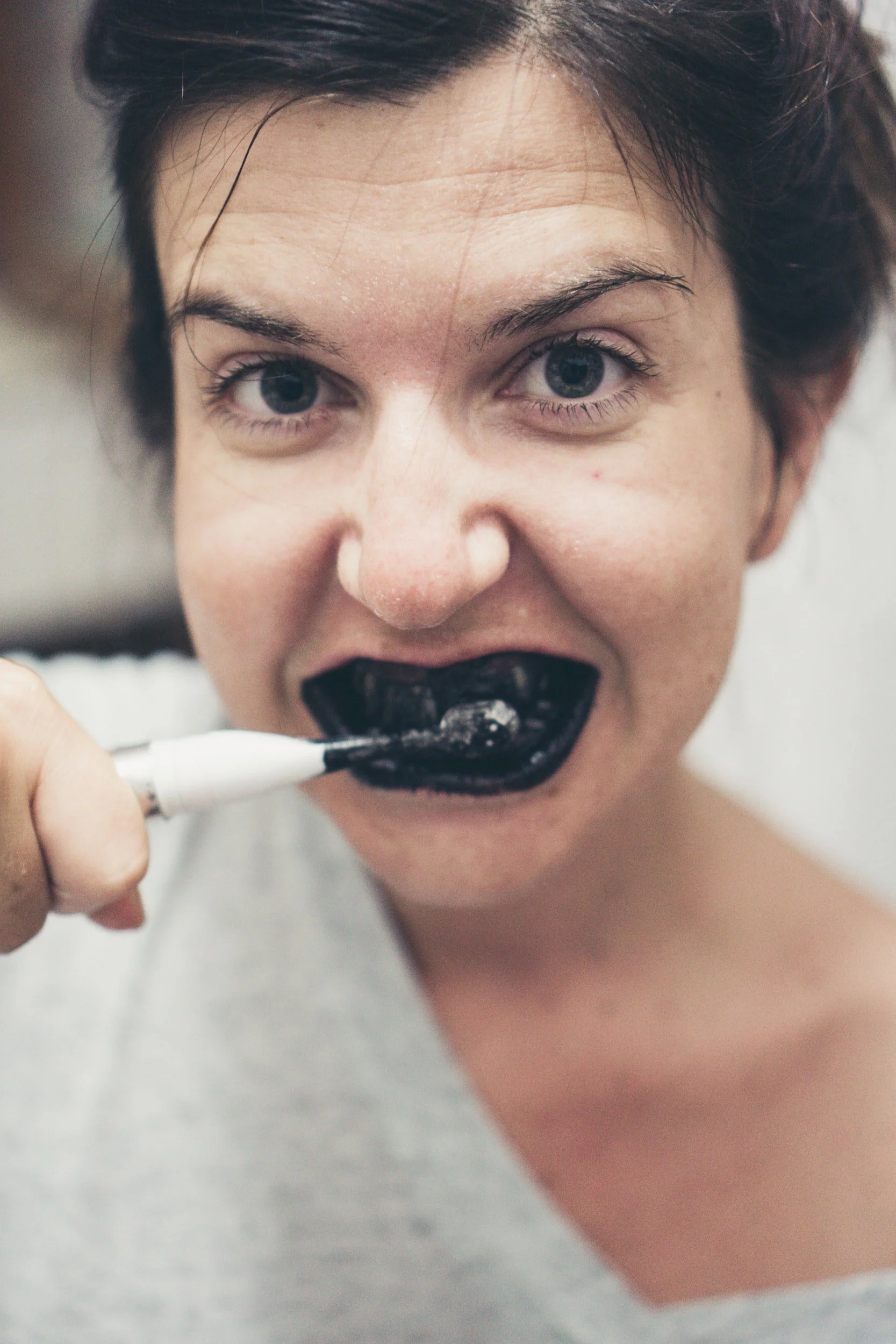
One very questionable 'trend' that is still going strong however is the idea of using charcoal toothpaste to get bright, white teeth. If you haven't tried it (and we hope you haven’t, but we'll get to that in a minute) you've seen it on your Facebook or Instagram feed. Someone with a mouthful of what looks like black tar and a big grin on their face because they can assure you that this rather gross looking toothpaste is going to give you the whitest, brightest smile possible.
If you do a quick Google search, you'll see that everyone and his Aunty is selling their own version of this new 'wonder; toothpaste. Some of it is even mixed with other 'miracle' ingredients like clay, 'minerals' and coconut shells (!??) And none of it's cheap. But it is vegan. So, here's the big question; should you hop on the charcoal toothpaste bandwagon and plonk down your $20 (and up) for a little tube of black gloop? After all, summer's coming and you do want to look your best from head to toe.
The Truth About Charcoal Toothpaste
Now, the idea of using charcoal to clean your teeth is not new, whatever that nice hipster lady on YouTube says in her 'infomercial'. The Ancient Romans used charcoal to clean their teeth over two thousand years ago. But that's not really much of an endorsement, as they also used urine as a mouthwash, washed their faces with gladiator blood to get a clearer complexion and made a habit of vomiting half way through a big meal just so they could eat more. So not exactly the health experts you want to follow, to say the least.
The fact is not only will charcoal toothpaste not make your teeth any whiter, prolonged use will actually destroy them. Activated charcoal is hugely abrasive, so yes, it may get some stains off your teeth, but it will also begin to take the enamel off as well. Once your enamel is gone, you can never get it back. At that point the next 'layer' of the tooth, dentin, will be exposed, and as that has a natural yellow tinge you'll be left with teeth that look yellower than ever before and that are at a much greater risk for decay and damage.
The lesson here is sometimes the boring old ways just work. However uncool it is, a good old-fashioned fluoride toothpaste is still the best way to clean your teeth. And if you are concerned about the colour of your teeth, a professional whitening treatment at your dentist's office won't cost you too much more than that trendy charcoal toothpaste and it'll actually work.
Emergency Dentist Sydney Says:
Should you try it? No. Why use charcoal toothpaste to whiten your teeth when we already have medical grade, safe, dental board approved products that do that for you and don't destroy your teeth in the process.
Many of the odd health trends out there are pretty harmless, but charcoal toothpaste isn't one of them. It's not worth potentially damaging your teeth for good for the sake of being trendy, so stick to your tried and tested toothpaste and save all that extra cash for something that might actually benefit the appearance of your teeth, like visiting us for a good clean and polish.

Easy Ways To Improve Your Dental Health in 2018
Avoid Needing Emergency Dental Care
Avoid Needing Emergency Dental Care

Most of us make resolutions for each new year and chances are at least a few of them are still in effect right now. Sticking to those promises you have made to yourself can be tough, but not impossible if you are serious about them. Take a resolution to keep your teeth healthier for example. Sticking to that need not be hard at all, especially if you follow these basic tips...
Cut Back the Sugar, For Real This Time
Yes, we sound like a broken record on this issue sometimes, but we're OK with that as it is such an important piece of advice for the good of your teeth and gums. And the good of your body overall.
Unlike calcium, or proteins, or even carbohydrates, no-one's body actually needs sugar, we just really like it. It's also very hard to avoid sometimes as it is included in all kinds of processed foods that you'd usually consider savory. But it's terrible for your teeth and pretty bad for your body overall as well.
If you can't imagine life without the occasional sweet treat we do understand; neither can we. But make it just that, occasional, and get into the habit of checking food labels when shopping for added extra sugars that could be avoided by making a different choice.
Commit to Flossing Daily
In case you are questioning if we even need to floss anymore, check out our myth busting article 'The Great Flossgate Debate'. With that out of the way, we know flossing can seem annoying but it doesn't taken that long once you get the hang of it.
To make it easier to do, consider investing in some purse and wallet friendly pre-made flossers from the chemists or, if you want to push the boat out a bit further (and are a bit of a tech head anyway) you can pick up an electric flosser for around $50 from your chemist or dentist.
Learn to Love Your Dentist

Very few people will tell you that a visit to the dentist is at the top of their list of favourite pastimes. But it really isn't as scary, or as much of a hassle, as you think. Modern dentistry focuses around providing great oral care with a minimum of pain and as little fuss and extra expense as possible.
In addition to a six-month regular checkup you could consider making this the year you invest in your smile in a bigger way, whether that means a few whitening treatments or a bit of cosmetic dentistry that makes a bigger difference.
Emergency Dentist Sydney Says:
Resolving to take better care of your teeth in 2018 is a great idea to maintain or improve your oral and general health and to avoid unnecessary dental expenses, such as emergency dentistry. If you are looking for dental advice or considering cosmetic dental treatment, get in touch with us today.

Festive Season Dental Emergencies
We've Seen It All
We've Seen It All
The Christmas holidays are usually a fabulous time for everybody. Family! Fun! Friends! Pressies! Food! Booze! Lots of food and booze normally. Santa surprises all the kiddies and then we get to ring in a New Year with even more parties, even more fun and, you got it, even more food and booze.
It might surprise you to learn that while most companies have a quieter time during the Christmas holidays, at Emergency Dentist Sydney it’s one of our busiest periods. Why? Because the festive season is fun, but not always very tooth friendly. Which is what we want to discuss today; the dangers that might be facing your teeth this Christmas and what you can do about them.
The Stress Catches Up
It's been a long year for all of us. Busy at work. Or busy at school. Certainly, busy at home and usually busy outside the home as well. The world has certainly been a strange place this year as well, and many of us are heading into the holidays feeling more than a little bit stressed.
What you may not know is that all that stress can affect your teeth. Those under a great deal of it are more prone to developing pericoronitis, inflammation in the soft tissues surrounding the crown of a tooth that is only partially erupted, usually a wisdom tooth.
This can cause pain, swelling, difficulty eating, even fever and fainting at times. In most cases it is a final signal that it is time to plan on finally getting those wisdom teeth properly accessed and removed, so that the patient can go into a new year pain free and with a much happier smile.
Eating Emergencies
As we mentioned, food plays a huge part in the festive season. All kinds of extra goodies are around to tempt us and lots of them are the sticky, sugary kind that are far from friendly to teeth. Combine this with a tendency to consume more sugary beverages - and that includes those colourful Christmas cocktails most of which are loaded with the stuff - and possibly poorer than usual oral hygiene, thanks to being too tired or 'tired' (drunk) to remember to brush and floss at bedtime and you often have a recipe for future disaster for your teeth.
New Year's Disasters
New Year's is a very strange time. Full of hope for the new year and nostalgia for the old many adults venture out to have a great night partying ahead of the big countdown at midnight. And all too often a few (a lot) more drinks than usual leads to falls, fights and broken - or knocked out - teeth. And even if you do stay in control and in good spirits once again you are quite likely to forget to start the new year with a good tooth brushing before bed as you may not actually remember how you got there!
Seasonal Oral Health Safety Tips
Don't slack on your oral healthcare routine- No matter how busy (or 'tired') you are twice daily brushing is a must and you shouldn't slow down the flossing either. With all the work you'll be asking them to do your teeth deserve a little extra pampering and TLC at this time of year, and that should always begin by making sure they are clean.
Cut down on the sweet stuff - Yes there are tons of cakes, puddings, sweeties and choccies around during the Christmas holidays but there is lots of other good stuff as well. Try to include more savoury snacks than sweet on your buffet plate and if possible find a way to brush your teeth after eating, or at the very least chew on a piece of sugar free gum and have a glass of water to help wash some of that nasty decay causing bacteria away.
Don't suffer in silence - If you do find that your wisdom teeth flare up, or that near cavity is becoming a real cavity now that it’s been exposed to too many sweets, or you have tooth pain for reasons you don't understand, you do not have to spend the holidays suffering in silence. Call an emergency dentist, they'll be there to help.
And if the 'worst' should occur and you fall (or fight) and crack, break or even lose a tooth don't panic. There are lots of things an emergency dentist can do to help in these understandably upsetting situations that will still allow you to start a new year with a smile.
Emergency Dentist Sydney Says:
We hope you have a lovely festive season and that dental problems are the last thing on your mind. But if they do crop up we're here to help and we'll even put the Christmas films on the telly for you if you must come in and see us, so that you don't lose too much of that festive vibe!

"I Haven't Been To The Dentist In 10 Years"
Here's What To Expect When You Do
Here's What To Expect When You Do
It does happen. Life gets busy. Work is crazy and you barely have a free minute at home either, and when you do, you like to spend that precious spare time doing something happy and fun. Next thing you know, you wake up one morning with a bit of a nagging toothache and you realise it's been 2, 5, maybe even ten years since you actually visited a dentist. How the heck did that happen? And what is a dentist going to say when you have to tell them you've been so remiss?
In this situation, some people would be tempted to put off a visit to a dentist, even though they now seem to actually need one. They are simply a bit too embarrassed to consider having to admit that , although they really do do the whole brushing and flossing daily thing, and haven't had a problem with their teeth at all - they are even pretty white - they have neglected what they know is the most important part of oral health care; a regular dental checkup.
The fact is though, if you haven't made it to the dentist in a while, and yes, even if it's been ten years, we won't judge you. Life happens. As good dentists we will be glad you're there now and that you are finally taking proper charge of your oral health, even if it's taken a bad toothache to get you to see us.
The other thing that makes people in this situation very nervous is not really knowing what to expect once they do make it to the dentist's chair. Although it will of course vary from patient to patient, here's a little about how it'll generally go.
The Paperwork

We don't do paper anymore! Emergency Dentist Sydney is almost completely digital. New patients simply fill in a digital form on our iPad upon arrival and sit in our comfy reception until we are ready to see you – which won't be long we promise!
The Examination

If you haven't been to a dentist in ten years, chances are you'll be rather surprised by how much things have changed around a dentist's office in general. TVs with Netflix in the waiting rooms? That's new. Free tea, coffee or water? Well that didn't used to happen before. They do laser root canals now? Well isn't that some Star-Treky stuff!
Once you've got past the pleasant surprises in the waiting room your appointment will begin with a basic checkup and a chat with the doctor about your oral health history and any issues you seem to be having right now (like that toothache) No lectures, no looks of shocked horror, and no patient shaming when you admit just how long it's taken you to get there, just a chat about starting afresh!
The X-Rays

Even if you did manage to dig up old x-rays, you'll need some new ones. Ideally, dental x-rays should be repeated on an annual basis, as a lot can change, even for an adult. We know that x-rays can be uncomfortable, but they don't hurt and they'll be over in a flash and give your dentist the below the gum line view they need to ensure that any and all oral health issues you might be experiencing, even if you don't know they exist (yet), can be properly addressed.
Treatment

A lot can happen in ten years in terms of anyone's oral health. That toothache? It might be caused by a cavity, it might be caused by gum disease, it may even be caused by pesky wisdom teeth still lurking below the gum line. And now's the time you'll find out, and, if there are problems, talk with the dentist about the plan going forward to sort them out.
If you are one of the lucky ones, you might not even need that much work done at all. But a proper, professional cleaning is certainly a must and gosh will you be surprised by how clean your teeth look and feel once that's over. Then, if we're completely honest, it might be time for a little lecture. A really little, gentle one, that emphasises the importance of keeping up the good work you've started and making the time - and the effort - to make going to the dentist a part of your life again.
Emergency Dentist Sydney Says:
If the last time you saw the dentist was a decade ago, don't be shy, come on back. It really is never too late to take full charge of your dental health and in ten years from now, you'll be really glad you did. And you might even have learned to like us by then!
Need Advice Or Emergency Dental Care In Sydney CBD?
Contact our friendly team


Extractions Don’t Need To be Feared
Toothache
Here's Why
Pulling teeth - or dental extractions as they are properly called - is one of the oral health services that gets a seriously bad rap.
In fact, the idea of getting a tooth pulled is so scary to some that it's one of the number one reasons they put off going to see a dentist when toothache strikes; a fear of the pull.
To be fair, the term 'pulling teeth' sounds pretty painful. That's why dentists really don't like it. A modern dental extraction is not a painful, terrifying experience at all, but we understand that some need a little extra convincing. So let's take a look at just how a dental extraction works in the 21st century.
How Does a Dental Extraction Work?
How can it not hurt to get a tooth extracted? That's a fair question we'd expect to hear. Back in the day, before dental technology was as good as it is today, getting a tooth pulled could indeed be a painful, somewhat bloody process. Today, it's a matter of the application of a numbing cream, the administration of a simple, safe local anesthetic, the extraction of the tooth, which in the hands of a skilled and experienced dentist literally takes seconds, and the application of a little gauze to the former site of the tooth to stem any bleeding and aid rapid blood clotting. It's all over in a matter of minutes and if the now removed tooth was causing the patient pain - which very often it was - that pain is gone and they will be on the road to better oral health overall right away.
Oh, and by the way, the term pulling a tooth is really misleading. There really is very little pulling involved. In fact if you were to attempt to pull your own tooth, and you took a pair of pliers and pulled at the offending tooth, you would find that it does not come out unless you bench 250. Why? Because any tooth is 'glued' into its socket by tiny ligament fibres that anchor it into the jaw. To remove the tooth a dentist gently loosens these fibres and 'pops' the tooth out, no yanking required. As he or she does so, you will very likely feel pressure, but, in the hands of a skilled dentist, that pressure should not become pain, even if the tooth is a little bit stubborn and tries to hold on (which some do.)
When Is a Dental Extraction Needed?
Now that you have a better understanding of what to expect during a dental extraction we need to move on to the next issue, when does a dentist decide to recommend a dental extraction? In a word, as a last resort. Once you remove a tooth it's gone for good, so doing so is not a decision to be taken lightly. A good dentist will recommend trying all other available avenues - often a root canal - before suggesting a dental extraction. Sometimes, however, there is just nothing to be done and removal is the very best option. Your dentist will explain why, and then, because dentistry has come so far so fast, discuss with you the possible options for replacement, with a crown or implant.
Emergency Dentist Sydney Says
Dentists don't actually relish pulling teeth, it's our job to try and save them, but when we can't we make the extraction process as easy and comfortable as possible.
Need Advice Or Emergency Dental Care In Sydney CBD?
Contact our friendly team


Why You Should Never Just Assume You Need a Filling
Toothache
Toothache

Even if you are usually fairly fastidious about your oral healthcare routine, and you try your best to keep up with those recommended regular dental checkups there may very well come a time when you are blindsided by a sudden toothache. Not fun, and often not easy to soothe.
It's at this point that many people assume that, despite all of their best efforts, they have a cavity and it's time to steel their nerves to head into the dentist's office for a filling. However, although often that does turn out to be the case (and modern fillings are painless and very natural looking by the way, so it's not the end of the world) it is not always a cavity causing that pain, and other forces may be at work.
Here's a look at some of the other possibilities...
Sensitive Teeth
If the pain occurred - or occurs - after eating or drinking something very hot, or very cold, then it may be caused by a fairly simple case of sensitivity. While there are lots of toothpastes available that are designed to help ease this the best first course of action is a visit to the dentist. There he or she will be able to rule out things like excessively thinning tooth enamel or receding gums, conditions which have to be treated in a different way, and then recommend a suitable daily oral health care routine to follow in the future to minimise the problem.
Cracked or Chipped Tooth


Even if you can't quite see it a crack or chip in one of your tooth may be the cause of your discomfort, as even the smallest of these can expose a nerve, leading to a surprising amount pain. Your dentist has a number of methods at their disposal to repair these defects, but they can't do that until you go in and see them!
Gum Disease
Sometimes the pain you assume is radiating from a tooth gone bad is actually coming from the gum surrounding it instead. A gum infection, which can be caused by a number of different things, can be excruciatingly painful and does need to be treated as soon as possible. Often a course of dental laser treatment and cleaning, along with medication to clear up the current infection, is extremely effective and you can be out of pain very quickly.
TWhen You Need More than a Filling
Some tooth decay cannot be effectively treated with just a filling. If a tooth is significantly damaged by decay its root is often affected as well, and in this case slightly more treatment is called for, often in the form of a root canal, if the tooth is to be saved. This is a scary prospect for many, as they have heard nightmarish tales of pain and agony that lasts for days. This is not the case at all in the 21st century. A root canal can be performed quickly and efficiently using dental lasers and the pain and discomfort is minimal (really).
Emergency Dentist Sydney Says:
It's easy to try to treat a toothache at home because you don't have the time/patience/guts to head to the dentist's to get it properly diagnosed and treated. But even if a toothache seems fairly minor, or it comes and goes, tooth pain is always a sign of a problem of some kind, and the faster you get it treated the better off you - and your oral health in general - will be.

What Should You Expect From an Emergency Dentist in 2017
Our Take
Our Take
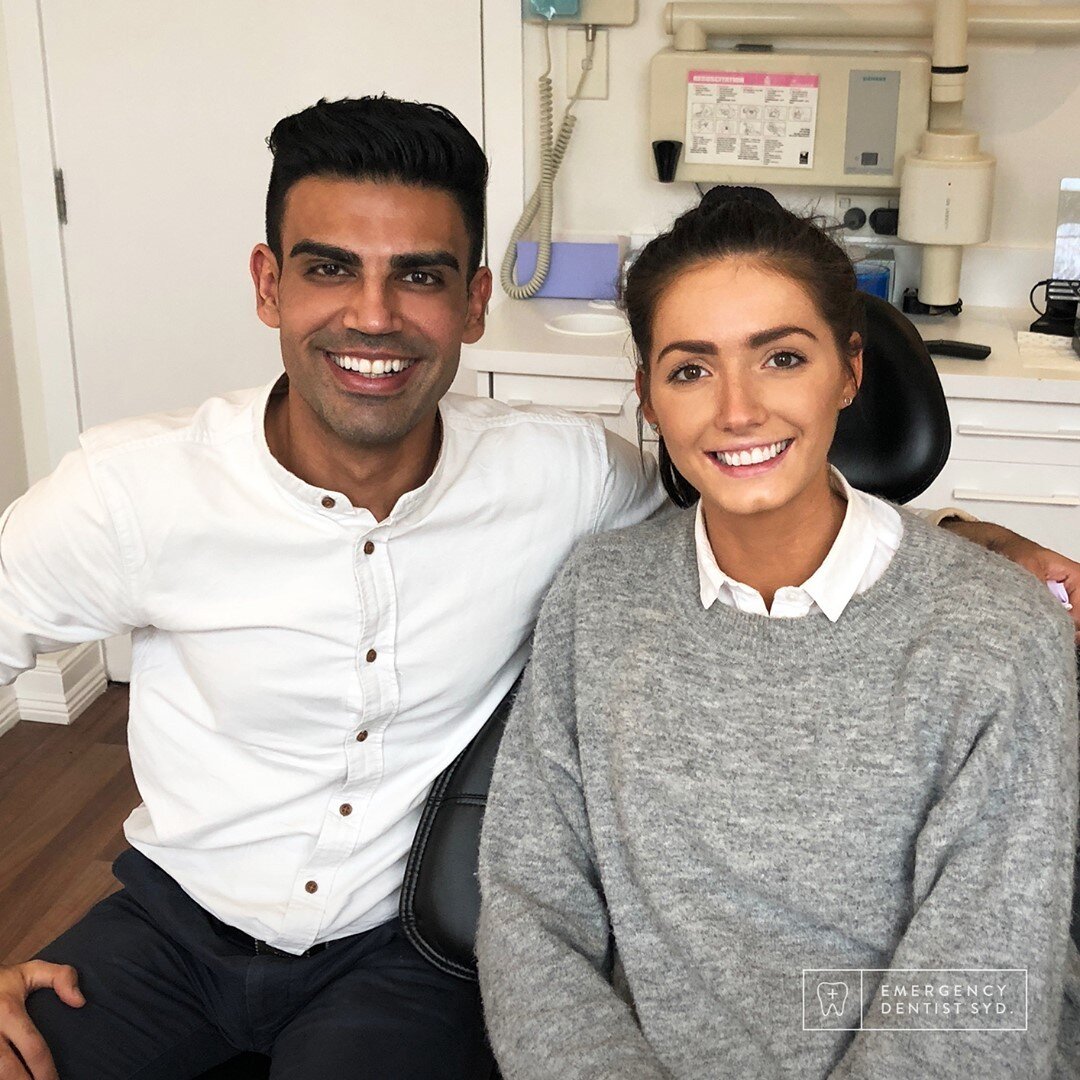
Pictured: Dr David Graham & Dr Amrinder Oberoi
Patients have always had certain expectations they want their dentist to meet. They have always looked for expertise and compassion, experience and that all important gentle touch. Most of us have also always preferred to go to a dental surgery where the surroundings are clean and comfortable and the staff are nice and friendly. In 2017 however, patient expectations are even greater, and now, to satisfy the modern dental patient a practice needs to offer a little more. And why not? Anyone does have the right to expect great care AND great service from their dentist. But what kind of things should a 21st century dental practice be providing, apart from fantastic oral health care?
Here's what we think
Easy Appointments

Who has the time to spend ten minutes on hold on the phone to make a simple appointment? Not everyone. 'Back in the day' of course we usually had no choice, but as technology allows that to no longer be the case the best dentists should make it fast and easy to make an appointment, and it should be just as easy to change one too. We offer online appointment scheduling that allows our patients to choose the time and date of their consultation and book it online in a matter of seconds. And we think that every other dentist should be doing the same. After all we value our time, so it's only right that we value yours too.
Clear Directions

Pictured: The St James Trust Building at 185 Elizabeth Street, Sydney.
Who needs to spend ten minutes trying to find an address they've never been to before? To help ensure that our patients are not left wandering around like lost souls, we provide clear directions on our website - complete with map and public transport links and information. And if you are driving? You can call ahead and we'll make sure you'll have a parking spot close to the office when you arrive, so that you don't have to delay your treatment because you're driving around desperately looking for a place to park.
A Full Range of Emergency Services
No one wants to be in pain, and that really is why emergency dentists exist in the first place. But some after hours dental clinics only offer a very limited range of emergency services. We believe that for an emergency dental clinic to truly provide all of the care patients are looking for all of our services should be available after hours and at the weekends, as well as all of our helpful and caring staff.
Transparency

We have treated hundreds of patients in pain and, fortunately for us, many of those patients have later taken the time to give us some nice kudos online. Whether you are checking out of practice's reputation on Google, Facebook or another review service, we make sure you see them all. We don't pay random people to make up fake glowing reviews and we don't kill bad reviews just because we happen to disagree with them (we address them instead). We want our patients to feel secure in the knowledge that they are choosing the right dentist and think that this kind of total transparency should certainly be a big part of that. See what our patients have to say.
Extra Comforts

Pictured: Entertainment on the ceiling while you recline.
Very few people would put a trip to an emergency dentist at the top of their list of fun things to do with their evening or weekend, we know that and we're not offended. Because we are aware that a visit to our office can be a little daunting, and even a bit scary, we make sure we go the extra mile to make the experience as pleasant as possible. We always make sure there's tea, coffee and water on hand and to ease the anxiety a patient might feel while waiting to see the doctor, or waiting for an x-ray result, we installed TVs all over the office and offer access to Netflix, Spotify and YouTube so you can indulge in your favourite shows and/or music to help relax some of your cares away while we get to work on getting you out of pain.
Emergency Dentist Sydney Says:
In 2017 people want more from their dentist these days and we are happy to provide it, something that we think helps sets us apart from others and if you make an appointment to come and find out for yourself we think you'll agree
Soft Teeth
Is there really such a thing?
Is there really such a thing?

If you haven't said it yourself chances are that you've heard someone say it; I have soft teeth. But exactly what is that supposed to mean and is there really such a thing? The simple answer is no.
The Soft Teeth Myth
People often use the term 'soft teeth' to describe teeth that seem 'naturally susceptible' to tooth decay and cavities. When using the term people believe that such things are caused by some genetic flaw, as bad teeth do seem to run in their family. However, they are mistaken. Everyone is 100% in control of their dental destiny. No matter how many cavities your Dad has had fixed, or how many times your Mum has been in the dentist's chair to get bleeding gums looked at their oral health problems cannot be passed on to you.
There may be something that you have in common with your parents and other family members that may be contributing towards oral health problems; poor oral hygiene, and you are the only person who can change that.
Preventing 'Soft Teeth' Problems
Having established that there really is no such thing as soft teeth all of the problems that people associate with them are very real and do need to be addressed. Tooth decay - which leads to those fillings - is primarily caused by bacteria, and maintaining a good daily oral health routine will go a long way towards preventing it. Brush twice a day - at least - with a good toothbrush, floss at least once a day and avoid consuming too many sugary foods; it's not hard at all, but such a routine is still very effective.
There are of course other factors that can contribute to tooth decay. Those who still smoke are at greater risk and some medications can cause problems as well. The best way to address these issues is to discuss them with your dentist, so they can help you come up with a better way to care for your teeth. And speaking of the dentist, they are the other big part of the puzzle, as those regular checkups are also a must in the 'battle' against tooth decay and other oral health problems.
Setting a Good Example
The one time you can influence someone else's oral health destiny is when you are raising your kids. It's important that kids are taught about good oral health practices as early as possible, even when they still have their first set of teeth. All too often parents feel that toddler tooth problems are less serious and less worthy of treatment as the teeth kids have at this point are not permanent. Another myth. 'First tooth problems' can indeed impact the growth and development of permanent teeth and so establishing a good oral health routine right from the start, including dental checkups, is essential, and the one time it is a family issue!
Emergency Dentist Sydney Says:
It's time to face facts; ‘soft teeth’ ae a myth. They’re just teeth that need better care, and the responsibility for that care begins with you (and your dentist of course.)

Why Ignoring Bleeding Gums Is A Big Mistake
Plaque, Bad Habits & Gum Disease
Plaque, Bad Habits & Gum Disease
You notice a little pink when you rinse and spit after cleaning your teeth. Or there's a little blood on your floss when you remove it. No big deal right? Maybe not if it's a very occasional thing, but if your gums bleed regularly, even if it's just a little, it very well be a sign of a bigger problem you need to address as soon as possible. Here are some possible reasons for those red spots on your toothbrush and what you can do about it.
Pesky Plaque Problems
One possible cause of bleeding gums is a plaque buildup around the gumline. Plaque is nasty stuff at the best of times, but if it is allowed to build up it hardens into tartar, which in turn irritates the gums, causes them to bleed and can eventually lead to full blown gum disease.
The fix here is to up your oral care game. The best thing to do is start of with a good professional cleaning and then keep things nice and squeaky clean from there. Brush AT LEAST twice a day and, no matter what you might have heard recently, to keep plaque buildup at bay you do still need to floss once a day as well.
Bad Brushes
It may be that it is the very tools you are using to try and keep your teeth clean are actually the cause of your bleeding gums problem. Often people think that the harder the bristle on their toothbrush the better the clean, but very hard bristled toothbrushes can be very tough on the gums. To avoid cutting your gums with a brush that is just too stiff - because that is what can happen all too easily - opt for a softer option. It will still get your teeth clean, it will just do so a little more gently, and your gums will thank you for that.
Pill Problems
Occasionally a certain prescription medication can have, as one of its side effects, the ability to cause your gums to bleed. This can be particularly true of some antihistamines, blood pressure medications and certain stronger antibiotics. If you suspect that your pills may be the problem, discuss the issue with your doctor, they may be able to change your prescription or offer some advice on how to deal with the problem.
Your Gums and Gingivitis

Gum disease - medically known as gingivitis - is probably one of the biggest causes of regular gum bleeds and only your dentist can help you solve the problem for good. How your gum disease is treated with depend upon the severity. In some cases improved oral hygiene can be the simple answer, but if the gingivitis is more advanced
Emergency Dentist Sydney Says:
Rather than ignoring those 'little gum bleeds' make an appointment to do something about it today, before the problem gets worse or becomes irreparable.

What Bad Breath?
Don't Be Embarrassed To Discuss Bad Breath With The Dentist...
Don't Be Embarrassed To Discuss Bad Breath With The Dentist
Bad breath. It's always an elephant in the room. The chances are that those who suffer from it won't ever hear about it from their friends and their significant other may never say too much about it either. The whole issue is an embarrassing one that, the chances are, you probably don't even want to be reading about right now because it kind of makes you feel uncomfortable.
There are many causes of bad breath, and, with the right information, and sometimes the right treatment, they can be very effectively addressed. And the best person to turn to for help is your dentist.
The Causes of Bad Breath
Bad breath - medically known as halitosis - can have a number of different causes. Some are pretty obvious while others less so. Forgetting to brush and floss on a regular basis, smoking, a love of garlic. All pretty obvious causes of bad breath to most people. But what if you, like more people than you might imagine - do brush and floss and avoid garlic every bit as much as Dracula does and still battle bad breath?
Well, did you know that dehydration causes bad breath? And that following one of those uber trendy low carb diets can do the same because that way of eating causes your body to release something called ketones that can be smelled on your breath and they often smell pretty bad? Or that an as yet unseen forming cavity can really do a number on your breath as well?
Well you may not have done, but your dentist does. He or she also knows about a number of other causes of bad breath, like taking a certain medication. They also know that, in rare cases, halitosis can be a symptom of an underlying, non oral related disease that will call for a medical doctor's care. And while they may not know the minute you sit down in the chair just what's causing the problem they will keep working with you until it's figured out.
But I Don't Want to Talk to My Dentist About Bad Breath!
We get it, you're embarrassed and you really don't want to bring up the halitosis thing with anyone, including your dentist. You'd rather keep chewing on a new stick of gum every five minutes and downing enough mouthwash to sink a ship and hope for the best.
However, even if you just finished your 12th stick of Extra of the day before you hopped up into the dentist's chair they will detect that bad breath. It's their job. But fear not, they are not going to recoil in horror or call you out in front of the entire office. They know you're upset. They know you're puzzled. And they are just going to help you deal with the problem in a quiet, discreet and non-judgmental way. Then you can finally face the world - and all your friends - with great breath and an improved sense of self confidence, that, to be honest, will be worth every minute you felt a bit squirmy talking about all of this at all.
Emergency Dentist Sydney Says:
Dentists are here to help, not to judge. Never be afraid to discuss bad breath - or any other oral health concern - with us. Trust us, we've pretty much seen it all before and our only concern is helping to fix the problem, not to make you feel bad about it.

First Impressions Count
"...And Remember To Smile
And Remember To Smile
Nelson Mandela once famously said, “Appearances matter, and remember to smile”. As dentists we have adopted the latter part of that quote, #RememberToSmile. In context, Mandela was talking to Time Magazine about some important lessons he had learnt during his 90 years and we can see why.
Before an interview, a big presentation and certainly before a date or a night out you take great care to make sure your clothes are on point, your hair looks good and everything smells good. In fact, you no doubt spend more than a bit of time and money on these efforts to make the best possible first impression. But here's a question for you, how much did you spend on your smile?
“Appearances matter, and remember to smile”
You've heard the expression 'million-dollar smile' right? It's more than just a jaded saying though. Your smile has a far bigger impact on that great first impression than you might realise. According to a psychologist from the States, Dr Paul Ekman, professor of psychology at the University of California and a man known as 'Professor Smiles', as he has devoted his career to studying them, people respond to a great smile from up to 30 meters away. And a smile, he says, lets people they are likely to get a good reception, making it hard not to reciprocate. In other words a smile is a great way to set up a good interaction before you ever say a word, a real plus when you are on that big interview or first date.
That having been said a great smile is about a lot more than the ability to get those facial muscles into the right place. The focus is on the mouth when you smile, which means your teeth. A bright white smile and a set of healthy, well-cared for teeth and gums can say an awful lot about you, mainly that you take pride in your appearance and that your health is important to you. It is also a confidence booster for you, as people with teeth that are stained, cracked, discoloured or otherwise imperfect smile a lot less than people with 'good teeth', whether they realise it or not, and people who avoid smiling often come across as self-conscious, nervous or even rather rude.
The Keys to a Confident Smile

These 'smile problems' are far from unusual of course, lots of people have problems with more than just the colour of their teeth, their teeth might also be broken, cracked and/or crooked. And they may think there is not too much they can do about those latter problems other than keep their mouth closed as much as possible. However, that really isn't the case anymore. Modern dentistry has a 'fix' for pretty much all of them.
A good smile really starts in the most mundane of ways; with a simple check up at the dentist. Regular checkups and basic cleanings really are the foundations of a great smile and they are also the way that more serious issues can be examined, addressed, and yes, fixed, so that you can begin your journey to that 'million dollar smile.
Emergency Dentist Sydney Says:

Regular dental checkups and good oral hygiene are the first steps to a healthy smile. And remember, a smile comes from the inside out.

Don’t Fear The X-Ray
Dental X-Rays Explained...
Dental X-Rays Explained
For years now, x-rays have been a standard part of dental care and most of us are used to the idea and have been since we were little kids. Being used to something does not always mean being OK with it though, and it's fair to say that more than a few people are a little nervous and scared about dental x-rays and some even avoid them, fearing that an x-ray may in some way be harmful to their health.
The fact is that dental x-rays are very safe, and in the 21st century they are safer than ever before. Yes, a very low level of radiation is produced when an x-ray is taken - that is, after all, how they do their 'job' - but you are actually exposed to more radiation during an hour's flight on a plane than you are during a routine four image bite wing x-ray session!
However, if you are still a little wary it might help for us to explain dental x-rays, why we need them and what they really involve in a little more detail:
Who Needs Dental X-Rays?

Our Dentists. Dr Amrinder Oberoi & Dr David Graham
Dental x-rays are used by dentists to help them get a clear look at oral health issues that may be hard - or even impossible - for them to see with the naked eye, even the very trained eye of a dentist. Making use of these images your dentist can:
Decay, including areas of decay that are often 'hiding' between the teeth or underneath an old filling or crown.
Abscesses, which are basically areas of infection that sit at the root of a tooth or between a tooth and the gum.
Bone loss caused by gum disease
Changes or abnormalities in the root canal of a tooth
If an x-ray is not performed some of these issues may be missed and go untreated until the condition is more serious and painful than it needed have been. In addition a dental x-ray can also help a dentist when they are preparing fillings, crowns and braces.
Kids and Dental X-Rays
Some parents are especially concerned that dental x-rays may be harmful to their kids, as they are younger and smaller and their bodies are still growing and developing. However, the very low levels of radiation are so low that they are safe for kids of all ages and a dental x-ray can be especially useful to a dentist when he or she is treating a child. Why? Because thanks to an x-ray a dentists can:
Ensure the child's mouth is big enough to properly accommodate incoming teeth.
Determine whether or not primary teeth are loosening properly to allow secondary teeth to erupt properly.
Monitor the growth of wisdom teeth.
Identify gum disease and decay at an earlier stage.
It is especially important that children visit the dentist regularly - at least every six months - and that get x-rays when their dentists recommends them. Childhood is a crucial time in terms of oral health and a lack of dental care when you are a kid can have serious lasting effects well into adulthood.
Dental X-Rays and Pregnancy
As a general rule pregnant women are advised to avoid x-rays while pregnant, not because there is any real proven danger to them or their unborn child but as a matter of simple and sensible precaution.
Dental care is very important during pregnancy though and there are certain situations in which a very carefully administered x-ray may still be necessary. For example, it is an accepted fact that periodontal disease in pregnant women can have adverse effects on their pregnancy, and so in some cases a patient's dentist and OB may agree that an x-ray presents far less of a risk than the damage that can be caused by gum disease, as several bodies of research have found that women suffering from gum disease during pregnancy are at an increased risk for giving birth to a pre-term or low birth weight baby.
If an x-ray is called for during pregnancy a dentist consults with a patient's OB first and extra protections like having the patient wear a lead lined apron and thyroid collar and keeping the number of images taken to an absolute minimum.
Every dental professional does understand that there are lots of things that many people find scary and daunting about a visit to the dentist's office and are more than happy to discuss concerns they have before any procedure, including dental x-rays, is started. If you have concerns about x-rays and whether or not they are really needed, ask and any dentists will be more than willing to address - and allay - your fears, even if they seem a bit silly to you.
One inexpensive alternative to standard floss in a box are floss sticks, or floss picks as they are also known. Lots of people do prefer these to standard floss as a lot of the measuring and guesswork is taken out of the equation and although you can only really use each pick once for hygiene reasons, making it a bit pricier to use them, the potential oral health benefits of actually flossing make the investment worth it.
There are also several different kinds of 'mechanical flossers' on the market. Some make use of water, some make use of air and they are priced anywhere between $10 and about $75, depending on the model you choose. Some do work well, and a water flosser can be an especially good choice for those with braces or bridges, as they can remove food particles that brushes and flosses often miss. Should you make the larger investment in one of these gadgets? If you struggle to floss now but think they might change that, by all means go ahead.
Emergency Dentist Sydney Says:
Dental x-rays are safe and the images they produce are the key to making sure we receive the correct information to treat you appropriately.
Patient Care First

Keep Up-To-Date with All Things Oral & General Health
RECENT ARTICLES






For 15 years, we've had one mission - when Sydney has a dental emergency, Emergency Dentist Sydney is there
We're proud to celebrate 15 years of providing emergency dental services to Sydney CBD and surrounding suburbs.