

Emergency Dentist Sydney's 2019 Team
Starting the New Year With a Solid Team
Starting the New Year With a Solid Team
2018 has been a great year here at Emergency Dentist Sydney, with a lot of changes for both staff and patients. As the year draws to a close, it’s important that we remember the year that’s just passed even as we anticipate the year that’s coming, which is why we’re creating this 2018 summary.
Emergency Dentist Sydney in 2018
This year has been a busy one for the team at Emergency Dentist Sydney. Not only have they seen around 500 emergency patients during the year, they’ve also kept their focus on what’s important. For the team, this means constantly updating their skills to keep up with medical and technological advances in the dental field. And this is what allows them to offer patients the best possible treatment and experience.
Another important focus for the staff at Emergency Dentist Sydney is relieving patient anxiety. This is a major barrier to the oral health of a lot of people, which is why our staff continue to learn new ways to relieve this problem and help patients overcome their fear and stress. So if you’ve been avoiding the dentist out of fear or anxiety, then we probably have the solution.
The Emergency Dentist Sydney Team
There is a varied team here at Emergency Dentist Sydney and that’s by design. Each member of the team has their own role and specialities. This helps ensure that patients get the best possible treatment no matter what oral health problems or concerns they have. As Doctor Oberoi says, “Our emergency team includes myself, the principal dentist. We have an oral surgeon on the team, a gum hygienist, and an associate dentist who does weekend work.”
The team here at Emergency Dentist Sydney includes:

Doctor Oberoi
Our Principal Dentist who performs a range of general and cosmetic dental procedures from dental implants to anti-wrinkle injections.

Doctor Graham
A dental surgeon who works 2 days a week and has a special interest in bruxism.
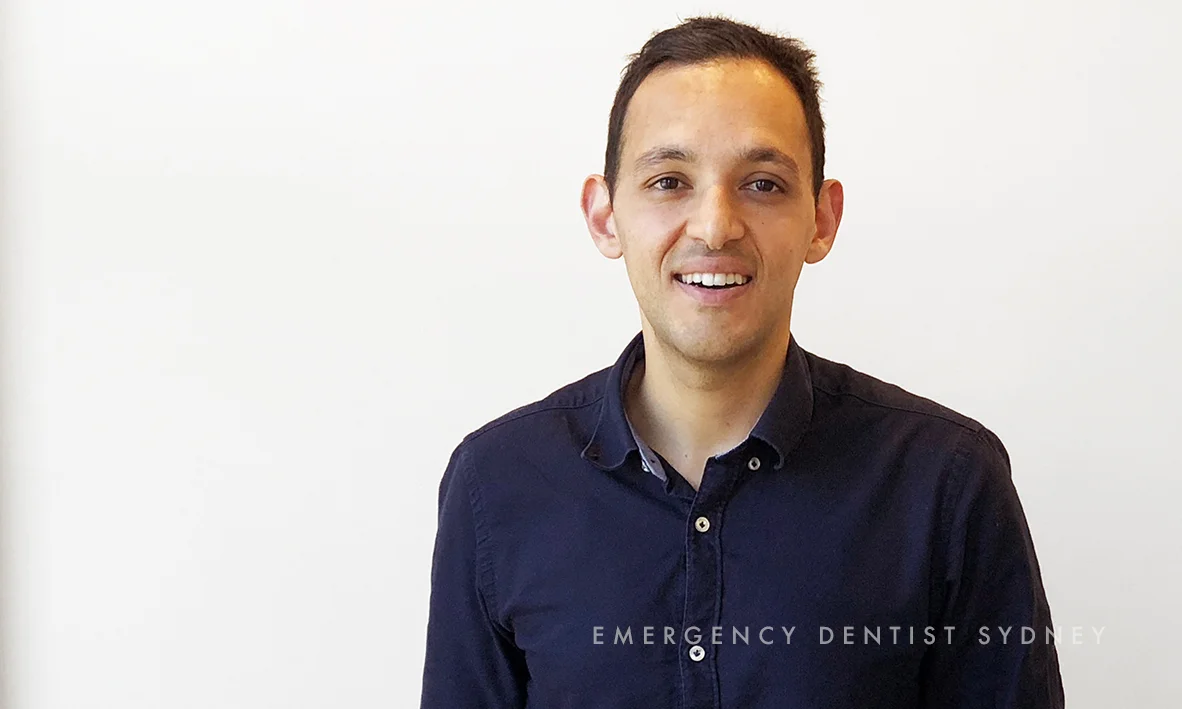
Doctor Raj
An oral surgeon who is involved with more complex dental procedures such as difficult extractions, wisdom teeth and lip and tongue ties.

Phoebe Bell
Emergency Dentist Sydney’s dental hygienist, who focuses on preventative dentistry and education as well as cosmetic procedures such as teeth whitening.

Jenna
Jenna is the Practice Manager and oversees all the day to day necessities of the clinic.

Larissa
Larissa is the Patient Co-Ordinator, which means that she’s the primary dental nurse and is involved in all aspects of patient care and treatment from check-ups to more complex procedures.
Emergency Dentist Sydney Says:
If you have a dental emergency, contact our Emergency Dentist in Sydney. Our caring and expert staff are available 24 hours a day to help you with all your emergency dental needs.

Do I Have a True Dental Emergency?
When to Call the Dentist
When to Call the Dentist
If you have a problem with your teeth on the weekend or late at night, you might worry about contacting an after hours dentist. After all, when you’re in pain, it can be hard to tell if the problem is an emergency, and what kind of medical professional you should contact. To help with that, here are some of the most common dental emergencies and what you should do about them.
What is a Dental Emergency?
This may seem obvious. For most people, a dental emergency is when your tooth really hurts and you want it fixed. However, there are a few different types of emergencies that after hours dentists see. Here are some common dental emergencies.
Any problem that threatens the health and placement of a tooth. This broken, lose and cracked teeth.
Severe pain.
Bleeding from the mouth tissues that won’t stop.
A severe infection that suddenly flares up. This can be life threatening, so it’s important that you see an after hours dentist as soon as possible if this occurs.
What to do in a Dental Emergency
If you experience a dental emergency, then you need to get help as soon as possible if you want to solve the problem. This will also help you to preserve the health of your mouth and teeth over the long term. With that in mind, here’s what to do for some specific dental situations:

A toothache
If you experience severe pain after hours, you can take Nurofen to alleviate it until you can get to an after hours dentist. Don’t try to brush the area, but you can rinse with warm water to gently clean it.
Bleeding
If the bleeding isn’t too bad, rinse your mouth with warm water and apply pressure to the area to encourage it to stop. If the bleeding is severe, seek medical help immediately.

Dislodged teeth
If you have a tooth or teeth knocked out because of some type of injury, retrieve the tooth and rinse with water to clean it. Reposition gently in the tooth socket without pressing it down. If you can’t put it back in your mouth, put the tooth in milk to keep it moist. And contact an after hours dentist immediately so the tooth can be put back where it belongs.

Cracked teeth.
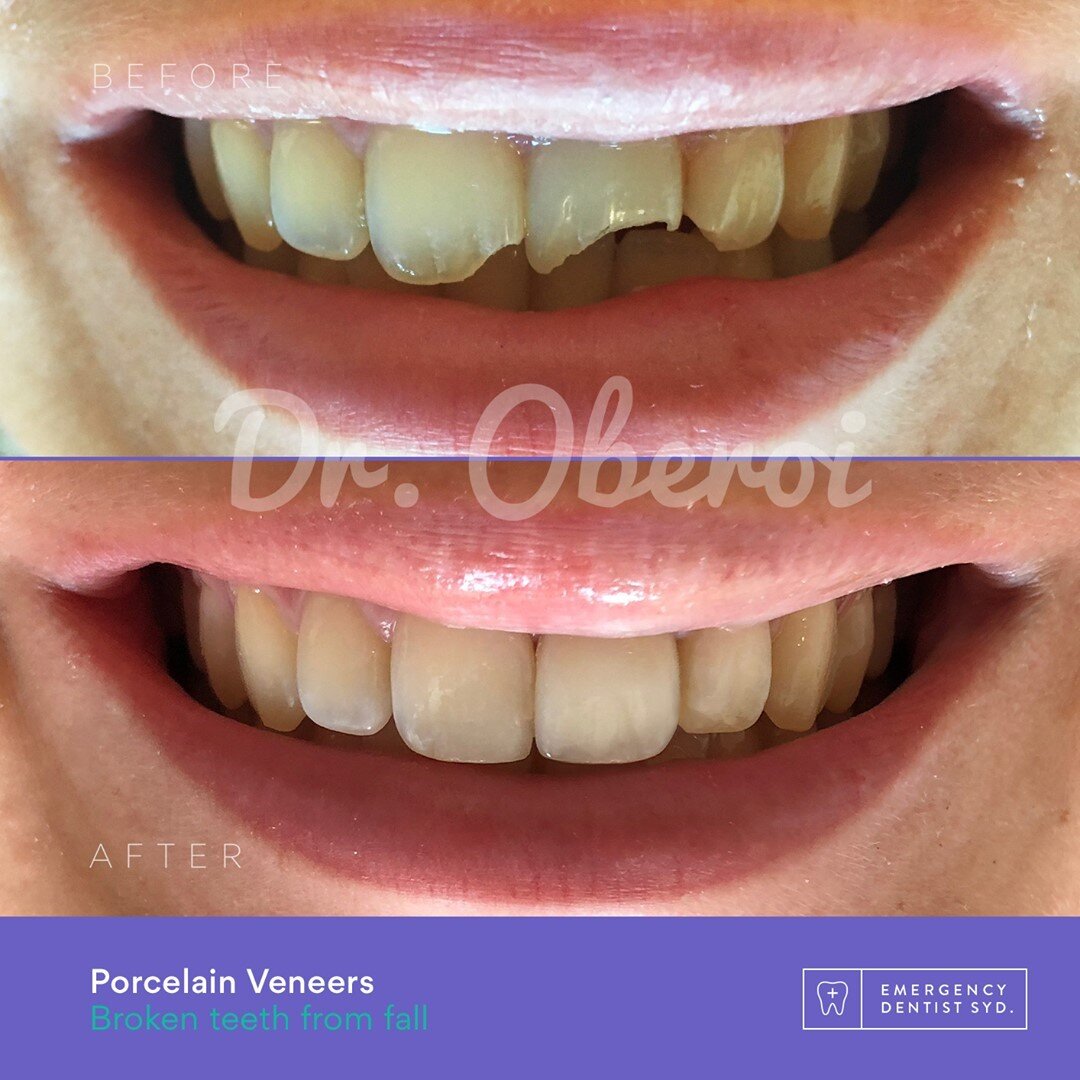
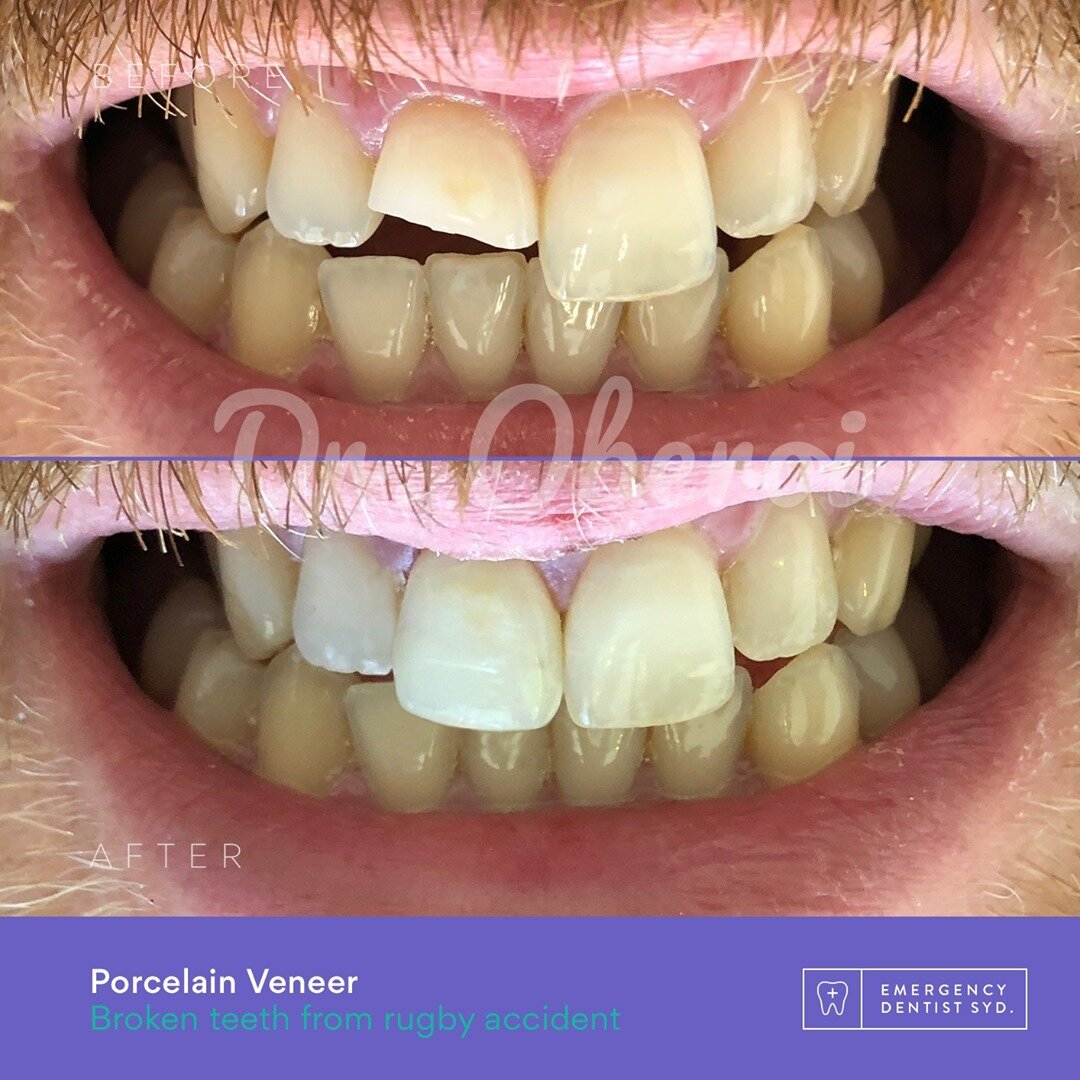
It’s easier than you think to crack a tooth or teeth. If you experience this, rinse your mouth with warm water, apply a cold compress to the face and see an after hours dentist as soon as possible. Your dentist will be able to repair the tooth using a porcelain crown or veneer, dental bonding, or a dental bridge.

Something stuck in your tooth.
Unless it’s extremely painful or bleeding, this usually isn’t a dental emergency. Try to gently remove the obstruction with your fingers or tweezers. You can also try flossing around the object. If this doesn’t remove the problem, make an appointment with your dentist.

Severed gum or lips.
This is considered a medical emergency, not a dental emergency. So apply pressure to slow the bleeding and go to your doctor or to the emergency room if it’s after hours.
Emergency Dentist Sydney Says:
If you have a dental emergency, contact our Emergency Dentist in Sydney. Our caring and expert staff are available 24 hours a day to help you with all your emergency dental needs.

The Importance of Good Quality Emergency Dentistry
Avoid Long Term Dental Problems
Avoid Long Term Dental Problems
You may not always get the opportunity to choose your emergency dentist. If you injure your mouth after hours, you’ll be in pain, confused and worried, as well as struggling to find an after hours dentist. But that doesn’t mean that you should settle for just any dentist who answers the phone. In fact, choosing the right Emergency Dentist in Sydney can be pivotal in getting the effective and expert help that you need.
The Importance of Choosing the Right Emergency Dentist
You need to choose an after hours dentist with the same care that you use when you choose your regular dentist. Emergency dentists must have a specific set of skills that are related to what patients need when they experience an injury or other dental problem. As Dr. Oberoi from Emergency Dental Sydney explains, “Emergency dentists have to be trained well in managing people with dental pain or dental trauma. They’re like Emergency Doctors in a lot of ways. They have more experience in diagnosing and giving appropriate treatment.” This extra training is essential to ensure you get the right treatment and the best outcome possible no matter what type of treatment you need.
If you don’t choose the right dentist, you may find yourself with someone who doesn’t have the depth of experience they need to cope with your dental emergency. This can result in substandard work, which causes more problems in the long run. If your dental work isn’t completed properly it can result in further trauma, infection or injury. And this will probably mean that you’ll have to have further work done to correct the problem or suffer long term pain or discomfort.
If you want to avoid these problems, then you need to put some thought into choosing an after hours dentist.
What to Look For in an Emergency Dentist

Obviously an after hours dentist should be appropriately qualified and experienced, but this isn’t really a big issue these days because of the regulations surrounding this profession. But that doesn’t mean that you should just go to anyone. As Dr. Oberoi says, “It’s important to choose an emergency dentist based on how good the dentist is. Because if the work isn’t done to the highest level then it can lead to further problems.”
This means that you shouldn’t default to just any dental provider even if you’re looking for a dentist after hours. It’s always better to visit a dentist who has a proven record in emergency treatments and can ensure the best outcome possible for your dental problem.
Emergency Dentist Sydney Says:
If you have a dental emergency, contact our Emergency Dentist in Sydney. Our caring and expert staff are available 24 hours a day to help you with all your emergency dental needs.

The Top 6 Causes of Dental Emergencies
The Most Common Reasons for Seeing an After Hours Dentist
The Most Common Reasons for Seeing an After Hours Dentist
People call emergency dentists for all kinds of reasons. After all, it’s not like your teeth know that it’s the weekend or late at night and they need to wait for a more convenient time. However, you can decrease the chances that you will need to make an after hours trip to the dentist. To help you with that, here are the most common reasons people need an emergency dentist and how to avoid them.
1. Neglect or Poor Hygiene
Taking care of your teeth is essential if you want to avoid a late night trip to the dentist. You need to brush at least twice a day, floss regularly, and see your dentist for regular check-ups. Neglecting one or all of these activities will lead to dental problems, guaranteed. These problems can include poor dental hygiene, cavities, and possibly even infections. And all of them are painful and can result in a trip to your after hours dentist.
But avoiding the dentist is just as bad. Lots of people put off their dental appointments, usually because of nerves or fear. But this will only lead to further problems. Your teeth need to be cleaned and checked by the dentist on a regular basis. Regular check-ups mean that your dentist can identify and treat any potential problems before they turn into late night problems.
2. Trauma from Falls
Anyone can fall over, and most of the time it’s not a big deal. But sometimes it can have serious consequences. Falling can do more than hurt your knees and hands, it can also knock out your teeth or even break your teeth. Unfortunately, there’s really no way to avoid this problem, apart from being careful if you’re prone to falls.
If you do damage or break one of your teeth, your dentist may be able to fix the problem. If the crack is small, dental bonding can be applied to repair the damage. Larger cracks can be covered with a crown. And if you have a tooth knocked out, your dentist may be able to put it back in place. The success of these interventions depends on you and on how quickly you seek treatment. That’s why it’s vitally important that you contact your after hours dentist as soon as possible after the injury so you can learn about your treatment options.
3. Trauma from Sporting Accidents
If you play sports where there’s a lot of physical contact, you should be wearing a mouth guard at all times. Your dentist can make a mould of your mouth and design a guard that’s specifically shaped to fit you.
However, this doesn’t completely eliminate the danger of some sports. If you play contact sports there’s always the risk of injuring your mouth or your teeth even with a mouthguard. You can crack or break a tooth or teeth, or even knock one out. If this occurs, your dentist needs to assess the damage so they can determine the best treatment option.
4. Poor Diet
If your diet is high in sugars, carbohydrates, or starches, it can increase the plaque production in your mouth and lead to decay. Soft drinks and sweets are particularly bad for your teeth, and if you eat a lot of these foods you’re more likely to experience a dental emergency. You can decrease the damage these foods do by brushing and flossing after every meal, but the best way to avoid damage is to change your diet. Eating plenty of vegetables, lean proteins, and healthy carbohydrates will keep your teeth healthy and markedly reduce the risk of a trip to the late night dentist.
5. Fixing Existing Dental Issues
Another issue that often sends people to the late night dentist is problems with their existing dental hardware. This can be cracked or loose crowns, fillings that fall out, or damage to braces or other dental implants. These problems may be the result of poor dental work or they can be caused by eating hard food or physical injury.
No matter what causes the issue, you need to consult your dentist to discuss your treatment options. In most cases, the dental work can be replaced or redone without too much trouble so you can go about your daily life again.
6. Lack of Education on Dental Health
A lack of education about dental health is still a big problem in the modern world. It can lead to poor dietary habits and poor oral hygiene habits, both of which can seriously affect dental health. This problem may also cause people to avoid going to the dentist until it’s absolutely essential, which means that they only get dental care in emergency situations. If you avoid the dentist for this reason, it will be incredibly detrimental to your long term dental health.
The best solution to this problem is to pay a visit to your dentist. They will be able to give you all the latest information on dental care and make suggestions for your ongoing oral health. They’ll also be able to identify any existing problems so that you can avoid emergency trips to the after hours dentist.
Emergency Dentist Sydney Says:
If you have a dental emergency, contact our Emergency Dentist in Sydney. Our caring and expert staff are available 24 hours a day to help you with all your emergency dental needs.

What to Do If You Need an Emergency Root Canal
From an Experienced Emergency Dentist
From An Experienced Emergency Dentist
If you suddenly experience a severe toothache late at night or on the weekends it’s important that you know what to do. It may be tempting to just call the closest dentist to get help, but that could end up causing more problems than it solves. An emergency root canal can be a complicated procedure. That’s why you need to make sure that the after hours dentist you see is appropriately experienced and trained in this procedure.
What is a Root Canal?

A root canal is a very common procedure that’s performed when a tooth becomes infected because of decay or poor oral health. The infection can cause the tissue inside the tooth to become diseased and damaged. If it isn’t treated at this stage, then the tooth will have to be extracted and the infection can also spread, causing problems with other teeth and with the rest of the mouth.
This can come on quite suddenly. You may have a tooth that bothers you a little for a while, and then suddenly one night you’re in a lot of pain and looking for an after hours dentist. But this is where you need to be careful. Although root canals are common, that doesn’t mean that you should just see the first dentist who answers the phone. As Dr. Oberoi from Emergency Dentists Sydney says, “A root canal is a complex procedure so it’s important that the staff are trained properly so that patients get the best treatment.”
It’s fairly easy for something to go wrong during this procedure, or for infected tissue to be missed, which can affect the outcome and lead to a tooth extraction. So if you want to avoid complications, you need to make sure that your after hours dentist is appropriately experienced and trained in the procedure.
Emergency Dentist Sydney

If you suddenly need an emergency root canal late at night or on the weekend, you need to know that you’re in good hands. As Dr. Oberoi states, “Patients are nervous and have limited choice in who they see out of hours, so they need to know that their dentist can do the job properly.”
The staff at Emergency Dentist Sydney have been focussed on emergency procedures for many years and have performed literally thousands of root canals. They have experience in almost every type of dental emergency imaginable, from toothaches to broken teeth and problems with fixtures such as crowns and veneers. So no matter what’s happened to your teeth, you can get the help you need from our 24 hour dentist whenever you need it most.
Emergency Dentist Sydney Says:
So if you have a toothache after office hours, make sure you contact our Emergency Dentist in Sydney. Our caring and expert staff are available now to take care of all your emergency dental needs.

Sudden Toothache and Emergency Dental Treatment
How We Can Help
How We Can Help
Those who have never experienced a serious toothache really don't know just how bad the pain from something as 'minor' as tooth pain can be. Most of those who have been through such pain before, on the other hand, understand all too well just how terrible toothache can be. And although it's often a matter of personal perception, somehow it often seems as if the toothaches that strike late at night, or at the weekend, when most dentists' offices are closed feels even worse than one that strikes during 'regular' business hours.
What Causes Sudden Toothaches
A bad toothache can strike like lightning - and in many cases be so painful that it actually feels like something hit you - but often the problem has been 'brewing' for weeks (or even months).
Untreated tooth decay 'suddenly' leads to the beginnings of a painful infection, or a nerve that has become exposed due to the decay becomes hugely sensitive. Or gum disease results in a painful abscess. Or that wisdom tooth you've been warned about (several) times before is trying to erupt again and causing pain that can be excruciating.
Trauma can lead to a severe toothache as well of course. A blow to the mouth, a tooth that gets cracked or dislodged or an injury to the gum line can all lead to a terrible toothache as well.
When is a Toothache an Emergency?
You've tried Panadol. You've tried taking the afternoon off. You've tried ice. You've tried heat. Your toothache isn't improving though, and, in fact, it seems to be getting worse. But is this really a situation that merits a visit to an emergency dentist or should you just try to tough things out until office hours, even though that is getting harder and harder to do?
In many cases, the simple answer is yes. No one should suffer needlessly, and so if the pain is severe, if it has come on very suddenly and/or has lasted for more than 24 hours a call to an emergency dentist really is the best course of action. It becomes even more important that you do so if your pain is accompanied by a fever or is radiating to other places - your ears for example - as well.
Whatever the cause of your pain is eventually determined to be (more about that in a moment) prompt action can not only help you stop the pain faster but may also help save your tooth (or teeth)
What Can an Emergency Dentist do for Toothaches?
What an emergency dentist will do for your toothache depend upon what the problem is determined to be. Therefore, that will be the first order of business, by way of a full examination and a set of x-rays. Once the cause of your toothache has been diagnosed your dentist will discuss treatment options with you, but they may include any of the following:
Removal of the tooth or extractions
Fillings
Gum Treatment or Periodontal Treatment
Root Canal Treatment
Can Toothache be Prevented?
Many of the causes of a sudden toothache are indeed preventable. Tooth decay and gum disease can often be prevented with simple good oral hygiene - brushing and flossing at least twice a day, regular visits to the dentist and routine care as needed. If you get into the habit of visiting your dentist every three to six months the simple fact is that you may never need emergency dental treatments at all.
Emergency Dentist Sydney Says:
If your toothache is severe, follow these emergency dental care tips. If it has lasted for more than 24 hours and you just can't take it anymore, give us a call.

Cracked a Tooth?
What to Expect When You Visit the Dentist
What to Expect When You Visit the Dentist
Cracked teeth happen, but they can happen in a number of different ways. A trip, a fall, a blow to the mouth. Biting down on an apple that's just a bit too hard. Grinding your teeth at night and doing so just a little too hard. Or maybe you notice that after such an incident your tooth doesn't seem to be cracked or broken but it does seem to have been dislodged or pushed back and that too is rather disconcerting.
Sometimes there isn't actually much pain involved when a tooth gets cracked. Sometimes it's only painful when you eat or drink something very hot or very cold. Sometimes there is lots of pain. So, when should you actually see a dentist? Should you even bother?
The answer to the second question will always be a 'yes'. Whenever a tooth has been cracked, fractured or dislodged there is a very real danger of permanent damage. Should you see a dentist on an emergency basis? That may vary from case to case, but to be on the safe side it may be a good idea to call an emergency dentist for advice as to how best to proceed based upon what has happened to you.
How are Cracked Teeth Treated?
So, you are headed to the dentist to get your damaged tooth looked at. What can you expect once you get there? That again will depend very much upon what damage has actually been done to the tooth. In some cases, cracked teeth can cause nerve damage as well as damage to the outer surface of the tooth. In others, there may be a danger of infection to any exposed pulp. And in almost every case we see, a patient is concerned about what can be done to minimise the aesthetic damage to their smile.
Common treatments for cracked or broken teeth, however, include all of the following:
Porcelain Crowns or Veneers
Temporary braces or brackets
Teeth Whitening
Removal of the teeth or Extractions
Gum Treatment or Periodontal Treatment
As you can see, the possible treatments vary quite widely. Just which will be appropriate for you is a decision you and your dentist will make after you have undergone a thorough dental examination and, very importantly, x-rays, that will help determine just what damage has been done.
Whatever treatments you do eventually need for your cracked or dislodged tooth the one thing you should not do is ignore the problem or put off a trip to the dentist. Modern dental techniques can help repair all kinds of damage and save teeth that may otherwise have had to be pulled, but often time is of the essence.
Emergency Dentist Sydney Says:
Cracked or dislodged teeth can be effectively treated and repaired. Prompt treatment is the key, however, so the faster you see a dentist after cracking a tooth the better

Knocked Out Tooth?
Don't Panic, There's a Chance It Can be Saved
Don't Panic, There's a Chance It Can be Saved
Getting a tooth knocked out can feel like a nightmare. Although it may not be the most serious injury in the world, it can certainly seem like the world is close to ending. Who wants to be called Gappy when they are an adult? It was cute when you were six and knew it was very much a temporary situation, but a knocked-out tooth as a grownup? It sends shivers down most people's spines just thinking about it.
As shocking and scary as it is, thanks to modern dentistry if your tooth is knocked out, putting things right is a lot easier than it used to be, and the chances you won't lose your lovely smile for very long are high. As long as you take prompt action that is.
Dealing with a Knocked-Out Tooth: Immediate Steps to Take
Whether the cause is a sports injury, an accident, or you got into a fight - either with someone else or the pavement - it is important to know what to do immediately after a tooth has been knocked out.
When a tooth is knocked out it is quite literally severed from the socket (that's just one reason why it hurts so much) and usually, the ligament that once attached it to your gum and jaw is destroyed. The tooth can still be saved at this point, but you'll need as many of the tiny nerve fibres to remain attached as possible.
This means you'll have to be very careful when you pick up the tooth (we're assuming here it can be located) You should pick it up by the crown only, never the root. Pick it up the wrong way and those precious fibers will be gone.
Once you have the tooth, wipe away excess dirt (carefully) and either set it back into the socket or hold it between your cheek and gums in your mouth. Bathing your tooth in your saliva will help keep it alive. If you can't place it in your mouth putting it into a glass of cold whole milk is the next best thing.
At this point somebody - possibly not you as your mouth is busy trying to save a knocked-out tooth - should be on the phone with an emergency dentist. A tooth that is lost due to an accident has an 80-90% chance of being saved if these procedures are followed and you can get to the dentist's office quickly.
A healthy tooth that is. If a knocked-out tooth was loose already, something that is usually caused by periodontal disease, none of these measures may help, as a diseased tooth is usually beyond that at this point. You should still head right to the dentists though, as the damage done to the gums and potentially to surrounding teeth still needs to be accessed asap.
Preventing Tooth Loss
Accidents happen. We understand that. But there are some things you can do to help prevent getting a tooth knocked out in the first place. Some sensible measures include the following:
If you play sports, wear a mouth guard. Not just if you play cricket or footie and there are flying objects involved, but when you participate in any sport. You never know when an opponent’s arm, or the track, might connect with your face and knock your tooth out. You need to make sure it fits well though, so talk to your dentist and they'll help you find the right one.
Practice good dental hygiene and visit your dentist regularly to prevent gum disease and decay. As we already mentioned, an unhealthy tooth is knocked out far more easily than a healthy one and once it's out there's rarely any putting it back in.
Think when you drink. Yes, there's still tons of fun to be had, even if the summer's winding down. And while we are not suggesting you give up enjoying everything that Sydney has to offer - including all the great pubs and clubs - drink with care.
Once you get a bit beer wobbly you are far more likely to fall down and kiss the pavement (ouch, it hurts just thinking about it) and/or get into a bit of fisticuffs with a fellow 'happy' reveler. If you are drinking, take it steady and if you really can't walk straight (oops) don't try. Call a taxi, call an Uber, call a mate but don't try to walk home and certainly don't drive.
Emergency Dentist Sydney Says:
With prompt action a knocked-out tooth can often be saved. Just another reason why it pays to have our number in your phone, as you never know when you might need it at 2 am!

Common Emergency Situations
What Problems Do We See Most?
What Problems Do We See Most?

At Emergency Dentist Sydney, we are often asked just which dental emergencies we treat most often. And while we certainly see all kinds of cases - you might be surprised what we see - there are indeed certain dental emergencies that we spend more time dealing with than others. Here's a brief look at some of them:
Loose Teeth
There are a number of reasons why a tooth loosens but often when patients come to see us it is because their tooth has been loosened as a result of a trauma; a sports injury, a fall in which the tooth has been damaged and yes, sometimes when it's owner has been on the receiving end of a blow of some kind. A loose tooth isn't always a tooth that is destined to be lost though, as, if it's deemed appropriate a loose tooth treated quickly can be replaced and saved.
Knocked Out Teeth
Getting a tooth knocked out is a traumatic experience no matter who it happens to and just how the injury occurs. In years gone by once, a tooth was knocked out it was thought to be pretty much the end of it, and a dentist's primary job at that point was to 'clean up the mess' and then help patients make a plan to move on without the tooth. These days however with prompt and expert treatment a knocked-out tooth can often be saved.
Fractured Teeth
A fractured tooth, just like a fractured bone elsewhere in the body, can be more of a problem than people often think. As is the case with bones, fractured teeth vary in severity as well, from small cracks and chips that may call for primarily cosmetic dentistry to deep fractures that may have damaged the root of the tooth, calling for a more serious surgical procedure.
Toothache
There are lots of different reasons why a tooth might hurt, and the middle of the night is not a time that anyone really wants to start playing guessing games. That's why a great many patients we see on an emergency basis simply know that they are in terrible pain that just won't seem to quit and they leave it up to us to figure out why that is and what we can best do to help.
Acute Pain
Not all mouth pain is radiating from the teeth. Damaged and/or diseased gums or even an abscess may be to blame instead. When treating patients in acute pain on an emergency basis we can often help determine just what the problem is quickly and begin treating the cause of the pain effectively, and not just the pain itself.
Tender, Inflamed or Bleeding Gums
Not every case of swollen or bleeding gums needs to be treated on an emergency basis but there are some that call for swift treatment in order for patients to make the best possible recovery, especially as bleeding gums can often be a sign of another oral health problem as well.
Emergency Dentist Sydney Says:
Not sure if the dental problem you are experiencing is an emergency? Give us a call, we'll help you figure it out.

After the Emergency
Follow Up Treatments Explained
Follow Up Treatments Explained

Our name (sort of) says it all. Emergency Dentist Sydney. We're the people you can turn to at two in the morning on a Saturday night to help get rid of that terrible toothache that is making your life a misery (to say the least).
That is not, however, all we do. While we do everything we can to help you during your first visit to us, very often the real cause of that pain calls for follow-up treatments of a number of different kinds. The good news is that the same friendly, helpful and skilled dentists who helped you out during your emergency visit are ready, willing and able to perform those as well.
Common Emergency Follow Up Treatments Explained

You might be wondering what kinds of follow up treatments are called for after a visit to an emergency dentist. Here's a quick look at some of the most common:
Laser Root Canal
The days when all dentists wanted to do was yank teeth out are long gone. Losing a tooth - even one 'hidden away' at the back of the mouth - can be a very traumatic experience - so these days an extraction is usually only considered as a last resort.
Root canals can be used to save a tooth that has been damaged by decay or infection but of all the dental procedures people can undergo it's the one people are most scared of. Everyone always seems to be able to tell a horror story about the terrible time their Mum/Granny/best friend had with a root canal and those gory tales alone often put people off.
The fact is though that root canal procedures have changed a great deal, and that is especially true of the root canals we perform. We've replaced the scary, noisy drills and sharp pointy things with lasers. The lasers are as effective - often even more so - and most of our patients find that their pretreatment fears were completely unfounded after all.
Crowns and Veneers

Broken teeth can be a nightmare too. Not only do they usually look less than appealing but a broken or chipped tooth is a magnet for infection and recurring pain. Crowns and veneers can be used to solve this problem and many others, including misshapen teeth and to protect a tooth that has been restored by a root canal.
Veneers and crowns today are a far cry from those used even as little as ten years ago. They look very natural, can be custom fit to suit any mouth.
Other Treatments
Sometimes the causes of the pain that sends a patient to us in the middle of the night are not quite what they expected. For example, did you know how much trouble (and pain) something like gum disease can cause? Or a stubborn wisdom tooth that cannot even be seen with the naked eye? The good news is that we have the expertise to treat these conditions as well.
Whatever the reason you initially come in to see us for there is one thing we can promise you. You'll never leave our office without a plan for future dental treatment and care that has been fully discussed with you, including the costs involved.
Emergency Dentist Sydney Says:
Although many of our patients first come to us as a 'last resort' we're happy to say that lots of them keep coming back. We're committed to providing the best possible oral health care for everyone, not only in their 'hour of need' but for years to come.

My Tooth is Killing Me
But How Much Will It Cost to Fix It?
But How Much Will It Cost to Fix It?
You are in pain. Agony actually. The toothache you've been trying to ignore for days because you were a little too busy to make it to the dentist (which is not exactly your favourite place to hang out anyway) refuses to be ignored any longer. Or respond to any kind of pain medication you can find in your bathroom cabinet or at the chemists.
Oh, look though, there's an emergency dentist. In Sydney. Not too far away actually. And they're open! But hold on. How much is it going to cost? Even through a fog of pain, our thrifty side tends to kick in. Which is understandable. That's why today we thought we'd spend a little time going over the basic costs associated with coming to see us.
Basic Costs Explained
Every toothache is different. Every toothache has a different cause and will require a slightly different treatment. So, putting an absolute, guaranteed price on your whole visit to an emergency dentist is impossible to do. We can, however, walk you through the basics so you have a better idea of to expect:
Step 1: Book an appointment online or on the phone
We are open 24/7 but taking a few minutes to book your appointment with us online - or over the phone - lets us know you are on your way so that we can be better prepared to help you as quickly as possible when you arrive.
Step 2: Head Down to See Us
We're not hard to find if you haven't been to see us before. We're opposite Hyde Park, The Sheraton on the Park and lots of buses stop right outside our door. If you do need help getting to the practice visit our Find Us page for more details.
Step 3: When You Arrive
The basic cost of a consultation - no matter what time of day or night - is $100. If you need a prescription - which many patients do as infected teeth are some of the most common problems we see - we can tell you that the cost will increase by another $50. during the consultation our dentists will examine you and determine additional costs as needed.
The one thing you should know is that every recommended treatment - and its associated costs - will be fully discussed with you before we do a thing beyond a basic examination. We pride ourselves on being as upfront and transparent as possible, as we understand that no one likes nasty surprises when it comes to money!
Step 4: After the Emergency
Many of the patients we see on an emergency basis do require follow-up treatments. We can offer patients all kinds of services to help ensure that the real cause of their dental emergency is addressed, and not just masked. These range from extractions and root canals to crowns, implants and veneers. However, once again, everything - including the costs involved - will be thoroughly discussed and explained.
Emergency Dentist Sydney Says:
We pride ourselves not only on the high quality of our services and the expertise of our dentists but also on the fairness and affordability of our pricing.

Extractions Don’t Need To be Feared
Toothache
Here's Why
Pulling teeth - or dental extractions as they are properly called - is one of the oral health services that gets a seriously bad rap.
In fact, the idea of getting a tooth pulled is so scary to some that it's one of the number one reasons they put off going to see a dentist when toothache strikes; a fear of the pull.
To be fair, the term 'pulling teeth' sounds pretty painful. That's why dentists really don't like it. A modern dental extraction is not a painful, terrifying experience at all, but we understand that some need a little extra convincing. So let's take a look at just how a dental extraction works in the 21st century.
How Does a Dental Extraction Work?
How can it not hurt to get a tooth extracted? That's a fair question we'd expect to hear. Back in the day, before dental technology was as good as it is today, getting a tooth pulled could indeed be a painful, somewhat bloody process. Today, it's a matter of the application of a numbing cream, the administration of a simple, safe local anesthetic, the extraction of the tooth, which in the hands of a skilled and experienced dentist literally takes seconds, and the application of a little gauze to the former site of the tooth to stem any bleeding and aid rapid blood clotting. It's all over in a matter of minutes and if the now removed tooth was causing the patient pain - which very often it was - that pain is gone and they will be on the road to better oral health overall right away.
Oh, and by the way, the term pulling a tooth is really misleading. There really is very little pulling involved. In fact if you were to attempt to pull your own tooth, and you took a pair of pliers and pulled at the offending tooth, you would find that it does not come out unless you bench 250. Why? Because any tooth is 'glued' into its socket by tiny ligament fibres that anchor it into the jaw. To remove the tooth a dentist gently loosens these fibres and 'pops' the tooth out, no yanking required. As he or she does so, you will very likely feel pressure, but, in the hands of a skilled dentist, that pressure should not become pain, even if the tooth is a little bit stubborn and tries to hold on (which some do.)
When Is a Dental Extraction Needed?
Now that you have a better understanding of what to expect during a dental extraction we need to move on to the next issue, when does a dentist decide to recommend a dental extraction? In a word, as a last resort. Once you remove a tooth it's gone for good, so doing so is not a decision to be taken lightly. A good dentist will recommend trying all other available avenues - often a root canal - before suggesting a dental extraction. Sometimes, however, there is just nothing to be done and removal is the very best option. Your dentist will explain why, and then, because dentistry has come so far so fast, discuss with you the possible options for replacement, with a crown or implant.
Emergency Dentist Sydney Says
Dentists don't actually relish pulling teeth, it's our job to try and save them, but when we can't we make the extraction process as easy and comfortable as possible.
Need Advice Or Emergency Dental Care In Sydney CBD?
Contact our friendly team


Patient Care First

Keep Up-To-Date with All Things Oral & General Health
RECENT ARTICLES







For 15 years, we've had one mission - when Sydney has a dental emergency, Emergency Dentist Sydney is there
We're proud to celebrate 15 years of providing emergency dental services to Sydney CBD and surrounding suburbs.