

Will It Hurt?
A guide to what to expect during a dental emergency
The Emergency Dentist Sydney has had patients that described their dental pain as the worst pain they’ve ever experienced. The key to minimising any pain experienced is to not delay treatment as chances are it won’t get better on its own. Here we go into the different reasons you may find yourself in our emergency dentist’s chair.
A guide to what to expect during a dental emergency
The Emergency dentist has had patients describe their dental pain as the worst pain they’ve ever experienced. The key to minimising any pain experienced is to not delay treatment as chances are it won’t get better on its own. Here, we go into the different reasons you may find yourself in our emergency dentist’s chair.
What are my treatment options for dental pain?
The treatment options available for dental pain are:
Removal of the tooth or Extractions
Fillings
Gum Treatment or Periodontal Treatment
Root Canal Treatment
We will need to discuss your dental history and examine you first in order to determine the cause of the pain before treating you. This may involve x-rays and other tests on your mouth, gums, jaw, throat, or sinuses.
Why does dental pain occur and what causes it?

Tooth pain is a condition that can be caused by many different factors. The top three major causes of tooth pain include:
Tooth Decay: Occurs when the bacteria has reached the roots of the teeth resulting in an abscess.
Fractured Tooth or Filling: An exposed nerve can cause an abscess as well as excruciating dental pain.
Gum Disease: There are many ways gum disease can cause tooth pain, especially if left untreated and it develops into periodontitis.
In order to find out the cause a quick examination of your mouth will need to be performed.
Dental Emergency Treatment Tips
For Toothache & Pain
Dental emergencies require immediate action to ensure the best possible outcomes. Contact Us so we can help determine your dental emergency. After you have spoken with us and before we see you, there are a few things you can do (Note: Do not consume alcohol or illicit drugs to relieve pain).
Aching tooth, teeth, gums and mouth
Rinse out your mouth with warm water to cleanse it. Take an anti-inflammatory such as Neurofen to relieve some of the pain. Do not apply aspirin directly.
Object stuck in gums or teeth
Gently try and remove the object then apply pressure with a soft cloth once remove. Alternatively, try gently flossing the area.
Bleeding gums, lips and mouth
Clean the area gently with warm water then apply a cold pack or other cold compress.
Severed gums, lips and mouth
Rinse your mouth out with warm water to cleanse it then apply pressure with a cloth to the area.
Do I need to see a dentist about a toothache?
Yes. If the pain is severe, has come on suddenly, has lasted more than a day, you have a fever, you have other pain associated with your toothache, such as an earache, you should contact us to relieve your pain and treat the problem. Whatever your dental condition turns out to be, it is best to seek treatment before such things as infection start to spread or permanent damage is caused to your mouth or gums.
We will determine the cause, take action to prevent the spread of infection or other permanent damage to your mouth, teeth or gums and then treat your condition.
Will I need pain relief after treatment?
This really depends on the type of treatment you’ve received. For infections, the treatment performed is often enough to relieve the pain where antibiotics are also administered. For treatment of conditions other than infections a few pain relief solutions are:
Local anaesthesia, which is used for simpler procedures such as fillings and root canals.
Happy gas, which can alleviate pain and anxiety during most types of dental procedures.
IV sedation, which is most commonly used for more complex procedures such as wisdom teeth extractions.
Oral sedation, which is used most often for anxious patients.
Can toothache or other dental pain be prevented?
Yes. Regular and proper care of your teeth, such as daily brushing and flossing, are the best ways to ensure you don’t experience sudden dental pain, resulting in the need for emergency dentistry.
Patients who regularly visit the dentist for check-ups and properly take care of their teeth rarely find themselves needing emergency dentistry. There may be no signs at all that your teeth or a tooth may be deteriorating or in need of dental care, which is why prevention is your best option. Visiting your Dentist every 3 to 6 months will allow us to see the potential problems you may not even feel or see.
Need Advice Or Emergency Dental Care In Sydney CBD?
Contact our friendly team


Do I Have a True Dental Emergency?
When to Call the Dentist
When to Call the Dentist
If you have a problem with your teeth on the weekend or late at night, you might worry about contacting an after hours dentist. After all, when you’re in pain, it can be hard to tell if the problem is an emergency, and what kind of medical professional you should contact. To help with that, here are some of the most common dental emergencies and what you should do about them.
What is a Dental Emergency?
This may seem obvious. For most people, a dental emergency is when your tooth really hurts and you want it fixed. However, there are a few different types of emergencies that after hours dentists see. Here are some common dental emergencies.
Any problem that threatens the health and placement of a tooth. This broken, lose and cracked teeth.
Severe pain.
Bleeding from the mouth tissues that won’t stop.
A severe infection that suddenly flares up. This can be life threatening, so it’s important that you see an after hours dentist as soon as possible if this occurs.
What to do in a Dental Emergency
If you experience a dental emergency, then you need to get help as soon as possible if you want to solve the problem. This will also help you to preserve the health of your mouth and teeth over the long term. With that in mind, here’s what to do for some specific dental situations:

A toothache
If you experience severe pain after hours, you can take Nurofen to alleviate it until you can get to an after hours dentist. Don’t try to brush the area, but you can rinse with warm water to gently clean it.
Bleeding
If the bleeding isn’t too bad, rinse your mouth with warm water and apply pressure to the area to encourage it to stop. If the bleeding is severe, seek medical help immediately.

Dislodged teeth
If you have a tooth or teeth knocked out because of some type of injury, retrieve the tooth and rinse with water to clean it. Reposition gently in the tooth socket without pressing it down. If you can’t put it back in your mouth, put the tooth in milk to keep it moist. And contact an after hours dentist immediately so the tooth can be put back where it belongs.

Cracked teeth.
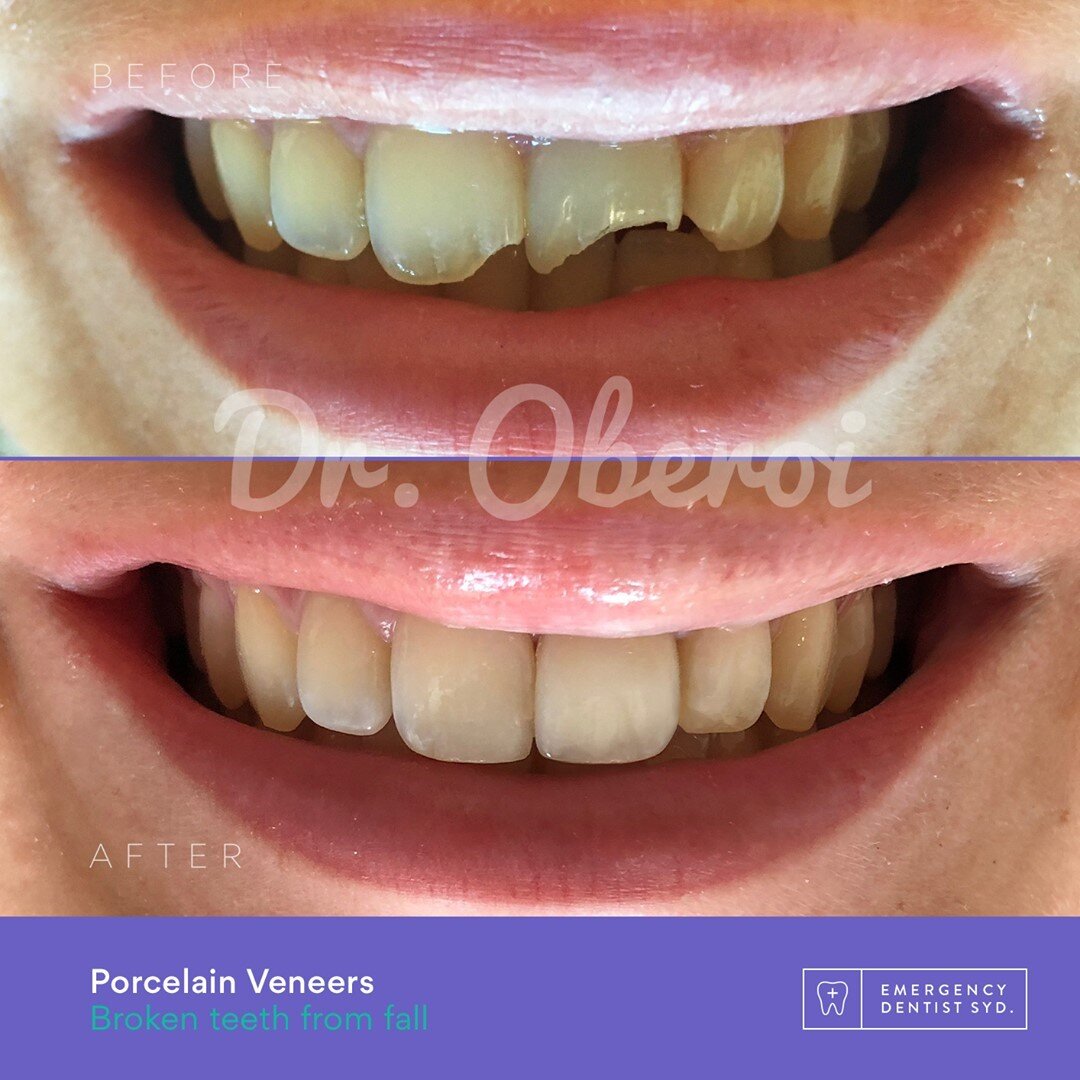
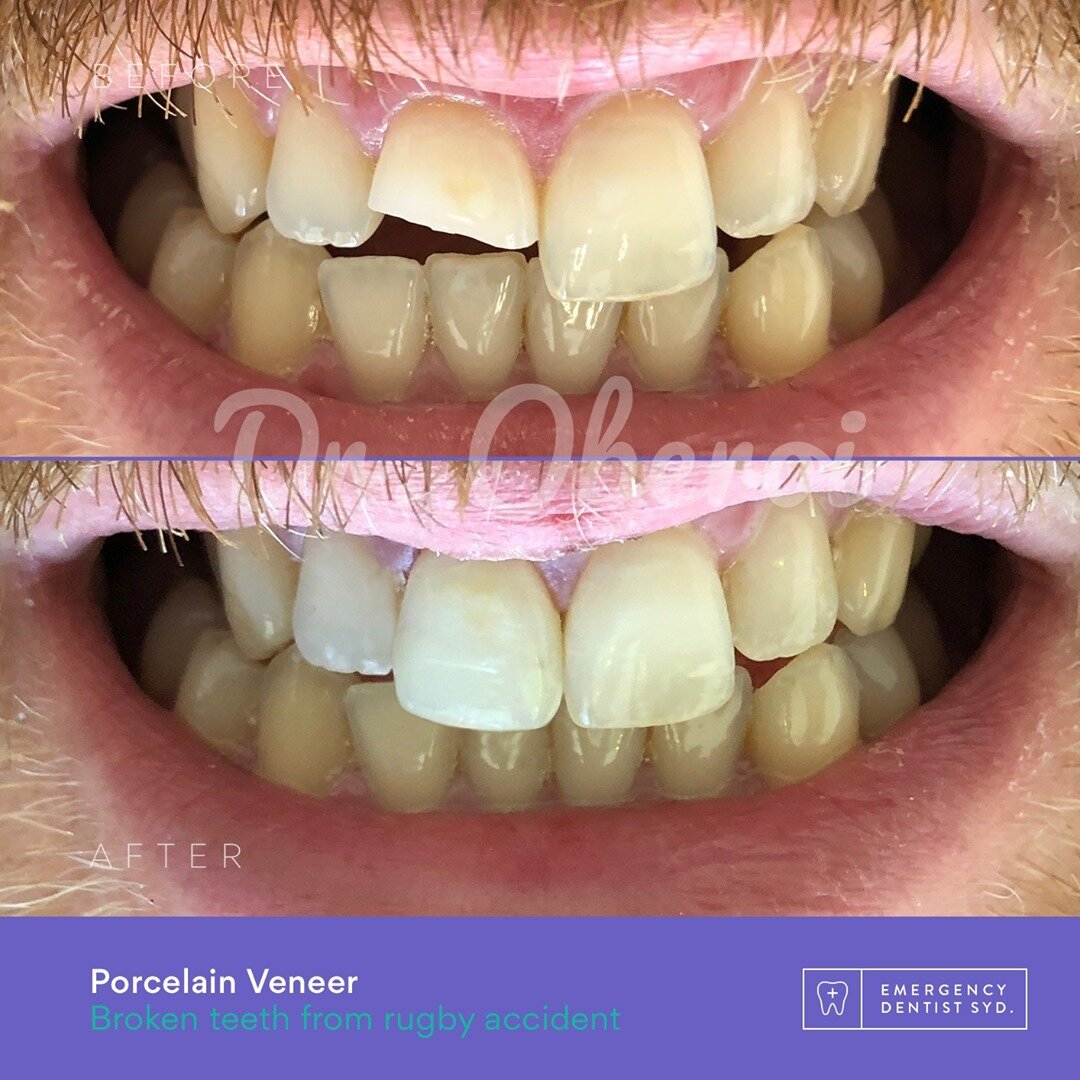
It’s easier than you think to crack a tooth or teeth. If you experience this, rinse your mouth with warm water, apply a cold compress to the face and see an after hours dentist as soon as possible. Your dentist will be able to repair the tooth using a porcelain crown or veneer, dental bonding, or a dental bridge.

Something stuck in your tooth.
Unless it’s extremely painful or bleeding, this usually isn’t a dental emergency. Try to gently remove the obstruction with your fingers or tweezers. You can also try flossing around the object. If this doesn’t remove the problem, make an appointment with your dentist.

Severed gum or lips.
This is considered a medical emergency, not a dental emergency. So apply pressure to slow the bleeding and go to your doctor or to the emergency room if it’s after hours.
Emergency Dentist Sydney Says:
If you have a dental emergency, contact our Emergency Dentist in Sydney. Our caring and expert staff are available 24 hours a day to help you with all your emergency dental needs.

How is Pain Relieved in Dental Emergencies?
Why Your Dentist Can Help Immediately
Why Your Dentist Can Help Immediately
Dental pain can be scary. You’ll probably worry about the cause, about the treatment, and about how long you’ll have to tolerate the discomfort. But the one thing you don’t have to worry about is whether an after hours dentist can help. Your dentist has a variety of treatments that can alleviate your pain almost immediately. And this is the best strategy for allowing you to get back to your regular schedule once more.
About Dental Pain
Dental emergencies can happen anytime and without warning. This will usually be accompanied by pain, which can feel like the following:
General mouth pain which is hard to localise.
Sharp pain like someone’s stabbing at your tooth or gum.
Throbbing pain that’s like a heartbeat in your tooth.
Low grade pain that spikes when you eat or drink anything.
If you experience this type of pain and you can’t get to your after hours dentist immediately, there are some easy, short term ways to deal with the pain. According to Dr. Oberoi from Emergency Dentist Sydney, “Nurofen and Panadol are the best options for pain relief in the short term.” This will allow you to cope until you can get the problem fixed.
Common Causes of Dental Pain
There are a number of things that can cause dental pain including the following:
Tooth decay.
A broken filling.
A tooth abscess.
Infected gums.
Damage from repetitive movements such as grinding or chewing.
Pain Relief Options in Dental Emergencies
Once you get to an after hours dentist, they have a lot of options that will help relieve your pain during dental emergencies. These can be used to make your dental appointment much more pleasant and to relieve ongoing pain as the problem heals.
The most effective option for removing the pain caused by a toothache according to Dr. Oberoi is, “By removing the infection and draining it, and then treating the infection through antibiotics, this is the best way to treat pain.” This will remove the source of the pain itself, rather than masking it.
However, if your pain isn’t caused by infection, there are a number of options that your dentist can use to alleviate your pain while they treat the problem. Some of the most effective solutions are:
Local anaesthesia, which is used for simpler procedures such as fillings and root canals.
Happy gas, which can alleviate pain and anxiety during most types of dental procedures.
IV sedation, which is most commonly used for more complex procedures such as wisdom teeth extractions.
Oral sedation, which is used most often for anxious patients.
Emergency Dentist Sydney Says:
There’s no reason for you to be in pain when your dentist can fix it so easily. So if you do experience it, contact our Emergency Dentist in Sydney. Our caring and expert staff are available 24 hours a day to help you with all your emergency dental needs.

"Just Take My Tooth Out."
Is This What You Should Be Saying?
Is This What You Should Be Saying?
If you have tooth pain, it can be tempting to do whatever is necessary to immediately fix the problem. If you do this, it will allow you to go back to your normal life with as little disruption as possible. However, this kind of speed can cause its own problems. It can lead to you making the wrong decision for your long term oral health. That’s why you need to carefully consider the alternatives before you ask an after hours dentist to remove a troublesome tooth.
Why Some People Choose Extraction
If you have a really severe toothache or cracked tooth, you might think that the best solution is to just get rid of the tooth. There may be a number of reasons for making this decision. As Dr. Oberoi from Emergency Dentist Sydney says, “Some people who want their tooth taken out do it because they don’t think they can afford to keep it, or they don’t fully understand the value of having your own teeth.”
You might also be experiencing severe pain or just don’t seem to have the time to get the problem fixed properly. Unfortunately, you might think that you can just get your tooth out and go through the rest of your life as if nothing happened, but this isn’t usually the case. Having a missing tooth or teeth can cause a variety of problems in the long term. This includes the following:
Chewing will be more difficult.
The shape of your face will change.
Your speech can be affected.
The gap might show when you smile, making you feel self-conscious.
The health of your remaining teeth will be affected, resulting in a higher chance of further decay.
Teeth support each other in the right position, so if you have one removed it will lead to the others slowly collapsing into the gap.
Teeth are meant to work as a unit, so when one is missing, your oral health overall will decline. So if you get a tooth removed impulsively, it will probably lead to more serious problems down the road.
The Alternatives to Extraction
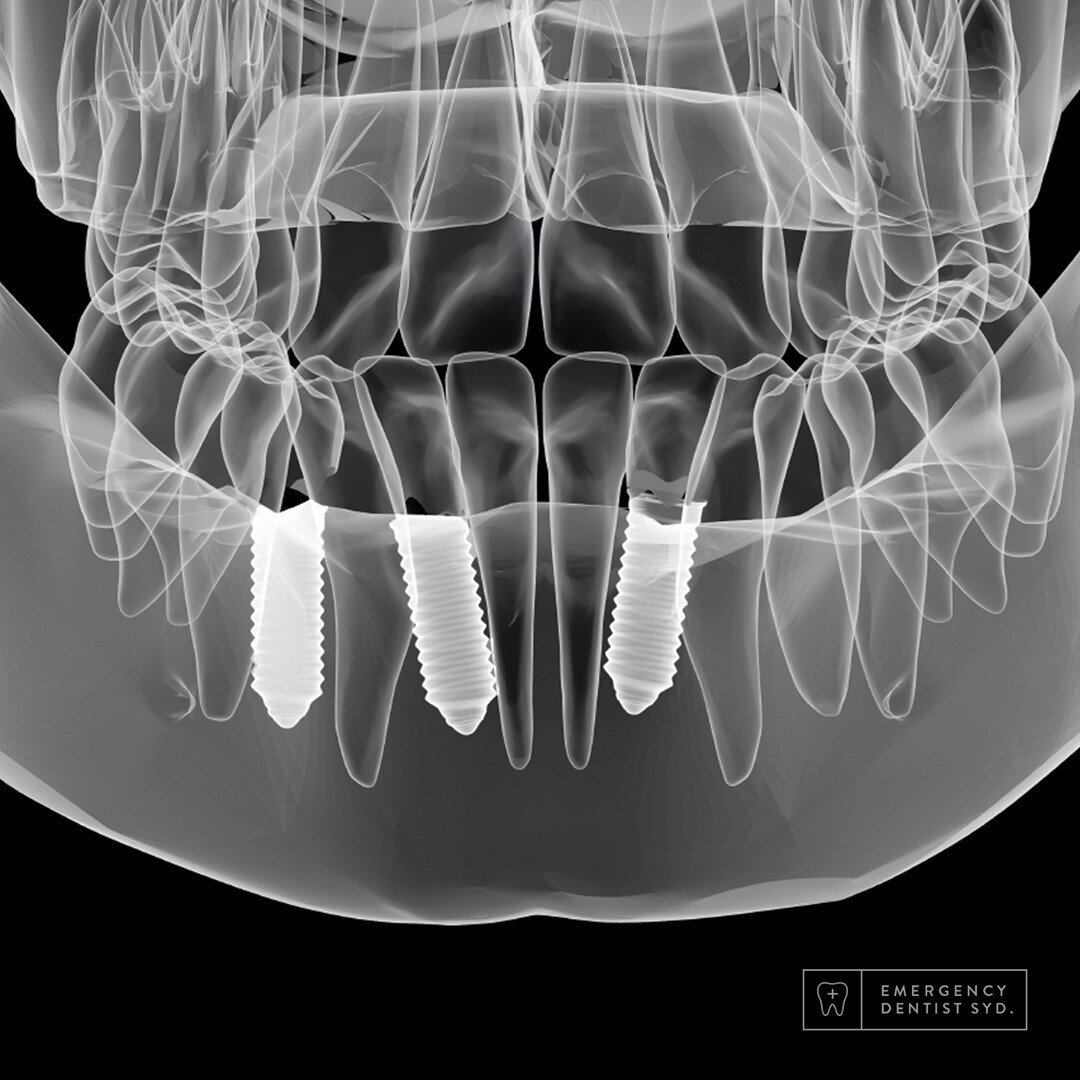
Extracting a tooth is a serious procedure. That’s why a good after hours dentist will find other ways to save your tooth if possible. As Dr. Oberoi says, “When you’re looking at alternatives, the best thing to do is to save the tooth with a root canal. If the tooth has a crack in it we can fit a crown or veneer over the top. And a dental implant is the last solution if the crack is really bad.”
So the next time you have a toothache, talk to your dentist before you make any decisions. This will help ensure that you get the best treatment possible for your present and your future oral health.
Emergency Dentist Sydney Says:
If you have a dental emergency, contact our Emergency Dentist in Sydney. Our caring and expert staff are available 24 hours a day to help you with all your emergency dental needs.

Emergencies Aren't Always a One-Stop-Shop
What You Should Expect
What You Should Expect
There are few things as frightening as a dental emergency. You’re in pain, confused about what to do, and just want to go back to normal. But this isn’t always possible, at least not without diminishing your oral health in the long term. With some dental problems, you may need more than one visit to solve the issue. So when you visit an after hours dentist, you need to be prepared to come back until the issue is resolved. Because sometimes the quickest route to normal functioning isn’t the best one.
The Problem with Dental Emergencies
The real problem with dental emergencies is that they can cause people to make the wrong decision. This is understandable. After all, when you see an emergency dentist you’re probably traumatised, in pain, and bleeding, and who wouldn’t want to fix those problem as soon as possible? As Dr. Oberoi from Emergency Dentist Sydney points out, “When people are in pain they want a quick fix, they don’t always think about the long term.”
But decisions made in the heat of the moment can have long term consequences. Which is why you need to listen to your dentist and take a longer view on your oral health.
One Stop Treatments
There are a number of different dental problems that an after hours dentist can fix immediately so you can go about your day as if it never happened. Some of them are as follows:
Mild decay where you only need a filling.
Small cracks in your teeth which can be fixed using dental bonding.
More advanced decay when a root canal can be performed.
Treatments That Take Time
There are a number of dental treatments that will take time and multiple treatments before they can be fixed. However, not everyone wants to wait that long. As Dr. Oberoi says, “People come in with a sore tooth and just want it taken out when there are better options.” This often results in people getting treatments that aren’t the best for them in the long term. So they come in with an infected tooth, and leave with a gap in their mouth that will have to be filled at some point. This could have been avoided if they were willing to wait and commit to a longer treatment that could have saved their tooth.
This situation doesn’t only occur with infected tooth. It can also be the case when you have severe gum disease, a tooth that needs to be extracted, or a broken tooth that needs a dental crown or bridge. You may also need multiple treatments if you have impacted wisdom teeth.
So when you have to pay a visit to an after hours dentist, remember that it isn’t a one stop shop. Sometimes, the best solution will take time and multiple treatments. If this is the case, taking the longer option will be the best way for you to enjoy good oral health over the long term.
Emergency Dentist Sydney Says:
If you have a dental emergency, contact our Emergency Dentist in Sydney. Our caring and expert staff are available 24 hours a day to help you with all your emergency dental needs.

The Importance of Good Quality Emergency Dentistry
Avoid Long Term Dental Problems
Avoid Long Term Dental Problems
You may not always get the opportunity to choose your emergency dentist. If you injure your mouth after hours, you’ll be in pain, confused and worried, as well as struggling to find an after hours dentist. But that doesn’t mean that you should settle for just any dentist who answers the phone. In fact, choosing the right Emergency Dentist in Sydney can be pivotal in getting the effective and expert help that you need.
The Importance of Choosing the Right Emergency Dentist
You need to choose an after hours dentist with the same care that you use when you choose your regular dentist. Emergency dentists must have a specific set of skills that are related to what patients need when they experience an injury or other dental problem. As Dr. Oberoi from Emergency Dental Sydney explains, “Emergency dentists have to be trained well in managing people with dental pain or dental trauma. They’re like Emergency Doctors in a lot of ways. They have more experience in diagnosing and giving appropriate treatment.” This extra training is essential to ensure you get the right treatment and the best outcome possible no matter what type of treatment you need.
If you don’t choose the right dentist, you may find yourself with someone who doesn’t have the depth of experience they need to cope with your dental emergency. This can result in substandard work, which causes more problems in the long run. If your dental work isn’t completed properly it can result in further trauma, infection or injury. And this will probably mean that you’ll have to have further work done to correct the problem or suffer long term pain or discomfort.
If you want to avoid these problems, then you need to put some thought into choosing an after hours dentist.
What to Look For in an Emergency Dentist

Obviously an after hours dentist should be appropriately qualified and experienced, but this isn’t really a big issue these days because of the regulations surrounding this profession. But that doesn’t mean that you should just go to anyone. As Dr. Oberoi says, “It’s important to choose an emergency dentist based on how good the dentist is. Because if the work isn’t done to the highest level then it can lead to further problems.”
This means that you shouldn’t default to just any dental provider even if you’re looking for a dentist after hours. It’s always better to visit a dentist who has a proven record in emergency treatments and can ensure the best outcome possible for your dental problem.
Emergency Dentist Sydney Says:
If you have a dental emergency, contact our Emergency Dentist in Sydney. Our caring and expert staff are available 24 hours a day to help you with all your emergency dental needs.

Is Immediate Pain Relief Always Possible?
What to Expect When You Visit Your Dentist with a Painful Problem
What to Expect When You Visit Your Dentist with a Painful Problem
If you’ve ever had a toothache then you know how uncomfortable it can be. In fact, this is probably the most common complaint that sends people to an after hours dentist. If you experience dental pain, you might worry about how much your dentist can actually help with it. After all, how much can they do apart from give you painkillers? Well, they can actually do a lot more than give you some tablets. To understand all the ways your dentist can alleviate your dental pain, keep reading.
Causes of Dental Pain
There are a number of things that can cause dental pain and send you to the after hours dentist. Some of the most common are:
Tooth decay or a cavity.
A cracked tooth.
An abscess.
Damaged dental work such as a broken filling or crown.
Gum disease.
Infection.
Damage or strain caused by repetitive movements such as grinding or chewing.
Dental Solutions to Pain
If you’re suffering from dental pain, the first thing your dentist will do is treat the problem. So if you have a cavity, they will put a filling in. If you have an infection, they will treat the cause of the infection and clean the infected tissue. This will help to completely eliminate the cause of the pain, prevent further problems, and return you to normal functioning again. There are a number of options that your dentist can offer for pain relief including oral medication, laughing gas, and IV sedation.
How Long Until You’re Pain Free?
In most cases, your dentist can eliminate your pain almost immediately with the three different pain options available in the clinic. Once the pain is alleviated, the source of the pain can be treated. This will eliminate the pain at its source so you’re comfortable once the painkillers wear off. If the pain returns after the treatment, then it means you need to visit your after hours dentist again.
As Dr. Oberoi from Emergency Dentist Sydney says, “If the pain gets worse or comes back it means that something has gone wrong or the issue hasn’t been addressed.” So talk to your dentist if you experience any further problems.
The only real exception to this is if you have a severe infection. Dr. Oberoi warns that, “In terms of pain relief we try and alleviate the pain straight away, and a lot of times we can. But in the case of severe infection it can take 24 to 48 hours for the pain to go away completely.” Which is all the more reason to visit your dentist before a problem gets to this stage.
What About Surgical Pain?
If you have some kind of dental surgery there will be some pain and discomfort afterwards. This is the case for any type of surgery, and it can usually be treated with over the counter pain medication. But you can also minimise your discomfort by choosing the right dentist for the surgery.
Dr. Oberoi states, “It depends on how the surgery is done. If the surgeon is careful to cause little trauma, then there’s less pain. That’s why it’s important to get the right people for your dental surgery.” So before you have any dental surgery, make sure that your dentist is well trained and experienced. That will help ensure that you have the best outcome possible from the procedure and it will cut down on your recovery time as well.
Emergency Dentist Sydney Says:
If you’re experiencing dental pain, contact Emergency Dentist Sydney. Our caring and expert staff are available 24 hours a day to help you with all your emergency dental needs.

Our Top Tips Handling Dental Emergencies
What To Do When You Can't See Your Dentist Right Away
What To Do When You Can't See Your Dentist Right Away
Dental emergencies happen all the time, like breaking a tooth from a fall or a painful toothache that won’t go away. Nobody wants to experience these dental situations…especially when it happens outside of business hours. Knowing what to do when you’re in a situation where you can’t see the dentist right away, will help you reduce the risk of further complications. Here are some tips you can use to protect your teeth and gums until you can see an emergency dentist.
Broken Tooth:
Gently clean the area in your mouth with warm water and protect the tooth from exposure to germs by covering it with a sterile gauze. Apply a cold compress to the face if swelling.
Knocked Out Tooth: Pick up the tooth by the crown and do not touch the roots. Rinse off any dirt with water but make sure not to remove any attached tissue fragments. If possible, gently insert the tooth in its socket. If you cannot insert the tooth back in, put the tooth in a cup of milk and take it to your dentist.
Cracked Tooth: Gently clean the area by rinsing with warm water and use a cold compress on your face to reduce any swelling.
Severe Toothache: Rinse your mouth with warm water and gently use a dental floss to ensure there is nothing caught between the teeth. Never put aspirin or any other painkiller against the gums near the aching tooth because it may burn the gum tissue. Visit the dentist even if the ache goes away.
Sore Gums:
This may be a sign of gum disease so immediate treatment is required. Before you contact your dentist, quickly but gently floss and ensure there is nothing caught between the teeth. Rinse gently with warm salt water and never put any painkillers against the infected gums as it may burn the gum tissue.
Broken Braces and Wires: If your wires and brackets are broken, use a soft object like an eraser to gently push the wire back into spot where it doesn’t cause any more discomfort. If you can’t reposition the wire, cover the end with orthodontic wax or a piece of gauze so that it doesn’t bother your gums or soft tissue. Never cut the wire as you could end up swallowing it or breathing it in. Make an appointment to see the dentist so that a more permanent solution will be given.
Objects Caught Between Teeth: Gently use dental floss to remove the object. If object does not come out, call your emergency dentist. Never use a sharp object like a pin to try and get the stuck object out.
Lost Filling: If your filling has fallen out, part of the interior of your tooth will be exposed so temporarily stick a piece of sugarless gum into the cavity. Do not use a sugar filled gum as this will cause immense pain. Another option is to use a dental cement which can be purchased over the counter.
Lost Crown: Temporarily replace the crown by coating the inside of the crown with denture adhesive or toothpaste to help it stay in place. Never use super glue. If you can’t position it in there properly, leave it and take it to your dentist.
Soft Tissue Injuries: Soft tissue injuries include the tongue, cheeks, gums and lips. These injuries can be cuts or swelling and can result in bleeding. To control the bleeding, gently rinse your mouth with salt water to disinfect the cuts. Then use a piece of damp gauze to apply pressure to the areas that are bleeding for 15 – 20 minutes. You can also hold a cool compress on your face to control the swelling. If you are still bleeding badly after 20 minutes, please call your emergency dentist. Continue to hold pressure on the affected area.
A dental emergency can occur at any time and at any place. It is helpful to know these tips just in case these situations arise. Always have an emergency dentist’s contact handy especially when you are travelling abroad. It will definitely save you time while you are trying not to panic. You can also check out our emergency dental care tips on our website.
Emergency Dentist Sydney Says:
Always contact your dentist when you have or think you have a dental emergency. It will make a huge difference to know what to do while you wait to see them.

Acute Pain
What to Expect
What to Expect
Pain in the tooth has been recorded to be the second most painful form of pain in the human body. Acute tooth pain can be very discomforting. It is an experience that should never be gotten as it is always difficult to forget experiences like that. This is because the pain takes all of you and you just cannot get yourself to concentrate on any other thing. No one who has ever had a tooth pain prays to keep having it.
What are the Causes?
Acute pain can be caused by a lot of factors which ranges from coming from the upper part of the tooth to the ones radiating from deep within the gum. Tooth pain can also be gotten as a result of infections from other parts of the body associated with the tooth. Some of the main causes of acute tooth pain are:
Tooth Decay: This is a major factor that causes acute tooth ache and it is due to bacterial infection. It occurs when the bacteria traversed through, reaching the roots of the tooth thus causing an abscess. The pain can be very terrible and highly unbearable.
Fractured Tooth: When a tooth is fractured, the nerve gets exposed and the exposure of a nerve causes excruciating pain because nerve exposure usually leads to the formation of an abscess.
Gum Disease: When the gum of an individual is infected and not quickly treated, it can lead to an inflamed gum, periodontitis and other root canal infections and this also is a leading cause of acute tooth pain.
Symptoms
When toothache occurs, some of the obvious symptoms that it comes with are:
Confusion and severe headache
Persistent increase in temperature
Obvious swelling and palpable tenderness of the gum and generally in the mouth
Blurred and/or double vision
Treatment Options
Acute pain should be taken as an emergency situation and be treated as such. The first and main treatment is to contact your dentist right away. This is important because the pain might trigger lots of other problems and complications might arise. While preparing to see the dentist though, some of these treatments can be quickly applied:
Properly rinse your mouth with warm water in order to get it cleansed.
Take two tablets of Ibuprofen or Advil and then wait for three hours.
Then, take two Panadol tablets and then wait for another three hours before repeating the second step.
These tablets to cause a significant reduction in the swelling in case there is an inflammation and also reduce the pain to a bearable minimum. It is very important to note that you should not directly apply aspirin, you should see your dentist instead.
Before getting to the end of these treatments, you must have been able to reach your dentist and get the proper care.
In cases whereby the pain is severe, has lasted more than a day or you have other associated pain apart from the toothache, it is very expedient to see the dentist quicker because other treatment options may be needed as all these may be due to abscesses or deep root canal infections and it warrants more serious treatments such as:
Extractions or removal of the tooth
Filling of the tooth
Gum or Periodontal treatment
Root Canal treatment
All these would require serious treatment and some minor surgical procedures, but, there is no need to panic as long as you visit the right dentist.
Emergency Dentist Sydney Says:
If your toothache is severe, follow these emergency dental care tips. If it has lasted for more than 24 hours and you just can't take it anymore, give us a call.
Patient Care First

Keep Up-To-Date with All Things Oral & General Health
RECENT ARTICLES







For 15 years, we've had one mission - when Sydney has a dental emergency, Emergency Dentist Sydney is there
We're proud to celebrate 15 years of providing emergency dental services to Sydney CBD and surrounding suburbs.